
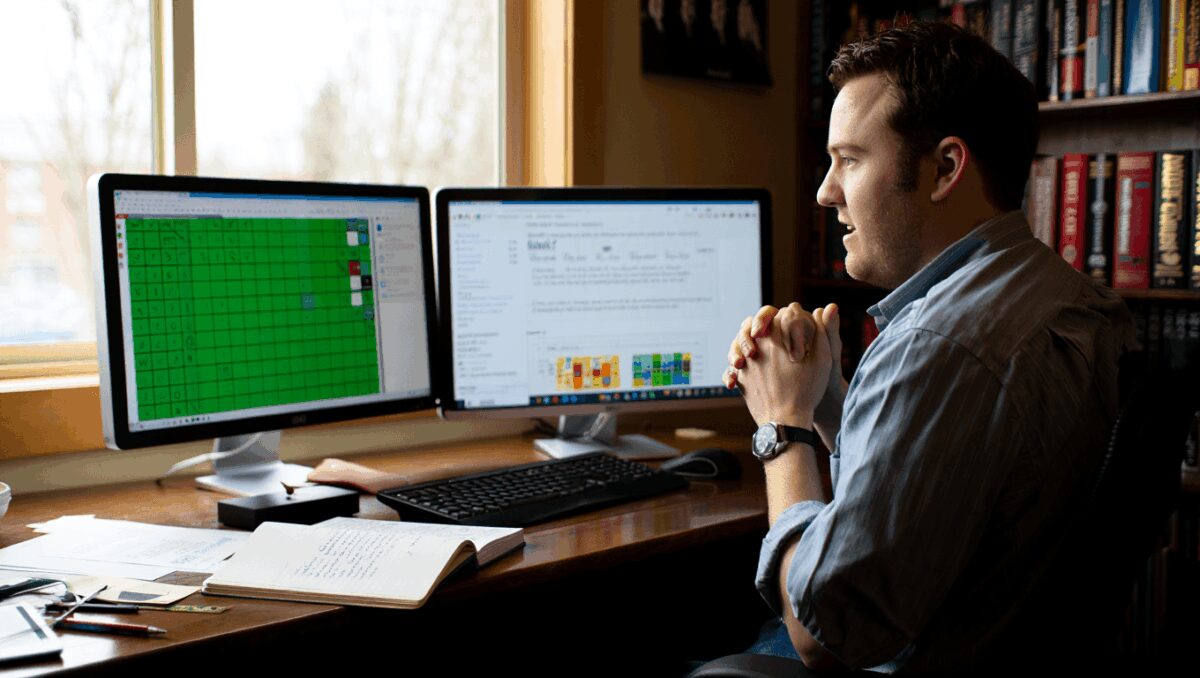
Josh Wardle, the creator of Wordle, has quietly released a new daily word puzzle that aims less at mass appeal and more at teaching a specific skill: how to read and solve **cryptic** clues. It isn’t a drop-in replacement for the five-letter guessing game that became a cultural sensation, but it could be the easiest path yet into the world of cryptic crosswords.
What Parseword does differently
Nvidia DLSS powers sharper, faster PC games: why players and developers are divided
Free Switch 2 update supercharges Switch 1 handheld games: 12 tested must-plays
Where Wordle gives you feedback on letters, the new game — called Parseword — turns the clue itself into the puzzle. Each day’s challenge presents a single sentence built as a “simile sentence” to be parsed: you must spot wordplay devices such as homophones, substitutions and hidden words to reconstruct the intended answer.
Crimson Desert on PS5 Pro delivers stunning visuals but mixed performance
Nintendo Switch 2 gets major speed boost for original games: enable handheld mode
In practice that means the mechanics reward lateral reading and a knowledge of cryptic shorthand rather than brute-force vocabulary guessing. The site supplements the puzzle with short videos, starter puzzles and layered hints designed to teach rather than merely reveal. That educational focus is central to Wardle’s stated aim: make cryptic solving less forbidding for newcomers.
How it feels to play
After trying the daily puzzles, you quickly notice two things: the mental work is different, and the learning curve is steeper. Some days the wordplay clicks and the solve is enjoyable; other days the layers of construction — multiple keywords operating in different roles, or a barely-visible hidden-word trick — can make progress slow even with hints enabled.
That tug-of-war between satisfaction and frustration is why Parseword will appeal strongly to a particular kind of puzzler: those who like unpacking language, spotting double meanings and following multi-step clue logic. For players who prefer instant feedback and short solves — the crowd that made **Wordle** ubiquitous — Parseword’s pace and style will feel foreign.
- Daily format: One puzzle per day, focused on a single sentence as the clue.
- Learning tools: Built-in tutorials, example puzzles and short explainer videos.
- Core mechanics: Homophones, replacements, hidden words and other cryptic conventions.
- Audience: Designed as a gentle on-ramp to full cryptic crosswords, not as a mass-market leisure game.
What this means for regular puzzle players
If you already have a daily lineup — Wordle, NYT Crossword, Connections or similar — Parseword can be a useful complement rather than a competitor. It won’t replace quick five-minute plays, but it can develop the skills needed for more challenging cryptics.
For casual players who prefer punchy, fast wins, adding Parseword could slow down a daily routine. For players seeking to expand their solving toolkit, it offers structured exposure to cryptic techniques without the intimidation of a full-size puzzle grid.
Alternatives and how to pick
Not interested in cryptic-style thinking? Plenty of other daily options exist. Below are a few alternatives that cover different tastes and time commitments.
- NYT Games: Broad mix — quick word puzzles to full crosswords, with varying difficulty levels.
- Puzzmo and independent apps: Collections that mix formats (logic, strategy, wordplay) if you want variety.
- Connections and Strands: Logic- and pattern-focused games for players who like classification and association.
Choosing between them comes down to the type of mental challenge you enjoy. If the idea of teasing out homophones and substitutions excites you, Parseword is worth a try. If speed and repetition are your primary pleasure, stick with lighter daily fare.
Why it matters now
Parseword’s release highlights a small but steady trend: puzzle designers experimenting with how to teach solving techniques within a single-player, daily format. As mainstream puzzle habits diversify after Wordle’s viral moment, products that prioritize learning over instant virality could carve a stable niche — especially among solvers who want to graduate into harder crosswords without feeling lost.
It’s unlikely that Parseword will knock the original Wordle from its cultural perch. But as a targeted tool for understanding cryptic clueing, it could become the go-to practice ground for a new generation of solvers curious about the more intricate side of wordplay.

Annabelle Ink is a gaming journalist and lifelong gamer who lives and breathes video game culture. From console releases to esports tournaments, this dedicated journalist brings insider knowledge and genuine enthusiasm to every review and feature. Her expertise spans multiple gaming platforms, helping readers discover their next favorite game while staying connected to the pulse of the gaming industry.