
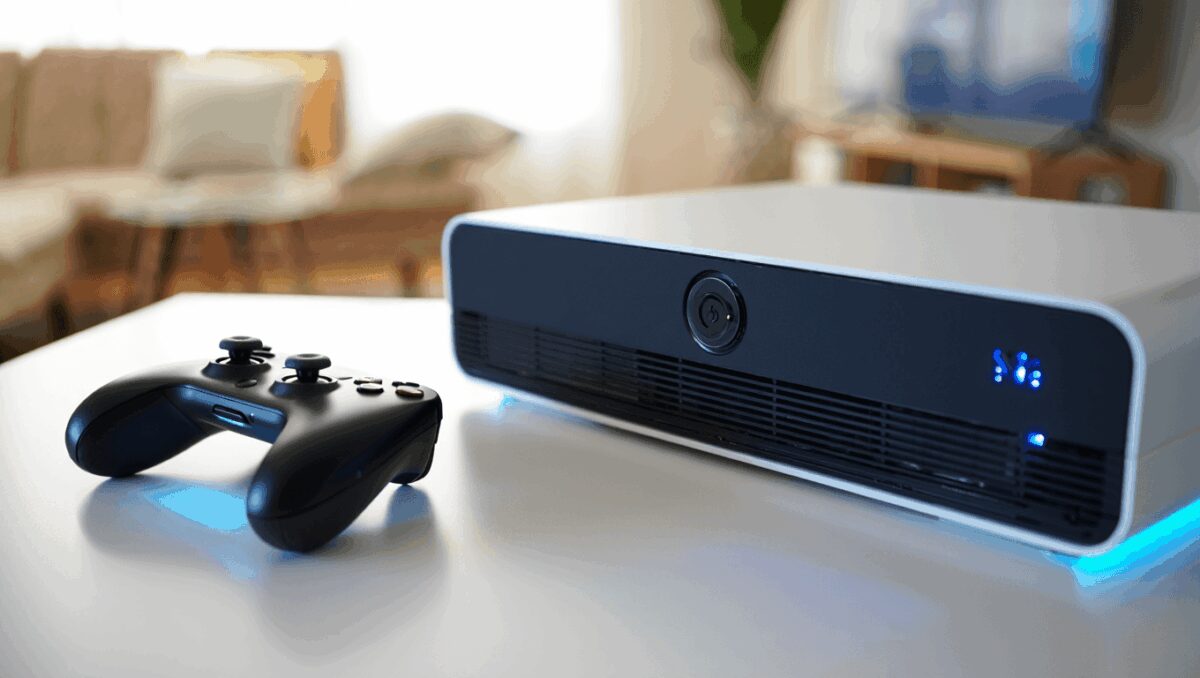
The new Valve console-PC hybrid arrives with an attractive design and a familiar big-screen interface — but its high entry price makes its value hard to justify right now. If you care about living-room convenience plus the openness of PC gaming, this device shows promise; whether it’s the right buy depends on what you already own and how much performance you expect for the money.
What it gets right
PlayStation phases out physical discs this year: key dates and what gamers must know
Nintendo Switch 2 deals: bundles, top games and accessories discounted up to 43%
The hardware is compact and thoughtfully executed. In a roughly 6-inch cube, Valve fits a fan-dominant cooling path that keeps noise to a minimum even under load. The swappable front plates and understated styling make it one of the tidiest living-room gaming boxes available.
PlayStation discs face backlash: Stop Killing Games says buyers expect real physical media
PS5 Pro beats Steam Machine: what it means for most gamers
SteamOS — the same interface many players know from the Steam Deck — translates well to a TV. Navigation is quick with a controller, the store and library are easy to browse from the sofa, and features like the LED status bar and integrated controller wake-up speak to a polished, console-style experience.
Connectivity hits the essentials: modern Wi‑Fi, Bluetooth, a USB-C port and wired Ethernet. There’s also HDMI CEC support, so powering up the machine with a controller can wake your TV automatically — a small convenience that matters in everyday use.
Where it disappoints
At its launch price — from about $1,049/£879 for the base SSD model — the package lands in a difficult place. Competing prebuilt PCs and recent console price announcements mean many buyers will expect more raw graphical oomph at that cost.
That shows in real play: older and indie titles run beautifully, but recent AAA releases strain the system. The machine’s custom AMD GPU is competent for 1080p and some QHD gameplay, but ray tracing is largely out of reach at playable frame rates, and the 8GB of VRAM limits higher-resolution textures and performance headroom.
- Daily use: Excellent for couch-friendly indie and legacy games, and for casual desktop tasks.
- AAA gaming: Expect medium settings and upscaling (FSR) to hit acceptable frame rates; native 4K is unrealistic for demanding modern titles.
- Noise and thermals: Near-silent under strain thanks to a large heatsink and a single big fan exhausting to the rear.
Key specifications
| Item | Detail |
|---|---|
| Price | From $1,049 / £879 (512GB); higher-capacity models cost more |
| CPU | Semi-custom AMD Zen 4, up to 4.8GHz (6 cores / 12 threads) |
| GPU | Semi-custom AMD RDNA3 variant, ~28 CUs, 8GB GDDR6 |
| Memory | 16GB DDR5 |
| Storage | 512GB SSD or 2TB SSD options |
| Ports & connectivity | HDMI 2.1(ish), DisplayPort 1.4, USB-A/C, Gigabit Ethernet, Wi‑Fi 6E, Bluetooth 5.3 |
| Size & weight | About 6 x 6 x 6.4 in; ~5.7 lbs |
Performance in context
Benchmarks and side-by-sides make the trade-offs clear. In modern AAA titles the box frequently delivers half or less of the frame rates you’d see on a similarly priced PC with a discrete RTX 50-series GPU. That means smoother gameplay requires resolution scaling and graphics compromises.
| Title (test) | This device (approx.) | Comparable RTX 5060 prebuilt |
|---|---|---|
| Black Myth: Wukong (1080p, Medium) | ~36 FPS | ~82 FPS |
| Cyberpunk 2077 (1080p, RT: Ultra) | ~18 FPS | ~45 FPS |
| Forza Horizon 6 (1080p, Ultra) | ~50 FPS | ~101 FPS |
Those differences matter if you own a large, high-resolution TV or expect near-console parity on new releases. If most of your library is older or indie games, the box performs very well and delivers the sofa-to-game simplicity many players want.
Software quirks and updates
The system runs Valve’s interface well, but some early oddities remain. For example, a per-game resolution default can make titles display at 1080p unless you manually change a setting labeled “Default” to 4K. Valve has acknowledged a usability issue and indicated a future update will clarify such settings.
Desktop-mode and Linux capabilities are intact, which makes the machine useful as a small Linux PC — but don’t expect laptop-class CPU power for heavy multitasking or demanding productivity workloads.
Who should consider it — and who should not
If your priority is a sleek, quiet living-room PC that gives you the Steam ecosystem and easy pick-up-and-play sessions, this hardware scratches that itch. It’s particularly attractive to enthusiasts who already live in Valve’s ecosystem or value the minimal footprint and customization options.
But if your buying decision hinges on getting the most raw performance per dollar, or you want consistent high-frame-rate 4K with ray tracing, a similarly priced prebuilt PC or current-generation console will be the better call.
Practical rule of thumb: unless the price drops closer to the $650–$750 range, this product will appeal mainly to design-minded Steam loyalists rather than mainstream gamers chasing value.
Bottom line
Valve’s hybrid is a thoughtful piece of engineering that finally distills much of what makes the Steam Deck compelling into a living-room box. It nails quiet cooling, a polished big-screen UI, and a compact aesthetic that will please many.
At the same time, the asking price forces compromises: the GPU and VRAM limit its longevity for cutting-edge AAA and ray-traced experiences, and those who want peak performance will find better value elsewhere. For now, it’s an intriguing step toward a new category — but not yet the clear middle ground between console ease and PC power that many hoped for.

Annabelle Ink is a gaming journalist and lifelong gamer who lives and breathes video game culture. From console releases to esports tournaments, this dedicated journalist brings insider knowledge and genuine enthusiasm to every review and feature. Her expertise spans multiple gaming platforms, helping readers discover their next favorite game while staying connected to the pulse of the gaming industry.