
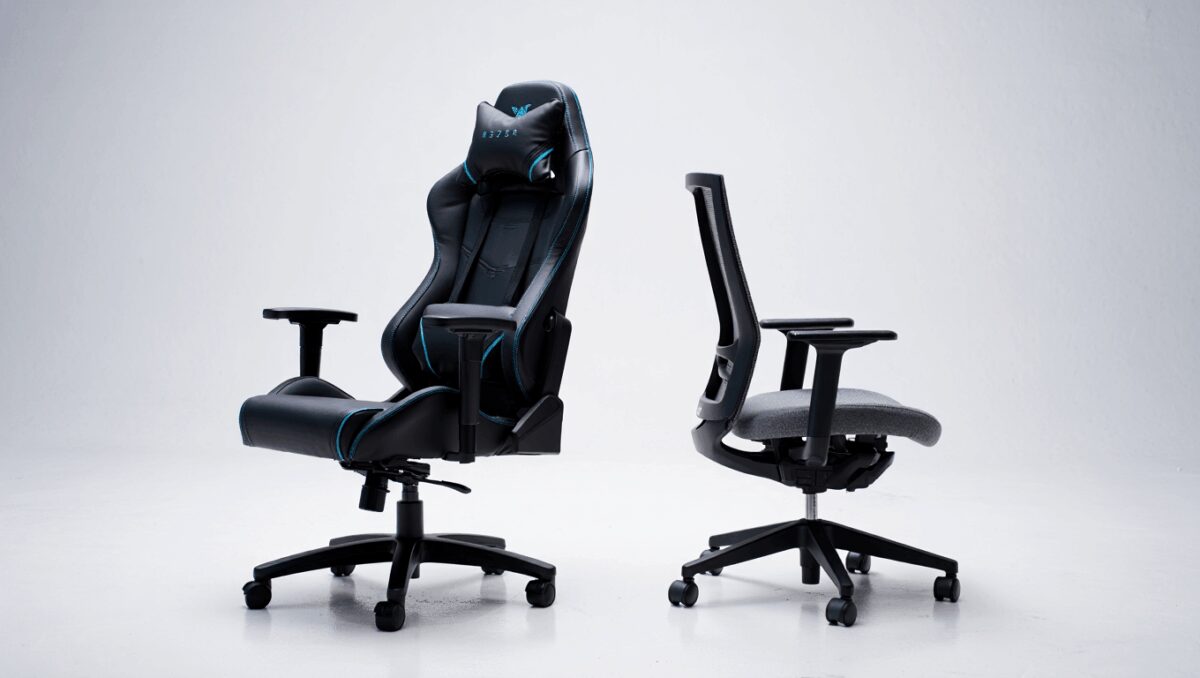
I spent two months testing Razer’s newly released Iskur V2 NewGen, and it challenged my long-held preference for traditional office chairs. With a redesigned lumbar mechanism and simplified controls, this flagship gaming seat narrows the gap between gaming ergonomics and office-focused comfort—though material choices and climate still shape who should consider it today.
Reworking the back: a moving lumbar that listens
Wordle July 15 answer threatens streaks: brutal, unexpected solution leaves players fuming
Gaming monitors 2026: 10 standout models tested for 1080p through 4K
The most notable change is the chair’s adaptive lumbar assembly. Rather than a fixed support pad, the Iskur V2 NewGen uses a mechanism that both swivels with your motion and can be finely tuned by hand.
GTA 6 free via Microsoft Rewards: how to earn enough points fast
Assassin’s Creed Black Flag Resynced redefines pirate gaming: new gold standard
Two dedicated knobs give you precise control: one moves the support up and down to match the small of your back, the other adjusts how far the support protrudes. That combination allows you to push the lumbar forward for focused, upright work and pull it back when you want a more relaxed position—something more commonly seen on premium office chairs than on typical gaming seats.
Simple, reliable controls
Where some high-end office models feel needlessly complex, Razer keeps interaction straightforward. A hand-brake style lever controls recline and a cluster of buttons locks the armrests in place after you position them.
The armrests are truly 4D: they move up and down, slide forward and back, shift closer or wider, and rotate inward or outward. The physical buttons prevent accidental drift, which is a welcome touch after repeatedly re-adjusting less-stable designs.
There’s no built-in footrest, and the chair lacks an add-on footrest option. Still, with a maximum recline of 152 degrees, it’s comfortable for leaning back—just not optimized for napping without extra support.
Comfort vs. airflow: material trade-offs
Razer covers the Iskur V2 NewGen in an upgraded synthetic leather and adds cooling treatments aimed at reducing surface heat. In practice the backrest feels robust and supportive—the padding is thicker than many office chairs I test—but it can’t match the breathability of an all-mesh design.
If you work in a warm or humid environment, an all-mesh chair may still be the better daily driver. During testing I used a room fan and noticed a marked difference; in smaller spaces with ceiling circulation the chair felt much more comfortable for extended sessions.
- Key adjustments: Vertical and depth lumbar knobs; hand-brake recline; 4D armrests with lock buttons.
- Materials: EPU synthetic leather with cooling treatment—offers a premium feel but less airflow than mesh.
- Recline: Up to 152 degrees, locks in place for relaxed viewing or gaming.
- Missing: No integrated or optional footrest; seat is not mesh-perforated for maximal breathability.
- Best use: Evening gaming and mixed-use where strong lumbar support matters; less ideal as the sole chair in hot climates.
After two months with the chair, my conclusion is nuanced. The Iskur V2 NewGen represents a meaningful step forward for gaming chairs—its moving lumbar support and straightforward controls address several long-standing ergonomic complaints. For someone who spends long hours working in a cool, ventilated room or who primarily needs a gaming chair, it’s a compelling option.
However, if you live in a consistently hot climate or prioritize maximum airflow for all-day office use, a high-back mesh office chair still holds advantages. The Iskur V2 NewGen narrows the divide, but material and ventilation trade-offs keep it from being a universal replacement.

Annabelle Ink is a gaming journalist and lifelong gamer who lives and breathes video game culture. From console releases to esports tournaments, this dedicated journalist brings insider knowledge and genuine enthusiasm to every review and feature. Her expertise spans multiple gaming platforms, helping readers discover their next favorite game while staying connected to the pulse of the gaming industry.