
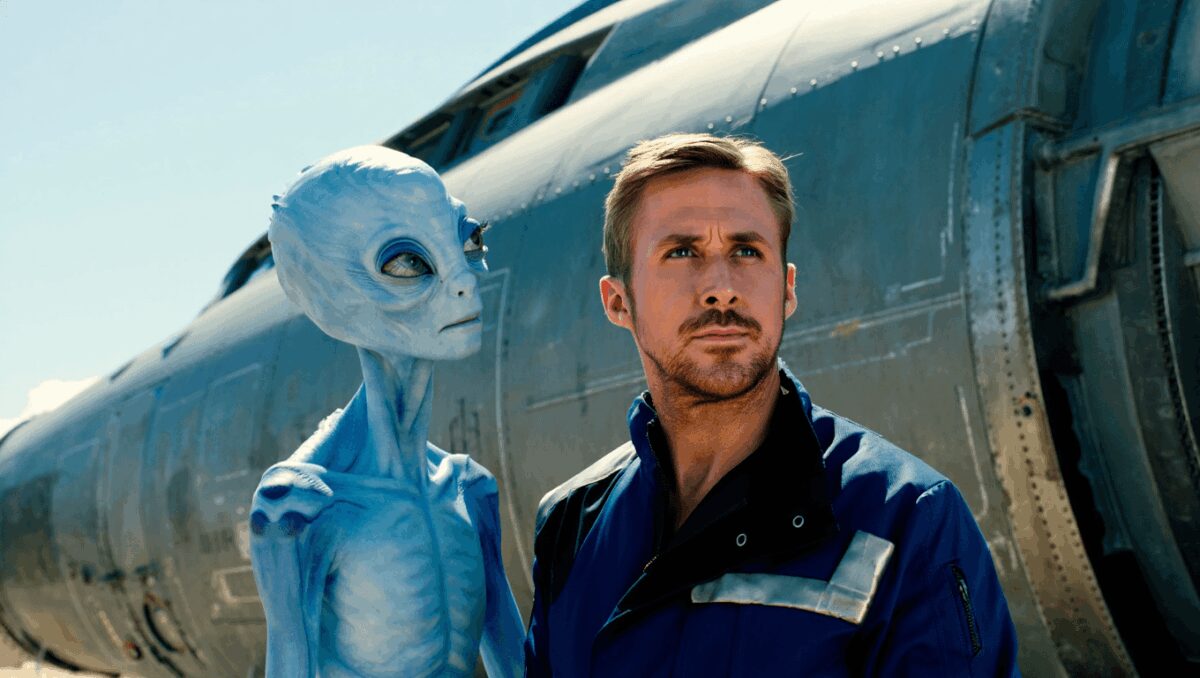
Ryan Gosling’s latest leads a big-screen adaptation of Andy Weir’s Project Hail Mary, arriving this month with enough spectacle and heart to make it one of 2026’s most-talked-about releases. That matters now because the film blends high-stakes, globe-saving science with an unexpected buddy story—a mix likely to draw mainstream audiences back to theaters.
Spider-Man: Beyond the Spider-Verse may unveil footage soon: producers say it’s on track
Disney Adventure unveils 5.5 million-pixel display that turns midship into an immersive stage
Project Hail Mary opens as a survival mystery: a lone man, a damaged memory and a mission that could decide Earth’s fate. But what begins as a quiet, stranded-astronaut drama soon pivots into an emotionally rich partnership that drives the movie’s momentum and keeps viewers invested through its final act.
A solo mission that becomes a friendship
The film introduces Ryland Grace, played by Ryan Gosling, waking up disoriented on a spacecraft light-years from home. He’s forced to piece together his identity and the reason for the mission: a mysterious dimming of stars that threatens life on Earth.
Spider-Man trailer rumor points to release date: Sony could unveil new Marvel movie
Disney World Buzz Lightyear ride returns with revamped blasters, new animatronics and targets
Early scenes lean into survival-thriller territory—inventory of supplies, technical problem-solving and silent dread. Flashbacks fill in the backstory and the scientific stakes, while the present-day narrative focuses on Grace’s isolation and the enormity of failure: a frozen Earth within decades if the team can’t find a solution.
Then the film alters course. When an alien engineer called Rocky emerges, voiced and performed through practical puppetry, the story becomes less about solitude and more about connection. That turn transforms the film into a two-character drama with surprising humor and warmth.
Tone and performance
Under directors Phil Lord and Chris Miller, known for balancing laughs with depth, Project Hail Mary doesn’t shy from comedy. Gosling, whose recent roles have revealed a sharper comic instinct, shifts smoothly between deadpan, physical and situational humor while still delivering in quiet, emotional scenes.
The dynamic with Rocky is the movie’s emotional anchor. Their rapport recalls classic human–alien pairings—companionship that eases tension and makes the scientific puzzle feel urgent on a humane level.
“The film’s heart sits in the relationship—it turns technical problem-solving into something profoundly human.”
Visuals, sound and a standout set-piece
Cinematographer Greig Fraser supplies large-scale frames that reward big screens; this is a film designed to be seen loud and wide. Complementing the visuals, Daniel Pemberton crafts a score that is part pulsing thriller, part elegy—an audio backdrop that raises the emotional stakes when it matters most.
One extended sequence in the second half functions as the film’s centerpiece: tense, inventive and physically risky for the characters. It’s the moment where the movie’s technical ingenuity and emotional investment pay off simultaneously, and it’s likely to be the scene people discuss after they leave the theater.
Who will like it—and why
- Sci‑fi fans: The film preserves the speculative core of Weir’s novel while streamlining some technical exposition for a cinematic audience.
- Fans of character-driven drama: The emotional bond between the leads gives the movie its lift beyond special effects.
- Viewers seeking a crowd-pleaser: The mix of humor, tension and visual spectacle makes this a broadly appealing theatrical experience.
The movie isn’t flawless. At times the plot follows familiar beats, and parts of the exposition feel engineered to service the central mystery. Still, such moments are offset by strong acting, imaginative production design and a tonal confidence that helps the film avoid the chilly detachment of some hard-sf adaptations.
Practically, this one benefits from the theatrical experience: if you can, choose an IMAX or Dolby Atmos screening. The visuals and sound design amplify both the thrills and the quieter emotional notes.
Broader significance
Beyond box-office implications, Project Hail Mary arrives at a moment when audiences appear eager for hopeful stories that still acknowledge real stakes. Its emphasis on cooperation—across species, in this case—and problem-solving reads as a modestly optimistic counterpoint to darker sci-fi trends.
For studios, the film is also a reminder that well-handled adaptations of popular novels can pair serious production values with mainstream accessibility, and that comedy can coexist with high concept premises without undercutting either.
Bottom line
Project Hail Mary is both an effects-driven spectacle and a quietly affecting human story. Ryan Gosling anchors the film with surprising comic and dramatic range, and the friendship at the center elevates what could have been a routine survival tale into something warmer and more memorable. Expect it to be one of the year’s more discussed releases, especially among audiences who enjoy genre films that aim for both heart and scale.
Project Hail Mary opens in the UK and Australia on March 19, and in the US and other territories on March 20.

Jessica Morrison is a seasoned entertainment writer with over a decade of experience covering television, film, and pop culture. After earning a degree in journalism from New York University, she worked as a freelance writer for various entertainment magazines before joining red94.net. Her expertise lies in analyzing television series, from groundbreaking dramas to light-hearted comedies, and she often provides in-depth reviews and industry insights. Outside of writing, Jessica is an avid film buff and enjoys discovering new indie movies at local festivals.