
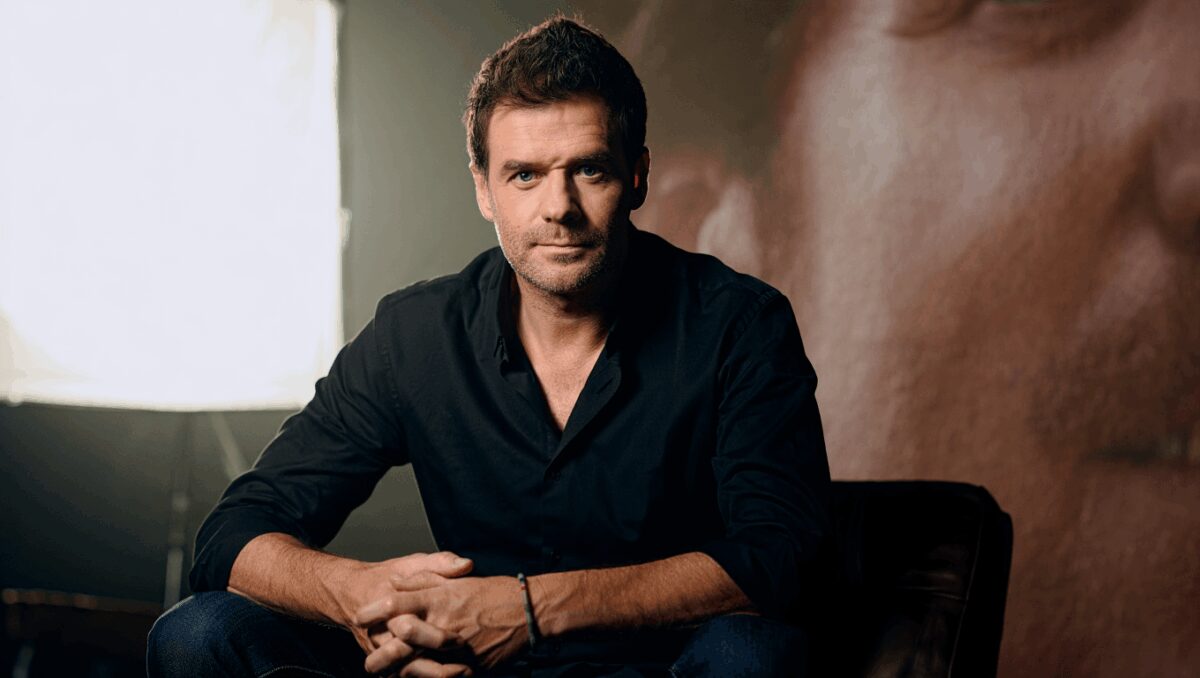
Doug Cockle’s work as the English voice of Geralt of Rivia has quietly shaped how millions feel about one of modern gaming’s most recognisable protagonists — and it nearly knocked him off his feet. His approach to the role, developed over more than two decades, illustrates why voice acting still matters as the industry tests the limits of AI and automation.
A performance that almost took his breath away
Nintendo Switch: 15 games that survived 1,000 hours of play
Switch controller outperforms the official model: nearly $50 cheaper
Recording battle grunts, exertion and pain for a fantasy swordsman is physically demanding in ways most players never see. Cockle describes sessions where he must summon the full force of a fight while standing motionless at a microphone — the mismatch between breath and movement can be exhausting. On one occasion, the strain left him unable to remain upright until he steadied his breathing again.
Halo remake delivers a polished PS5 upgrade but fails to justify itself
PS5 download costs skyrocket: how much 37 Sony first-party games will set you back in 2026
That intensity informs how he prepares for each take. He trains actors to be deeply inside the character while retaining enough technique to finish the job cleanly — a careful balance between immersion and control that turns staged suffering into convincing performance.
From “flattened” to deliberately restrained
When he first began voicing Geralt in the mid‑2000s, the direction from the developers was blunt: make the character emotionally muted. Cockle accepted that note but pushed back artistically, arguing that a figure who appears cold must be doing so for a reason.
He reframed Geralt’s temperament not as absence but as choice: a man who deliberately holds feelings in check because acting on them can be deadly. That subtle distinction — a suppressed interior life rather than a blank slate — explains why Geralt’s protective decisions, particularly around Ciri, resonate with players.
Across the series, Cockle says, the writing changed in step with that view. Where early entries leaned into stoicism, later stories allowed the character’s suppressed humanity to surface, creating more complex relationships and consequential choices.
A guided improv in the booth
Scripts often arrive late, and Cockle frequently encounters lines for the first time inside the recording booth. He treats sessions like structured improvisation: the first read can capture a raw, honest reaction; subsequent passes refine timing, emphasis and emotional color.
Some lines fly by at five or six a minute; others require several minutes of probing to find the right nuance. That on‑the‑spot creativity is why Cockle values projects that prioritise story and character over spectacle. He cites narrative-focused titles — like What Remains of Edith Finch and A Memoir Blue — as the sorts of games that ignite him as a player and performer.
Where human craft meets machine tools
Cockle separates practical AI applications from creative ones. He applauds AI that improves healthcare outcomes, calling diagnostic advances “game‑changers.” But when it comes to artistic expression, he argues, there is a qualitative difference: human creators transform personal history and intention into something genuinely new.
That position reflects a broader concern across the industry about what gets lost when performance is reduced to pattern recognition and synthesis. For voice actors, the question is not only economic but artistic: can an algorithm reproduce the lived choices that make a character feel human?
- Performance craft: Physical technique and emotional truth combine to sell moments that players remember.
- Character design: Deliberate restraint can be more interesting than flatness — it gives players something to discover.
- Production reality: Fast turnarounds and last‑minute scripts force actors to make instant, defensible choices.
- AI debate: Tools may augment production, but human expression remains central to storytelling.
The wolf that predated the role
Long before he ever met Geralt, Cockle got a tattoo of a howling wolf. It wasn’t a fan gesture — just a personal emblem born of childhood reading and a lifelong fascination with wolves. Years later, when he was cast as the face of the School of the Wolf, that private symbol felt oddly preordained.
He’s still undecided about getting an explicit Witcher tattoo — the medallion, crossed swords or Signs — saying a permanent mark needs to be the right one at the right time. Whatever he chooses, the earlier wolf proves a simple point: some affinities run deeper than a single job and shape how an actor connects to a role.
Whatever happens next in game development, Cockle’s story is a reminder that voice acting remains a craft — a mix of physical exertion, split‑second imagination and interpretive choice. Those elements are what make characters like Geralt feel less like assets and more like people, and that distinction matters as studios and audiences navigate the changing landscape of creative technology.

Annabelle Ink is a gaming journalist and lifelong gamer who lives and breathes video game culture. From console releases to esports tournaments, this dedicated journalist brings insider knowledge and genuine enthusiasm to every review and feature. Her expertise spans multiple gaming platforms, helping readers discover their next favorite game while staying connected to the pulse of the gaming industry.