
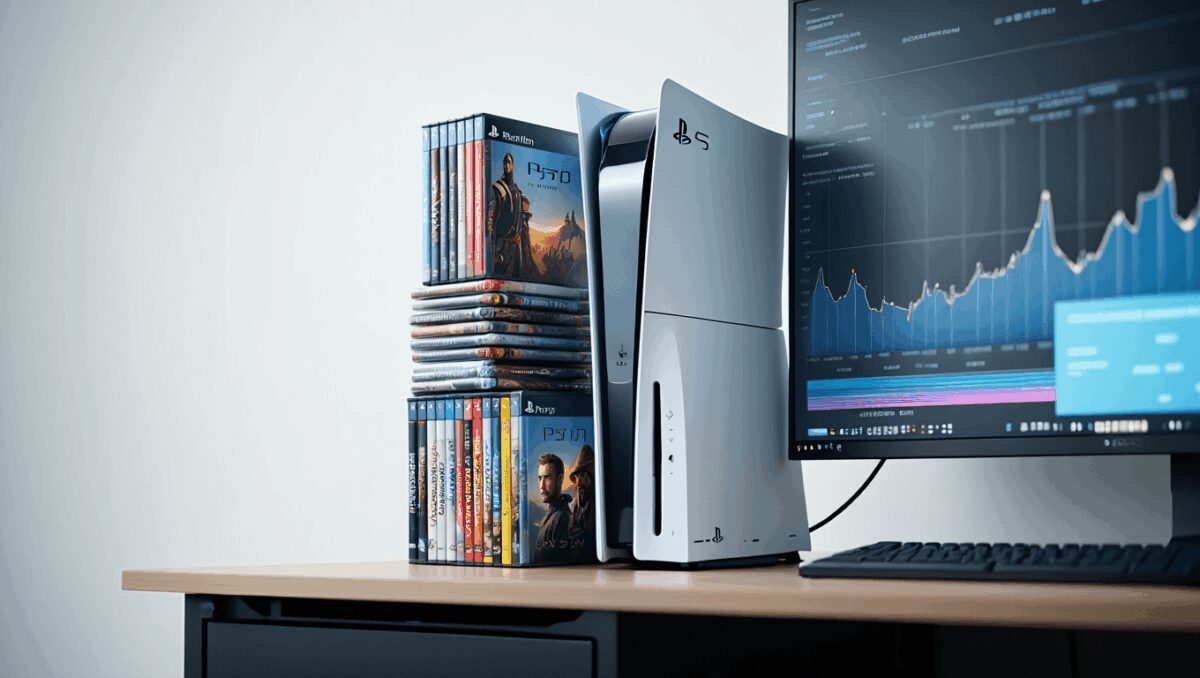
Sony told investors this week it intends to phase out physical PlayStation game discs beginning in 2028 — a move the company says it will implement cautiously. The announcement comes as storage costs and memory shortages are rising, raising fresh questions about game ownership and the expense of keeping modern game libraries accessible.
Sonic the Hedgehog office chair review: playful design boosts comfort and productivity
Razer Seiren V3 Pro outperforms Elgato Wave 3 in weeklong hands-on test
Speaking on Sony’s recent quarterly call, Chief Financial Officer Lin Tao confirmed the company is planning a gradual shift away from manufacturing disc-based copies of PlayStation titles. Executives described the timeline as deliberate, but the signal is clear: future major releases may be digital-first or digital-only.
Gamers have responded strongly online, largely over what they see as a loss of true ownership. Many digital storefront purchases are delivered as **licenses**, not transferable physical products, leaving consumers concerned about resale, long-term access and rights if platforms change policies or shut down.
Xbox backward compatibility lands on PC: four retro games enter testing
SteelSeries Arctis Nova Pro Omni $399: month of testing shows true cross-platform performance
Market data underscore how distribution has already changed. Analyst Mat Piscatella of Circana highlighted a steep fall in blockbuster reach: in 2008 more than 100 PlayStation games sold over 100,000 copies, while this year only a handful reached that threshold. That concentration in a smaller number of top sellers shifts how publishers and platform holders plan releases and inventory.
Why storage matters now
There’s a practical downside to an all-digital future: storage. Modern games are large, and those file sizes have climbed alongside richer assets and larger updates. At the same time, global demand for memory and SSDs — driven in part by the AI boom — has pushed prices higher, narrowing the window for affordable expansion.
To illustrate the scope, I totaled the advertised download sizes for Sony’s first-party PlayStation 5 titles released since the console’s 2020 launch. The combined footprint for those 37 games comes to roughly 2.99 TB.
The PS5 ships with about 1TB of internal storage. Even with an external drive or an approved m.2 NVMe upgrade, storing every first-party release plus the operating system and future patches requires far more space than the console provides out of the box — realistically, a minimum of 4TB of usable storage to avoid constant juggling.
| Item | Approx. size / price |
|---|---|
| Total of 37 Sony first‑party PS5 titles | ~2.99 TB |
| PS5 internal storage | 1 TB |
| Recommended minimum for full library + OS | 4 TB |
| Official 4TB WD Black NVMe (PlayStation‑approved) | About $790 (current retail) |
| Cheaper 4TB option (refurbished listing) | About $420 (Best Buy listing) |
What gamers face in the coming years
Those price figures matter: the officially recommended 4TB NVMe option is selling for several hundred dollars more than it did a year ago, and at current levels it’s roughly in the same neighborhood as a higher‑end console upgrade. Memory makers such as SK Hynix have warned that supply tightness could worsen in 2027, which suggests storage will remain costly well into the period when Sony intends to end disc production.
Put together, these forces leave players between a rock and a hard drive: higher hardware costs to maintain a large digital library, and ongoing anxiety about the permanence of digital purchases. This discussion does not even factor in the likely premium for next‑generation hardware if consumers want backward compatibility or smoother access to legacy titles.
Below is the list of Sony’s 37 first‑party PS5 releases I used in the calculation. Many are major, storage‑heavy titles that illustrate why additional space is becoming essential:
- Astro Bot
- Astro’s Playroom
- Days Gone Remastered
- Death Stranding: Director’s Cut
- Death Stranding 2: On the Beach
- Demon’s Souls (remake)
- Ghost of Tsushima: Director’s Cut
- Ghost of Yōtei
- God of War Ragnarök
- God of War: Sons of Sparta
- Gran Turismo 7
- Helldivers 2
- Horizon Forbidden West
- Horizon Zero Dawn (Remastered)
- Lego Horizon Adventures
- Lost Soul Aside
- Midnight Murder Club
- MLB The Show 21
- MLB The Show 22
- MLB The Show 23
- MLB The Show 24
- MLB The Show 25
- MLB The Show 26
- Nioh Collection (Nioh 1 & 2 Remastered)
- Ratchet & Clank: Rift Apart
- Returnal
- Rise of the Ronin
- Sackboy: A Big Adventure
- Saros
- Spider‑Man (Remastered)
- Spider‑Man 2
- Spider‑Man: Miles Morales
- Stellar Blade
- The Last of Us Part I (remake)
- The Last of Us Part II (Remastered)
- Uncharted: Legacy of Thieves Collection
- Until Dawn (remake)
Sony is framing the move away from discs as cautious and considered. For players, the near‑term realities — expanding storage needs and rising component prices — mean that the transition will carry practical and financial consequences. How publishers, retailers and platform holders handle licensing, access and affordability over the next two years will shape whether an all‑digital PlayStation era is convenient — or costly and contentious.

Annabelle Ink is a gaming journalist and lifelong gamer who lives and breathes video game culture. From console releases to esports tournaments, this dedicated journalist brings insider knowledge and genuine enthusiasm to every review and feature. Her expertise spans multiple gaming platforms, helping readers discover their next favorite game while staying connected to the pulse of the gaming industry.