
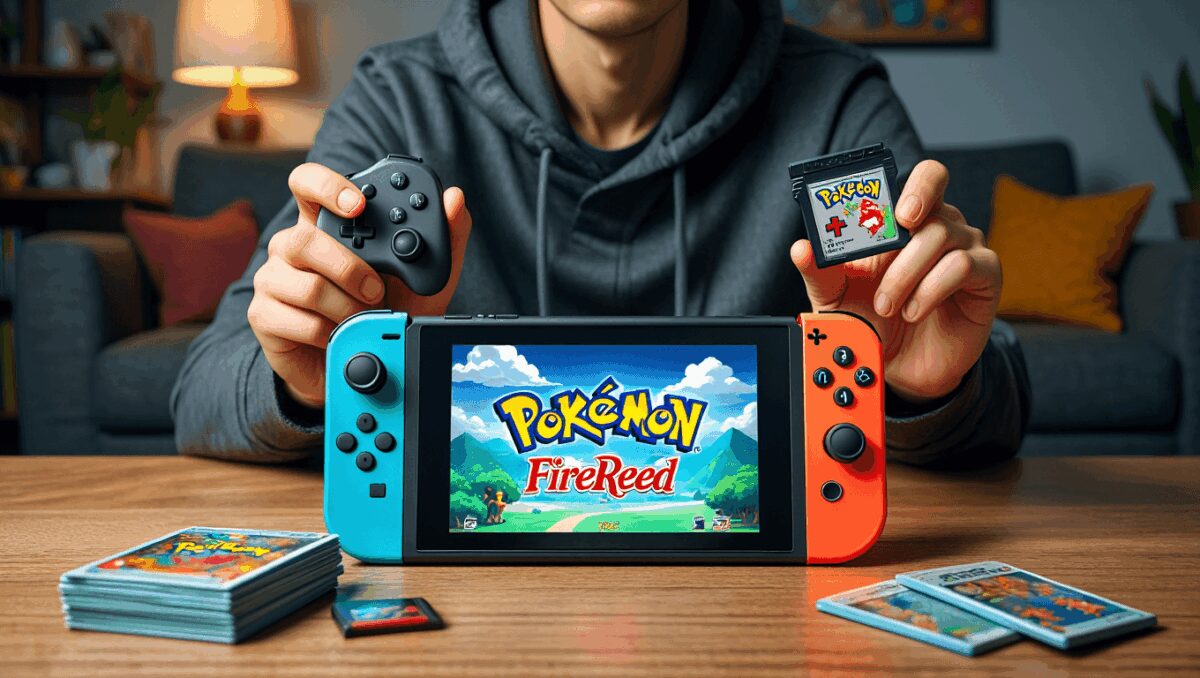
When Nintendo put the Game Boy Advance classic back on the eShop on February 27, 2026, it brought more than a retro title — it reopened a conversation about what modern Pokémon games have lost. After sinking more than 80 hours into the Switch release of Pokémon FireRed, the game’s old-school design feels like a deliberate counterpoint to recent 3D entries.
Resident Evil on Switch 2: our verdict on the one new game worth buying
Mario games on Switch and Switch 2: full lineup to play for Mario Day 2026
FireRed arrives on the current generation of consoles largely unchanged from its 2004 form; the digital price sits around $19 / £16. That fidelity to the original is exactly why the release matters now: it exposes what many players miss in the series’ evolution and raises questions about where developer priorities should lie going forward.
Why the 2D comeback resonates
There’s a texture to the pixel work and a rhythm to the gameplay that modern titles often trade away. Encounters, EXP gains and moment-to-moment pacing in FireRed encourage planning without becoming punitive. Grinding feels purposeful; victories taste earned rather than incidental.
Switch hidden gems under $25: 15 must-play budget games to grab now
Nvidia DLSS 4.5 dominates blind gaming test: 48% of players prefer it to AMD FSR and native
On a personal level I found the game pulls you into the world more effectively. Choosing Charmander, struggling through Brock’s rock-types with a leveled-up Mankey and finally taking the badge felt like the kind of small, satisfying arc that’s rarer in recent Pokémon outings. The 2D presentation leaves space for imagination — audio cues, sprite animation and simple encounters create a surprisingly vivid sense of character.
The modern games vs. FireRed: a quick comparison
- Presentation: 2D sprite art in FireRed often appears richer and more expressive than some contemporary 3D models.
- Difficulty and strategy: FireRed rewards appropriate type matchups and team planning; several modern titles streamline or simplify those mechanics.
- Pacing: The older title balances exploration and progression without feeling bloated or rushed.
- Social play: Local link battles on Switch are solid, but online trading and connectivity remain limited compared with cross-title ecosystems.
- Content portability: Nintendo has said Home support is coming — but not bidirectional, which restricts players who want to import creatures from other games.
All of this suggests that the charm of FireRed isn’t mere nostalgia; the core systems still hold up and in some cases outperform the feel of newer releases.
Playing with friends — the local strength
While I’ve been revisiting the Kanto gyms, local battles with colleagues have been the highlight. Switch-to-Switch connections allowed low-latency fights that felt genuinely competitive, and trading between the FireRed and LeafGreen versions remains a compelling social loop. For players who remember passing cartridges or linking GBAs, the experience is close to that tactile nostalgia — but on modern hardware.
That said, local play is currently a workaround rather than a full solution. The absence of wireless trading functions at launch means completing a national Pokédex is much harder unless Nintendo expands cross-title transfer options.
What still needs fixing
Even faithful ports have rough edges. At the time of release, there’s no wireless trade support built into the re-release, and the promised Home integration will be one-way only — limiting collectors and long-term players who want to consolidate their collections. A frustrating control mapping quirk has also drawn complaints: pressing all four face buttons simultaneously initiates a soft reset, a detail that can ruin progress if it happens at the wrong moment.
Price has been another talking point online. $19 may feel steep to some for an unaltered port, but when judged against original retail pricing and current second-hand GBA market costs, it represents an accessible way for new players — and former owners — to experience the game on Switch hardware.
Implications for GameFreak and the franchise
If there’s a takeaway beyond personal fondness, it’s that simpler design can still satisfy modern audiences. FireRed’s re-release demonstrates demand for titles that prioritize personality, tactical combat and player imagination over expansive 3D worlds and cinematic presentation.
- For players: The Switch version offers classic gameplay on current systems, but completionists face limitations without fuller online and transfer support.
- For Nintendo/Pokémon Company: Revitalizing 2D releases could diversify their catalog and placate fans seeking more strategic, character-driven entries.
- For GameFreak: The success of faithful ports might signal an appetite for new 2D projects alongside large-scale 3D development.
FireRed on Switch is more than a nostalgia trip — it’s a reminder that the series’ strengths once lay in tight design and memorable small moments. Whether GameFreak chooses to return to that formula remains to be seen, but the reaction to this release makes the case for balance: retain the technical ambitions of modern titles, while recapturing the soul of the originals.

Annabelle Ink is a gaming journalist and lifelong gamer who lives and breathes video game culture. From console releases to esports tournaments, this dedicated journalist brings insider knowledge and genuine enthusiasm to every review and feature. Her expertise spans multiple gaming platforms, helping readers discover their next favorite game while staying connected to the pulse of the gaming industry.