
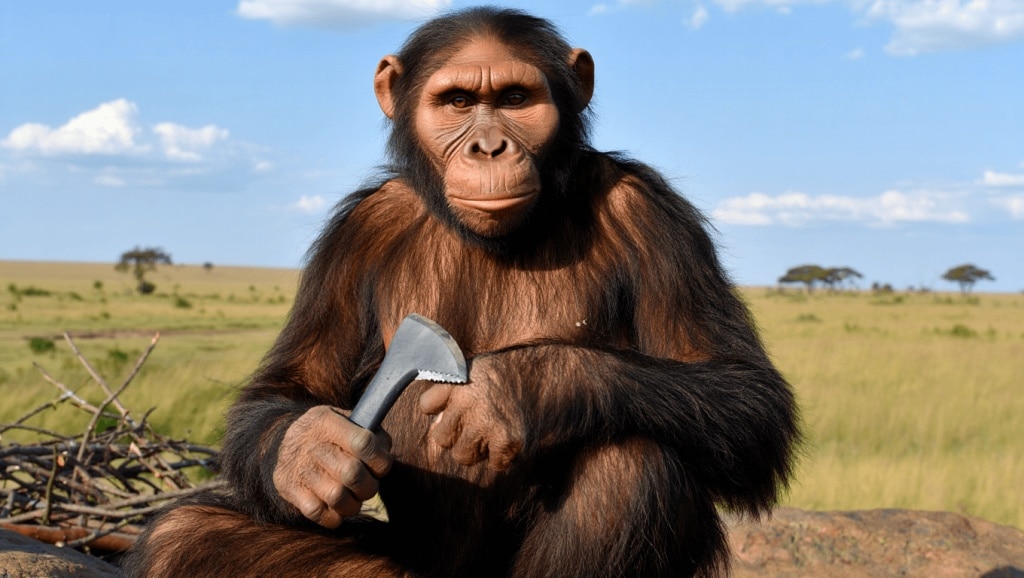
In the heart of Africa, a groundbreaking discovery is challenging long-held beliefs about our early human relatives. Led by the renowned scientists Meave Leakey and her daughter Louise, a pioneering family in the study of human evolution, the find includes remarkably well-preserved remains of an individual from the species Paranthropus boisei, commonly nicknamed “Nutcracker” due to its robust jaw. Yet, the real shock came from the unearthed hands of these ancient beings.
Unveiling the Secrets of Paranthropus Boisei
Are some dog breeds dangerous? The importance of responsible ownership to prevent accidents
Cats’ hidden power: How do they trigger irresistible emotions in humans?
The species Paranthropus boisei has intrigued scientists for years, primarily known for its powerful jaw suited for cracking nuts. However, recent findings published in the journal Nature suggest there’s more to these ancient relatives than previously thought. The team, including researchers from the United States, Canada, and South Africa, found that the bones of the hands indicate capabilities beyond mere seed gathering.
Paranthropus boisei is not directly in the line of Homo sapiens but represents a close branch in our evolutionary tree, equipped with adaptations possibly suitable for object manipulation and basic tool use.
The Intricacies of Paranthropus Hands
World Brownie Day: five irresistible recipes to try at home
Strengthen your relationship in the digital age: key tips to connect better
The primary focus of the study was to compare the hand of the Nutcracker with that of other hominids, such as Homo habilis, to determine if specific traits could have been advantageous for gripping, holding, and even crafting simple tools. Modern technologies such as digital scans, three-dimensional reconstructions, and precise measurements allowed researchers to analyze the tiny bones in detail.
The thumb, in particular, stood out due to its strength and length, bearing similarities to both human and gorilla digits but enabling precise and powerful movements, enhancing the potential for tool manipulation. Not only was the hand special, but the foot structure also indicated that this hominid walked upright, albeit with some climbing characteristics typical of tree-dwelling species.
Expert Insights on Biological Anthropology
Sergio Avena, a researcher from Conicet and a professor of Biological Anthropology at the University of Buenos Aires, shared his perspectives, emphasizing the significance of tool-making in defining the genus Homo. He recalled a pivotal moment when Mary Leakey, in 1959, suggested that members of the genus Paranthropus might have also used tools—a notion largely overlooked until recent affirmations in 2015 by archaeologist Sonia Harmand, who found stone tools dating back 3.3 million years, predating the genus Homo by at least 500,000 years.
The new study suggests that Paranthropus boisei’s anatomical adaptations could support tool use, reigniting debates about their mental capacities for such tasks. Avena highlighted that while the findings suggest potential, they do not confirm actual tool usage, leaving questions about their cognitive abilities open for further investigation.

Daniel Harris is a specialist journalist focused on the crossroads of breaking news, extraordinary history, and enduring legends. With a background in historical research and storytelling, he blends timely reporting with timeless narratives, making complex events and ancient myths resonate with today’s readers. Daniel’s work often uncovers surprising links between present-day headlines and legendary tales, offering unique perspectives that captivate diverse audiences. Beyond reporting, he is passionate about preserving oral traditions and exploring how extraordinary stories continue to shape culture and identity.