
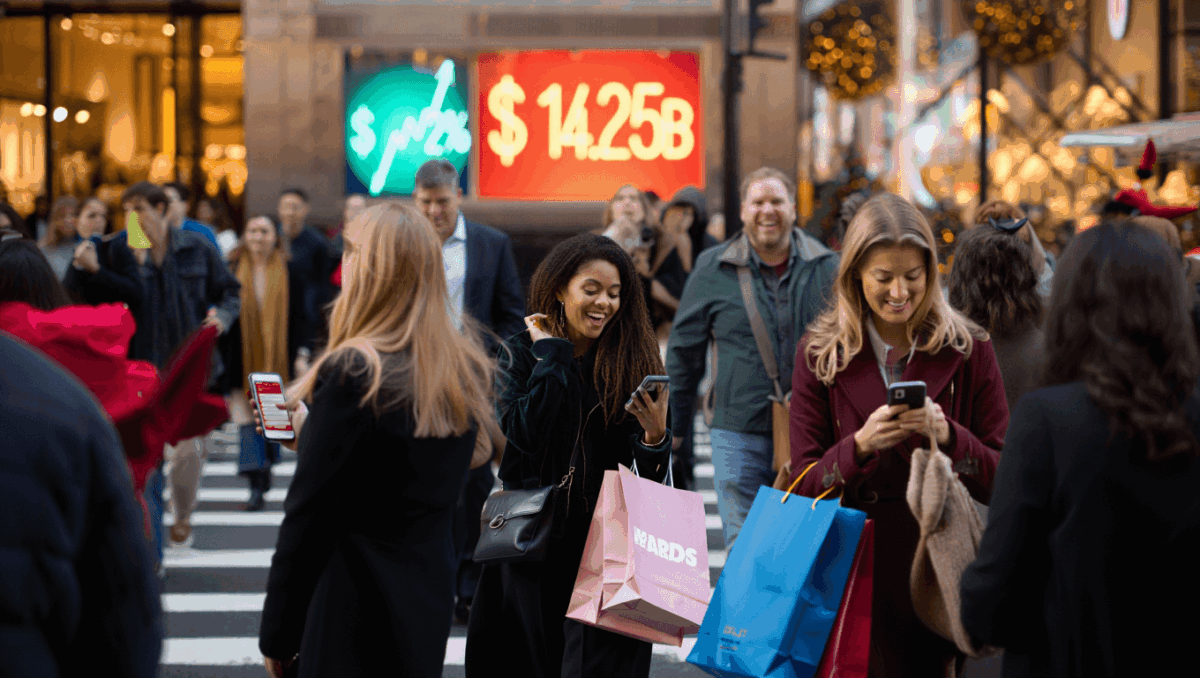
Holiday sales reached a record $14.25 billion on Cyber Monday, marking the biggest online shopping day in history as US retailers capitalize on sustained consumer spending through December. The milestone reveals powerful momentum heading into the final stretch of the 2025 holiday season, despite broader economic headwinds. What’s driving these record-breaking numbers tells an important story about technology’s transformation of retail.
🔥 Quick Facts
- Cyber Monday 2025 hit $14.25 billion in online sales, up 7.1% year-over-year
- Black Friday totaled $11.8 billion, with electronics leading at $3.7 billion (up 12.8% YoY)
- The five-day Thanksgiving weekend generated $44.2 billion in total online spending
- Full 2025 holiday season (November 1 – December 31) forecasted to reach $253.4 billion online
Record-Breaking Cyber Monday Shatters E-Commerce Expectations
TurboTax Expert Full Service opens January 5, 2026, and what new tax law changes mean for your refund will surprise you
Intel stock soars 4% at open with analyst predicting $50 target, here’s why Panther Lake launch today changes everything
The $14.25 billion spent on Cyber Monday 2025 represents more than just a sales milestone. According to Adobe Analytics, this figure exceeded initial projections and cemented Cyber Monday’s position as America’s biggest online shopping day. The 7.1% year-over-year growth outpaced many retail forecasts that predicted a slowdown.
What makes this achievement particularly striking is the economic context. Many analysts expected holiday sales to remain flat due to consumer financial strain and inflation concerns. Instead, retailers witnessed aggressive deal-seeking behavior and strong mobile traffic driving the surge. Shoppers spread purchases across the entire five-day Thanksgiving weekend, with momentum carrying straight through to Cyber Monday.
Electronics and Apparel Lead Category-Specific Growth
Samsung Galaxy S26 Ultra drops at $1,299 but kept one jaw-dropping feature completely secret until February 25
CES 2026 unveils $99 AI memory wearable and smart glasses that finally look normal, but Samsung’s 6K 3D display will blow your mind
The breakdown reveals which product categories captured the most holiday spending. Electronics dominated at $3.7 billion on Black Friday alone, representing a 12.8% increase compared to 2024. Apparel followed with $2.6 billion, up 5.2% year-over-year, while furniture reached $1.8 billion. This pattern reflects consumers prioritizing technology purchases and replacing worn clothing.
Cyber Monday replicated similar category patterns, with electronics maintaining its commanding lead. The strength in electronics suggests consumers remain willing to invest in tech devices despite broader economic uncertainty. Promotions and limited-time deals across major platforms pulled shoppers online, with both established retailers and marketplaces benefiting from the traffic surge.
| Category | Cyber Monday Sales | Year-Over-Year Change |
| Electronics | $3.7 billion | +12.8% |
| Apparel | $2.6 billion | +5.2% |
| Furniture | $1.8 billion | Positive Growth |
| Total 5-Day Weekend | $44.2 billion | +7.7% YoY |
Mobile Commerce and AI Drive Technology-Powered Growth
Technology played a central role in enabling these record sales. Mobile commerce exceeded 90% of net ecommerce growth this year, with shoppers increasingly using smartphones and apps to complete purchases. The shift accelerated dramatically during Cyber Monday weekend, as consumers moved seamlessly between devices while comparing prices and applying discount codes.
Artificial intelligence emerged as another critical technology influencer. AI and agent-referred traffic drove 21% of all holiday orders, according to Salesforce, representing a $263 billion opportunity for retailers. On Black Friday alone, AI influenced $14.2 billion in global online sales, with $3 billion from US shoppers alone. Retailers deployed AI-powered search tools, personalized recommendations, and chatbot assistance to help customers navigate through thousands of deals faster.
Buy Now, Pay Later Spending Surges Amid Consumer Financial Concerns
A concerning trend emerged alongside the record sales: increased reliance on Buy Now, Pay Later (BNPL) financing. Consumers spent over $1 billion on BNPL services during Black Friday and Cyber Monday combined, signaling financial strain despite enthusiasm for holiday shopping. This substantial increase suggests many shoppers stretched budgets or preferred installment payments to manage spending.
The BNPL surge reflects a broader tension in 2025 consumer behavior. While spending reached new records, income concerns and inflation worries persist. Retailers and payment providers capitalized on this dynamic by prominently featuring BNPL options, allowing shoppers to spread holiday purchases across months. Average consumer spending intentions remain down 10% from 2024, yet actual spending behaviors tell a different story.
What Happens When Holiday Sales Push Through December and Beyond?
With $14.25 billion already spent on Cyber Monday alone, the full-season picture becomes clearer. Adobe forecasts the 2025 holiday season (November 1 to December 31) will reach $253.4 billion online, a 5.3% increase year-over-year. This trajectory puts retailers on pace for sustained momentum through Christmas and into the New Year. The question now becomes whether consumers maintain spending intensity or scale back as the season progresses and budgets tighten further.
December still holds significant retail events, including holiday shipping deadlines and final clearance opportunities. In-store traffic also surged dramatically, with 32.6 million shoppers visiting stores on Sunday after Thanksgiving, up 27% from 2024. This omnichannel behavior suggests the holiday sales strength extends beyond ecommerce into physical retail as well. Whether this momentum sustains through Christmas and how technology continues shaping purchasing decisions remains one of the most watched retail stories of the year.
Sources
- Adobe Analytics – Cyber Monday 2025 online spending data and fullseason forecasts
- Reuters – Record shoppers and online sales surge reporting
- Forbes – Category-specific breakdown and retail analysis

Lee Ann Anderson is a technology journalist specializing in consumer tech, digital innovation, and Silicon Valley trends. With a talent for breaking down complex technical concepts into accessible insights, this skilled journalist keeps readers informed about the gadgets, apps, and breakthroughs shaping our digital future. Her coverage bridges the gap between tech enthusiasts and everyday users.