
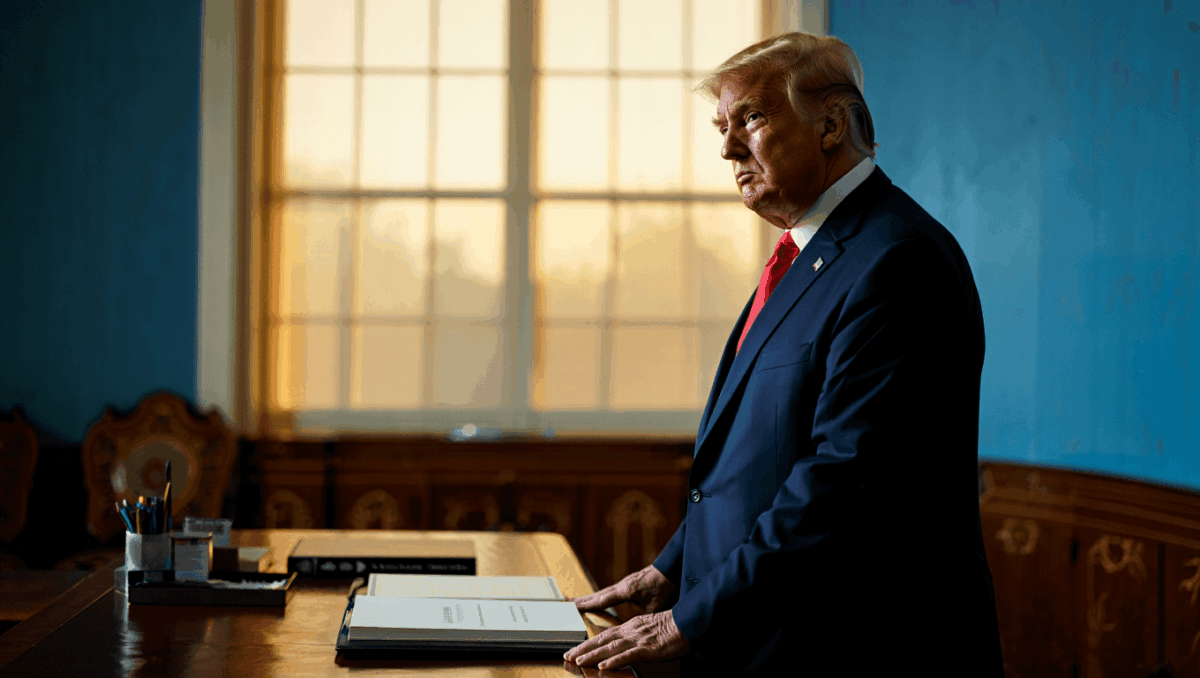
Trump announcement signals major diplomatic momentum for ending the Ukraine-Russia conflict. After two days of intensive talks in Berlin, the US administration reports a breakthrough on security guarantees that could reshape the entire peace settlement. European leaders welcome what they’re calling a “historic” turning point in negotiations.
🔥 Quick Facts
- US envoys Steve Witkoff and Jared Kushner presented NATO Article 5-like security guarantees for Ukraine on December 15, 2025
- Trump stated “we’re closer now than we have ever been” to ending the Ukraine war
- European leaders including Friedrich Merz, Keir Starmer, and Emmanuel Macron welcomed “significant progress” in Berlin
- Territorial disputes over Donbas remain the biggest unresolved issue facing negotiators
Trump Announcement Signals Historic Progress on Ukraine Security Deal
Powerball winner scoops $1.817 billion on Christmas Eve, what happens next will change their life forever
Zendaya shuts down pregnancy rumors after viral London outing with Tom Holland goes too far—here’s what she actually said
The Trump announcement about Ukraine peace talks arriving at their closest point ever marks a turning point in nearly four years of conflict. US President Donald Trump told reporters on Monday that ongoing diplomatic efforts have reached unprecedented momentum. His envoys Steve Witkoff and Trump’s son-in-law Jared Kushner spent eight hours in face-to-face meetings with Ukrainian President Volodymyr Zelenskyy and top European leaders over two consecutive days.
The high-stakes negotiations revealed promising breakthroughs on security guarantees for Ukraine’s future protection. Trump emphasized that European leaders are fully committed to supporting peace efforts. He added that previous conversations with Russian President Vladimir Putin had been productive, suggesting Moscow may be willing to engage on new terms.
NATO-Style Security Package Offers ‘Article 5’ Protection Framework
Arkansas lottery wins $1.817 billion Powerball jackpot on Christmas Eve, here’s what happens to the money
Powerball winner scoops $1.817 billion jackpot on Christmas Eve, but nobody knows who they are yet
The centerpiece of the US proposal involves unprecedented Article 5-like security guarantees for Ukraine without NATO membership. Multiple US officials described the proposed protections as equivalent to NATO’s collective defense pledge, meaning an attack on Ukraine would trigger a coordinated military response from the US and European allies. This represents the first time Washington has offered such strong security commitments to a non-NATO country facing Russian aggression.
German Chancellor Friedrich Merz told reporters the American proposals were “remarkable” and “considerable” in their scope. The package includes commitments from European nations to establish a multinational force that would operate inside Ukraine. This force would support military rebuilding, ensure airspace security, maintain maritime safety, and monitor any ceasefire agreements. The US would provide separate monitoring mechanisms and early warning systems to detect future Russian violations.
| Security Framework Component | Key Details |
| NATO Article 5 Equivalent | Collective defense pledge from US and European partners |
| Multinational Force Ukraine | European-led with US support, operating inside Ukraine |
| Ukrainian Military Strength | Peacetime level maintained at 800,000 personnel |
| Legal Commitments | Armed force, intelligence sharing, and logistical backing if Russia attacks |
Zelenskyy Cautiously Optimistic But Major Rifts Remain Over Territory
Zelenskyy initially praised the security package as “pretty good,” marking his most positive assessment of peace negotiations in months. However, he cautioned that major disagreements persist over the most divisive issue: what happens to occupied Ukrainian territory in eastern Donbas. The Ukrainian president emphasized that Kyiv needed absolute clarity on security guarantees before making any decisions regarding territorial control.
Russian forces currently occupy significant portions of the Donetsk, Luhansk, Zaporizhia, and Kherson regions. The Kremlin demands that Ukraine surrender all of these territories as a precondition for any peace deal. Ukrainian leaders have rejected this demand as unacceptable, stating that territorial decisions must remain exclusively in Kyiv’s hands. Merz reinforced this principle publicly, declaring “only Ukraine can decide about territorial concessions. No ifs or buts.”
European Leaders Rally Behind US-Backed Peace Framework
Nine European nations issued a joint statement welcoming what they described as “significant progress” in Berlin talks. Leaders from Denmark, Finland, France, Germany, Italy, the Netherlands, Poland, Sweden, and Norway praised the US commitment to security guarantees. The statement emphasized that Europe and America would jointly fund Ukraine’s economic recovery and support military rebuilding efforts.
European Commission President Ursula von der Leyen and European Council President António Costa attended the diplomatic discussions, signaling the EU’s full engagement in the peace process. The unified European position strengthens the negotiating position against potential Russian objections. However, some European diplomats privately expressed concerns about whether these guarantees would hold credibility without formal NATO membership protections.
Will the Trump Announcement Lead to an Actual Peace Deal Before Christmas?
The ambitious timeline suggests Christmas 2025 could mark a potential breakthrough or signed agreement. Merz stated that “for the first time since 2022, a ceasefire is conceivable,” adding that “it is now entirely up to Russia whether a ceasefire can be achieved by Christmas.” However, US officials warned that their security guarantee offers were “time-limited” and would not remain on the negotiating table indefinitely.
Multiple unresolved issues could still derail negotiations. The Kremlin has not confirmed acceptance of any security framework. Questions remain about NATO membership prospects, reconstruction financing methods, and the role of frozen Russian assets worth over €200 billion. EU countries remain deadlocked over whether to use these assets as loan collateral for rebuilding Ukraine, with Belgium raising concerns about potential Russian retaliation if participating in such measures.
Sources
- Al Jazeera – Breaking coverage of Trump’s Berlin talks and security guarantee announcements
- Politico Europe – Comprehensive reporting on European leaders’ statements and negotiations
- Reuters – Journalist coverage of security framework details and territorial issues

Daniel Harris is a specialist journalist focused on the crossroads of breaking news, extraordinary history, and enduring legends. With a background in historical research and storytelling, he blends timely reporting with timeless narratives, making complex events and ancient myths resonate with today’s readers. Daniel’s work often uncovers surprising links between present-day headlines and legendary tales, offering unique perspectives that captivate diverse audiences. Beyond reporting, he is passionate about preserving oral traditions and exploring how extraordinary stories continue to shape culture and identity.