
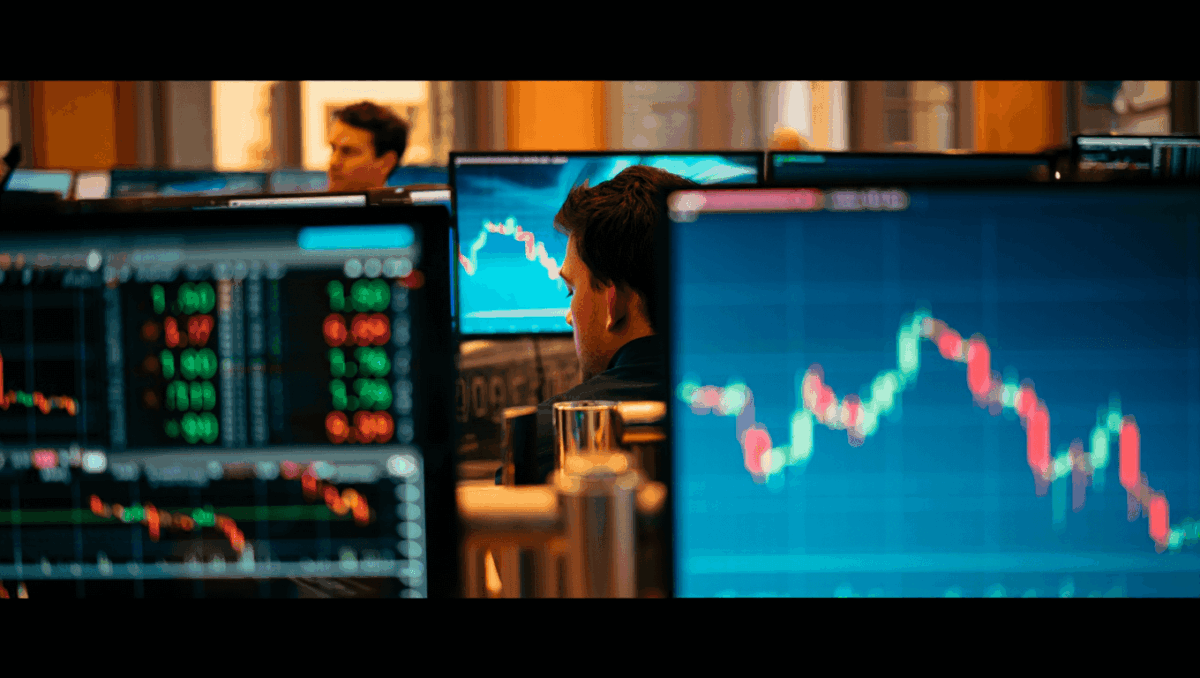
Currency exchange rates are entering new territory today as Federal Reserve easing expectations continue boosting volatility across major pairs. With the Fed having cut rates by 25 basis points in December, markets are now pricing in two additional cuts for 2026, shifting the dollar’s trajectory in ways not seen this decade. This dynamic reshaping of global currency values carries major implications for investors and businesses alike.
🔥 Quick Facts
- The Federal Reserve reduced its benchmark rate to 3.50%-3.75% on December 10, 2025, with a 9-3 vote split
- EUR/USD has experienced a 14% swing in 2025, ranging from 1.02 in January to near 1.16 by late autumn
- Daily forex trading volume reached $9.6 trillion in April 2025, up 28% from $7.5 trillion in the prior period
- Markets currently price in only two 25-basis-point Fed cuts for 2026 according to the CME FedWatch Tool
Fed Rate Cut Sparks Currency Market Restructuring
Intuit emerges as best software stock for 2026 while stock crashes to bargain levels analysts didn’t expect
2026 tax brackets shock Americans with hidden paycheck truth nobody expected
The Federal Reserve’s December decision to cut rates sent shockwaves through forex markets worldwide. The central bank reduced its benchmark rate by 25 basis points amid softening labor data and declining inflation expectations. This action marked a significant shift from the Fed’s rate-hiking cycle that dominated 2024 and early 2025.
Market analysts note that the Fed’s easing cycle fundamentally alters interest rate differentials between the United States and other major economies. When US rates fall relative to global competitors, the dollar typically weakens as investors seek higher returns elsewhere. This dynamic creates both opportunities and challenges for multinational corporations and currency traders.
Dollar Weakness Reshapes Exchange Rate Dynamics
Marcus Lemonis takes CEO role at Bed Bath & Beyond with $25M cost-cutting plan and watch what industry experts are saying about his next move
SPX surges 34 points at open with shocking tech recovery, here’s what caused the unexpected Venezuela rally
The dollar has reversed its earlier strength as easing expectations took hold. According to State Street Global Advisors, softer labor data and the expectation of December rate cuts halted the earlier USD recovery and kept major pairs rangebound. The EUR/USD pair has shown particular volatility, with technical analysts tracking critical support near 1.1650-1.1680 and resistance near 1.20.
Sterling has also exhibited significant movement against major currencies. Reuters reported that sterling hit a 17-year high against the yen following the currency’s outperformance, while the pound remained relatively flat against the dollar at approximately 1.3378. These shifts reflect broader repositioning as traders adjust portfolios for the Fed’s new easing trajectory.
Global Currency Exchange Volatility and Trading Trends
Foreign exchange turnover reached record levels in 2025, demonstrating heightened activity as market conditions shift. The Bank for International Settlements reported that OTC FX market trading climbed to $9.6 trillion daily in April 2025, reflecting a 28% increase from prior-year volumes. This surge reflects increased hedging activity and portfolio rebalancing related to central bank policy divergence.
| Currency Pair | Recent Level | Key Threshold |
| EUR/USD | ~1.17 | Resistance 1.20 |
| GBP/USD | ~1.338 | Range-bound trading |
| USD/JPY | ~180-185 | Divergence play active |
| Daily FX Volume | $9.6 trillion | Up 28% from prior year |
“Two-way volatility likely persists, but the medium-term USD downtrend remains the base case as the Fed leads the G10 in the next easing leg.”
— Union Bank of India, FX Volatility Analysis
Central Bank Divergence Creates Currency Trading Opportunities
The divergence between Federal Reserve easing and the policies of other major central banks stands as a primary driver of currency volatility. The European Central Bank has maintained a more cautious stance, while the Bank of Japan faces different structural pressures. This policy separation creates mismatches in interest rate differentials that drive speculative flows between currency pairs.
Market participants are actively monitoring how the Fed’s 2026 outlook develops. Currently, traders expect two 25-basis-point cuts next year, but this pricing remains fluid as new economic data emerges. The New York Federal Reserve recently noted that modernization in payments, increased stablecoin usage, and tokenized deposits may reshape how foreign exchange trading functions in coming years.
What Currency Trends Should Investors Watch into 2026?
Looking ahead, investors should monitor key economic releases and central bank communications for directional cues. The December 21, 2025 trading week marks an important juncture as markets position for year-end and forward guidance from global policymakers. Interest rate differentials, inflation data, and labor market conditions will determine whether the dollar continues weakening or stabilizes around current levels.
Technical analysts emphasize watching critical support and resistance levels for major pairs. The EUR/USD pair trading near 1.17 faces potential moves toward either 1.20 on the upside or 1.1650 on the downside based on economic developments. Currency traders also track commodity prices and emerging market flows, as these often signal shifts in risk sentiment that precede broader forex movements.
Sources
- Federal Reserve – December 2025 FOMC official statement and projections
- Trading Economics – Current Federal Reserve rate and economic indicators
- Bank for International Settlements – April 2025 OTC foreign exchange turnover data

Patrick Graham is a business and finance journalist translating Wall Street’s complexities into stories that matter to everyday readers. With extensive experience in financial journalism and economic analysis, this expert journalist provides sharp insights on market trends, corporate developments, and the economic forces affecting daily life. His reporting helps readers make sense of the business world’s biggest moves.