
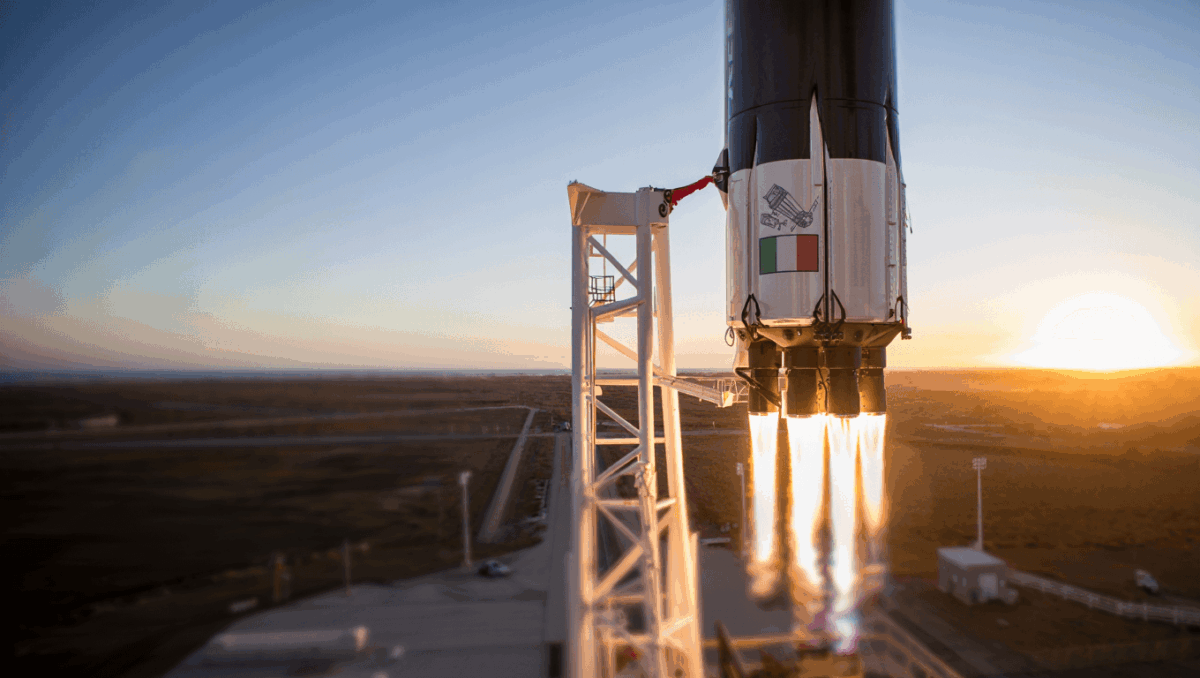
SpaceX launches its first mission of 2026 tonight, sending a 1,700-kilogram Italian Earth observation satellite to orbit from Vandenberg Space Force Base in California. The Cosmo-SkyMed Second Generation Flight Model 3 (CSG-FM3) spacecraft represents a critical advancement for Italy’s dual-use reconnaissance and civilian monitoring capabilities. Liftoff is targeted for 6:09 p.m. PST on January 2, 2026.
🔥 Quick Facts
- SpaceX’s first 2026 mission launches from Space Launch Complex 4E at Vandenberg on January 2
- The CSG-FM3 satellite weighs 1,700 kilograms and deploys into a 620-kilometer altitude sun-synchronous orbit
- Falcon 9 booster B1081 completes its 21st flight after supporting NASA missions including Crew-7 and PACE
- Italy’s Ministry of Defense and Italian Space Agency jointly manage the constellation for surveillance and emergency response
SpaceX Launch Kicks Off 2026 Operations
Intuit emerges as best software stock for 2026 while stock crashes to bargain levels analysts didn’t expect
2026 tax brackets shock Americans with hidden paycheck truth nobody expected
SpaceX is beginning 2026 with a Falcon 9 launch from California’s westernmost spaceport. The mission was originally scheduled for December 27, 2025, but experienced delays due to hydraulic issues with the launch pad hold-down clamps. SpaceX resolved the technical problem, clearing the way for tonight’s liftoff.
The Falcon 9 booster (B1081) will fly its 21st mission after previously supporting high-profile payloads. Following deployment of the satellite roughly 17 minutes after launch, the reusable first stage will attempt a powered landing at Landing Zone 4, continuing SpaceX’s reliability record.
Understanding the COSMO-SkyMed Constellation Architecture
Marcus Lemonis takes CEO role at Bed Bath & Beyond with $25M cost-cutting plan and watch what industry experts are saying about his next move
SPX surges 34 points at open with shocking tech recovery, here’s what caused the unexpected Venezuela rally
The Cosmo-SkyMed Second Generation represents Italy’s modernized approach to Earth observation. Each satellite in the constellation features synthetic aperture radar (SAR) technology operating in X-band frequencies, allowing imaging through clouds and darkness—essential for emergency response and security applications. The CSG-FM3 is the third of four planned second-generation satellites.
The constellation combines four operational satellites: two first-generation spacecraft and two second-generation vehicles already in orbit. Manufactured by Thales Alenia Space, each CSG satellite features a five-year design lifespan and operates from a circular sun-synchronous dawn-dusk orbit at 619.6 kilometers altitude. This orbital position enables consistent ground coverage and lighting conditions for consistent imaging performance.
Italy’s Strategic Investment in Space-based Surveillance
| Mission Parameter | Details |
| Satellite Mass | 1,700 kilograms |
| Orbital Altitude | 620 kilometers (385 miles) |
| Imaging Capability | Synthetic Aperture Radar (X-band) – all-weather, day/night |
| Design Lifespan | 5 years |
| Constellation Total | 4 operational satellites (2 first-gen + 2 second-gen + FM3) |
Italian Defense Minister Guido Crosetto emphasized the satellite program’s strategic importance. According to ministry officials, the Cosmo-SkyMed constellation exemplifies successful public-private collaboration between defense needs, the Italian Space Agency (ASI), and national industry. The constellation supports environmental monitoring, disaster response, and national security operations across Italy and Europe.
Funding comes jointly from the Italian Space Agency and the Italian Ministry of Defense, underscoring the dual-use nature of the program. These satellites provide critical Earth observation data for everything from natural disaster assessment to infrastructure monitoring and strategic intelligence gathering.
Booster Reusability and Landing Zone Performance
Tonight’s launch features Falcon 9 booster B1081, which has previously launched multiple high-profile NASA missions including Crew-7, PACE, and TRACERS. The reusable first stage will complete its 21st flight when it targets a landing at Landing Zone 4 near Vandenberg approximately 8.5 minutes after liftoff.
If successful, this landing will mark the 31st successful recovery at Landing Zone 4 and the 554th Falcon booster landing overall across SpaceX’s history. The company’s reusable rocket architecture continues to demonstrate its cost-effectiveness and reliability advantages, which have become central to modern launch operations.
What Makes This SpaceX Launch a Significant Start to 2026?
SpaceX’s choice to open 2026 with an international commercial mission underscores the company’s role as the world’s most active spaceport operator. The Falcon 9 remains one of the world’s most frequently flown rockets, with missions supporting government, commercial, and international payloads. Tonight’s launch demonstrates SpaceX’s ability to execute rapid-turnaround operations after overcoming technical challenges.
The COSMO-SkyMed FM3 mission carries strategic importance beyond its commercial aspects. Italy’s commitment to this next-generation Earth observation constellation reflects broader European and NATO-allied interests in space-based intelligence and environmental monitoring. As geopolitical tensions continue and climate-related disasters increase in frequency, reliable access to high-resolution satellite imagery becomes increasingly vital for national and international security operations.

Patrick Graham is a business and finance journalist translating Wall Street’s complexities into stories that matter to everyday readers. With extensive experience in financial journalism and economic analysis, this expert journalist provides sharp insights on market trends, corporate developments, and the economic forces affecting daily life. His reporting helps readers make sense of the business world’s biggest moves.