
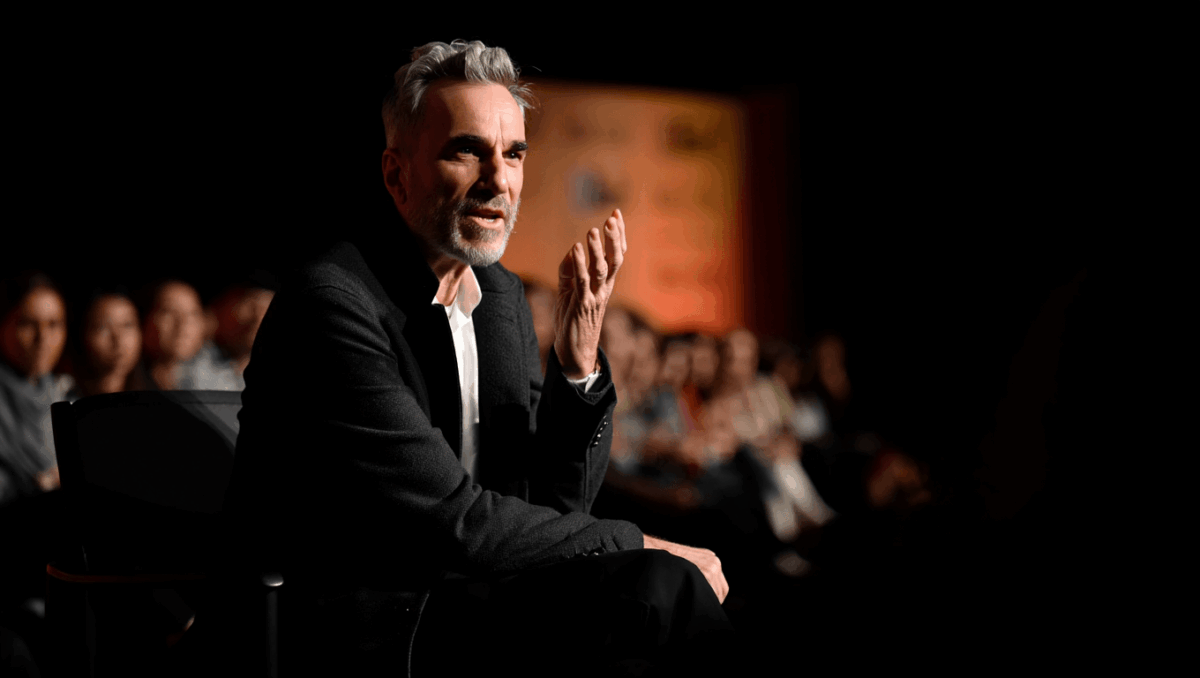
Daniel Day-Lewis broke his 8-year silence with a fiery defense of method acting during a rare public appearance at the London Film Festival in October 2025. The three-time Oscar winner mounted an passionate critique of how his craft has been misrepresented and attacked by critics in recent years.
🔥 Quick Facts
- Day-Lewis returned to acting after 8 years away with Anemone, directed by his son Ronan Day-Lewis
- At BFI Southbank in London on October 15, 2025, he called method acting an ‘easy target’ for critics with ‘little or no understanding’
- The 125-minute psychological drama marked Day-Lewis’ first film since Phantom Thread in 2017
- He emphasized that method acting is ‘just a way of freeing yourself’ to accept spontaneity as another person
The Ultimate Actor’s Actor Steps Back Into the Light
America’s Next Top Model documentary drops today on Netflix with shocking revelations
Dana Eden dies at 52, Tehran producer found dead in Athens hotel
When Daniel Day-Lewis announced his retirement in 2017, few expected to see him on camera again. His representatives released a statement saying he ‘will no longer be working as an actor’ following Phantom Thread. Fast forward to 2024, and Day-Lewis surprised the world by confirming his comeback in September alongside his son Ronan Day-Lewis, a writer and artist making his feature directorial debut.
The project, titled Anemone, reunited father and son in an ambitious psychological drama. Day-Lewis not only starred but also collaborated with Ronan on the screenplay. The film explores complex family dynamics through the story of two brothers, Ray and Jem, who served as British paramilitaries in Northern Ireland in the 1980s. Sean Bean co-stars alongside Day-Lewis in the 125-minute film.
Tommy Lee Jones’ daughter was pregnant before her tragic death, court docs reveal
J Cole announces The Fall-Off world tour, first global dates in decades
Speaking to Rolling Stone last month, Day-Lewis declared that he ‘never intended to retire’ and ‘would have done well to just keep my mouth shut’ about his decision to step away. This candid admission set the stage for his London appearance.
A Fierce Defense of Method Acting at the London Film Festival
On Wednesday, October 15, 2025, Day-Lewis appeared on stage at BFI Southbank for an extended Screen Talk conversation with renowned film critic Mark Kermode. The appearance drew thunderous applause from a packed audience eager to hear from the reclusive icon.
During the 73-minute session, Day-Lewis addressed what he sees as a fundamental misunderstanding of his craft. He stated that ‘recent commentary’ about method acting ‘is invariably from people who have little or no understanding of what it actually involves’. He characterized the discourse surrounding the technique as seeming ‘as if it’s some specious science that we’re involved in or a cult’.
The actor expressed frustration that people often describe his approach as if he’s ‘out of my mind’, claiming many believe he’s ‘mad as a March hare’. Method acting, he clarified, is simply ‘just a way of freeing yourself’ in order to be spontaneous and ‘able to accept whatever passes through you’ as another person.
Defending His Legacy While Breaking Down Misconceptions
Day-Lewis provided powerful examples of his method work during the conversation. Discussing a pivotal monologue in Anemone, he described his character’s confession to his brother about exacting revenge on a clergyman who abused him as a boy, ‘with the help of Guinness, curry and a box of laxatives’. He laughed when recounting why the scene affected him so deeply: ‘I don’t know why I found it so funny. The idea of shitting on a priest. It’s not normal. But I just thought it was hilarious and couldn’t stop laughing’.
This candor reveals Day-Lewis’ approach: method acting isn’t about psychological torment but about genuine emotional connection. Critics have mischaracterized the technique as ‘behaving like a lunatic,’ but the actor insists this represents a fundamental misreading of what the work entails.
Reflecting on his career, Day-Lewis acknowledged that some of his most celebrated roles would be impossible to cast today. He discussed his first Oscar win for My Left Foot, in which he portrayed artist Christy Brown, who had cerebral palsy. ‘Quite obviously, I would not be able to make that now, and for good reason’, he said, noting that the casting was ‘already questionable’ even in 1989.
Cinema vs. Theatre and the Elitism of Performance Art
Beyond defending method acting, Day-Lewis mounted a broader critique of how society values different performance mediums. He expressed frustration at what he perceives as ‘elitism in this country that theatre is the superior form’. Growing up, he had been trained to believe that theatre work represented the pinnacle of acting aspiration. ‘Then there’s films: bit dodgy. Television: like, really?’
Day-Lewis argued that theatre is ‘an elite cultural form’ because only privileged audiences can afford tickets. Cinema, by contrast, ‘the great thing about the cinema is that everyone could buy a ticket’. This democratization of storytelling makes film profoundly important to him, especially compared to the ‘relatively small group of people’ who can access expensive theatre productions.
What Makes This London Appearance Unforgettable for Fans and Critics?
Day-Lewis’ London appearance stands as one of the year’s most significant cinema moments. The three-time Academy Award winner rarely addresses the public directly, making his willingness to engage with tough questions about his career and craft remarkable. His appearance coincided with the UK premiere of Anemone on Tuesday night, placing the film at the center of industry conversation.
The actor demonstrated humility about critical reception while defending his artistic choices. ‘You sort of try and wear a cap of defiance but it doesn’t fit that well’, he admitted about the film’s mixed reviews. He emphasized that while ‘it matters hugely to us’, filmmakers must resist ‘trying to second-guess what people will think’ because that approach has become ‘an epidemic proportion disease in cinema’. Both he and Ronan cautioned against catering to public taste, insisting that authentic artistry requires following your vision regardless of commercial calculation.
Sources
- The Guardian – Comprehensive interview with Daniel Day-Lewis at BFI London Film Festival, October 15, 2025
- Variety – Coverage of method acting defense and Anemone details
- Hollywood Reporter – Screen Talk details and career retrospective

Jessica Morrison is a seasoned entertainment writer with over a decade of experience covering television, film, and pop culture. After earning a degree in journalism from New York University, she worked as a freelance writer for various entertainment magazines before joining red94.net. Her expertise lies in analyzing television series, from groundbreaking dramas to light-hearted comedies, and she often provides in-depth reviews and industry insights. Outside of writing, Jessica is an avid film buff and enjoys discovering new indie movies at local festivals.