
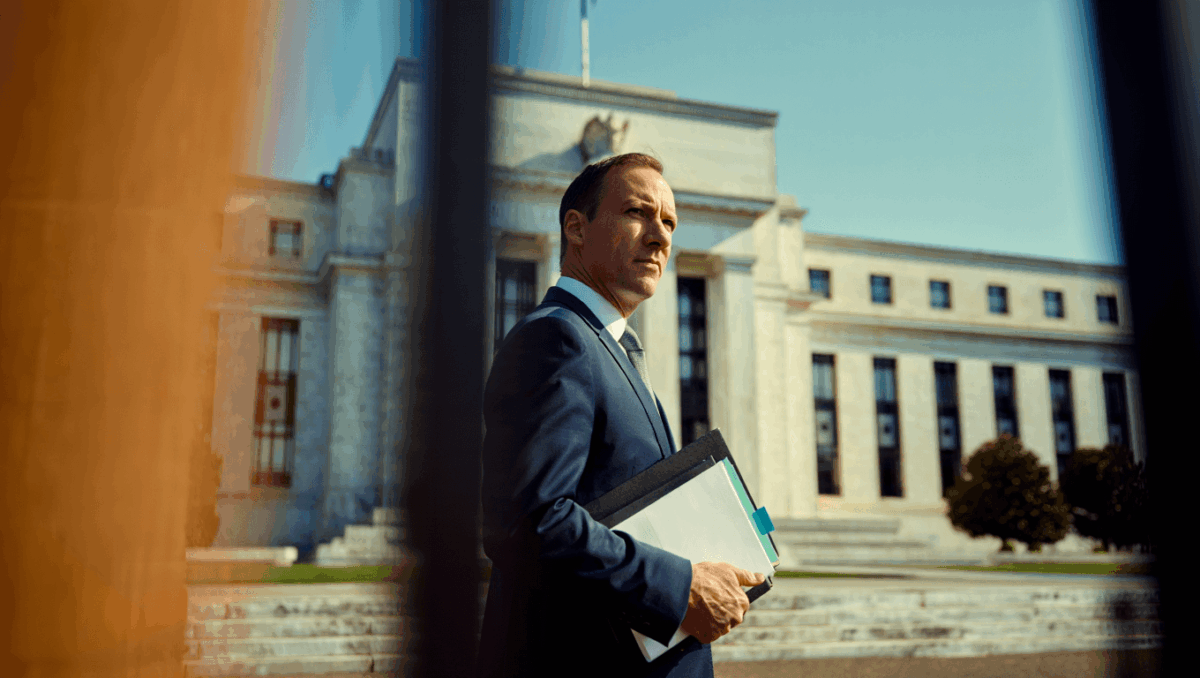
Loans are getting cheaper after the Federal Reserve cut interest rates for the third time this year. Mortgage rates have dropped to 6.12% and personal loans are now at 12.23%, giving borrowers meaningful relief. Here’s how this latest Fed decision could impact your wallet today.
🔥 Quick Facts
- Federal Reserve cut rates by 0.25% in December 2025, lowering the federal funds rate to 3.50% to 3.75%
- 30-year mortgage rates dropped to 6.12%, a significant improvement from the 7%-plus rates seen in late 2024
- Personal loan rates fell to 12.23%, down from 12.29% at the end of 2024
- This marks the third consecutive rate cut since September 2024, with cumulative reductions totaling 1.75 percentage points
Understanding How the Fed’s Rate Cut Affects Your Loans
Intuit emerges as best software stock for 2026 while stock crashes to bargain levels analysts didn’t expect
2026 tax brackets shock Americans with hidden paycheck truth nobody expected
The Federal Reserve reduced its benchmark interest rate by 25 basis points in its December 2025 meeting, a move designed to keep the economy stable heading into 2026. Short-term borrowing costs like credit cards and home equity loans felt most of the immediate impact, with lower rates trickling down to consumers. However, mortgage rates follow a different path than the Fed’s overnight lending rate.
Many Americans wonder why mortgage rates don’t drop immediately when the Fed cuts. That’s because mortgage rates are primarily influenced by long-term Treasury yields and inflation expectations, not the Fed funds rate directly. Mortgage lenders look at 10-year Treasury bonds to price their loans, which means economic signals beyond the Fed’s decision shape your home loan rates. For personal loans, the relationship varies by lender and loan type.
Marcus Lemonis takes CEO role at Bed Bath & Beyond with $25M cost-cutting plan and watch what industry experts are saying about his next move
SPX surges 34 points at open with shocking tech recovery, here’s what caused the unexpected Venezuela rally
Fixed-rate personal loan borrowers typically won’t see changes to their existing interest rates when the Fed moves. However, if you’re shopping for a new personal loan, lenders may offer better rates in response to the lower Fed funds rate.
| Loan Type | Current Rate | Fed Impact |
| 30-Year Fixed Mortgage | 6.12% | Indirect (influenced by Treasury yields) |
| Personal Loans | 12.23% | Some lenders may lower new loan offers |
| Credit Cards | Variable rates | Direct impact, rates typically decrease |
| Home Equity Lines (HELOC) | Variable rates | Direct impact, rates typically decrease |
Credit Cards and Home Equity Loans See Immediate Relief
The Fed’s December rate cut delivers immediate benefits for credit card holders and homeowners with variable-rate borrowing. Credit card rates respond directly to Federal Reserve decisions because most cards use a variable rate structure tied to the prime rate. As the Fed lowers its benchmark rate, banks reduce their prime lending rate, which then flows to credit card balances.
Home equity lines of credit (HELOCs) follow a similar pattern, offering faster relief than mortgages. If you carry a balance on your credit cards or have an open HELOC, watch for rate reductions in your next billing cycle or account statement. USA Today reported that “the Fed’s rate cuts should result in lower credit card and home equity loan rates,” along with lower borrowing costs for small businesses using variable-rate funding.
The cumulative impact matters: since September 2024, the Federal Reserve has slashed rates by 1.75 percentage points total, representing substantial savings for credit card debt and revolving lines. A consumer carrying a $5,000 credit card balance could see their monthly interest charges decrease noticeably as rates decline.
Why Mortgage Rates Didn’t Fall as Expected
Here’s the puzzle that confuses many homebuyers: the Fed cut rates, yet mortgage rates actually moved upward in the days following the announcement. This happens because Treasury yields rise independently of Fed decisions, driven by market expectations about inflation and economic growth. Mortgage lenders price loans based on what 10-year Treasury bonds yield, not the Fed’s overnight lending rate.
Federal Reserve officials acknowledged the complexity in their December statement, noting that “uncertainty about the economic outlook” affects how markets respond to rate cuts. Sometimes rate cuts inspire confidence in the economy, causing investors to demand higher Treasury yields for their bonds. Other times, economic concerns push Treasury yields lower. The bottom line: a Fed rate cut doesn’t guarantee mortgage rates fall.
Looking ahead, experts predict mortgage rates could reach the upper-5% range by late 2026 if current trends continue. CNN reported that the Fed’s actions explain “why you’re not seeing much of a difference in your loans” despite three rate cuts this year. Consumers should focus on variable-rate debt for immediate relief and monitor Treasury yields separately from Fed announcements for mortgage outlook.
Personal Loan Rates Drop to Lowest Level This Year
Personal loan rates have fallen to 12.23% in December 2025, down slightly from 12.29% at the end of 2024 and significantly lower than the starting rate of 11.93% in January 2024. While this represents gradual improvement, some well-qualified borrowers have found starting rates below 6.5% at elite lenders. The decline reflects the Fed’s cumulative rate cuts trickling through the lending system.
Fixed-rate personal loans don’t automatically adjust when the Fed moves because you locked in your rate at origination. Your monthly payment stays the same until payoff. However, new loan applicants benefit from lower rates when shopping among lenders. CNBC noted that although Fed cuts don’t guarantee lower borrowing costs, personal loans with fixed rates won’t change for existing borrowers.
The best strategy involves shopping multiple lenders if you need a personal loan soon. Some banks move faster than others to reduce rates after Fed cuts. Credit unions, in particular, sometimes offer better personal loan rates than traditional banks because they operate as member cooperatives.
What Should You Do to Maximize These Lower Rates?
If you carry credit card debt, contact your card issuer to ask when your rate decreases will take effect. Most issuers gradually reduce rates within one to three billing cycles. Paying down your balance now positions you to save more as rates decline. Consider consolidating high-interest credit card debt into a personal loan at 12.23% if you qualify, potentially saving hundreds in interest.
For mortgage shoppers, don’t wait indefinitely hoping rates fall further. At 6.12%, rates remain elevated by historical standards but offer better value than 2024’s 7%-plus rates. If you plan to refinance an existing mortgage, monitor 10-year Treasury yields rather than waiting for the Fed to cut again. Lock in a rate when Treasury yields dip, not necessarily after Fed announcements.
Small business owners should explore variable-rate funding options now that the Fed has trimmed rates. Small-business lending rates respond more directly to Federal Reserve decisions, making this an opportune moment to secure lines of credit or refinance existing debt before rates potentially stabilize.
Will the Federal Reserve Cut Rates Again in 2026?
The Federal Reserve faces competing pressures heading into 2026, making future rate cuts uncertain. Inflation concerns could force a pause in cuts if prices accelerate, while economic weakness could prompt additional reductions. Fed officials signaled limited enthusiasm for aggressive 2026 cuts compared to 2024’s pace, suggesting rates may stabilize.
Economists emphasize that the “risk-free path” for monetary policy is becoming harder to find, according to Federal Reserve officials. If the economy strengthens more than expected, the Fed might keep rates steady. If growth slows sharply, rate cuts could resume. Your best move involves refinancing variable-rate debt now while rates are lower and locking in fixed rates before the Fed’s next meeting in January 2026.

Patrick Graham is a business and finance journalist translating Wall Street’s complexities into stories that matter to everyday readers. With extensive experience in financial journalism and economic analysis, this expert journalist provides sharp insights on market trends, corporate developments, and the economic forces affecting daily life. His reporting helps readers make sense of the business world’s biggest moves.