
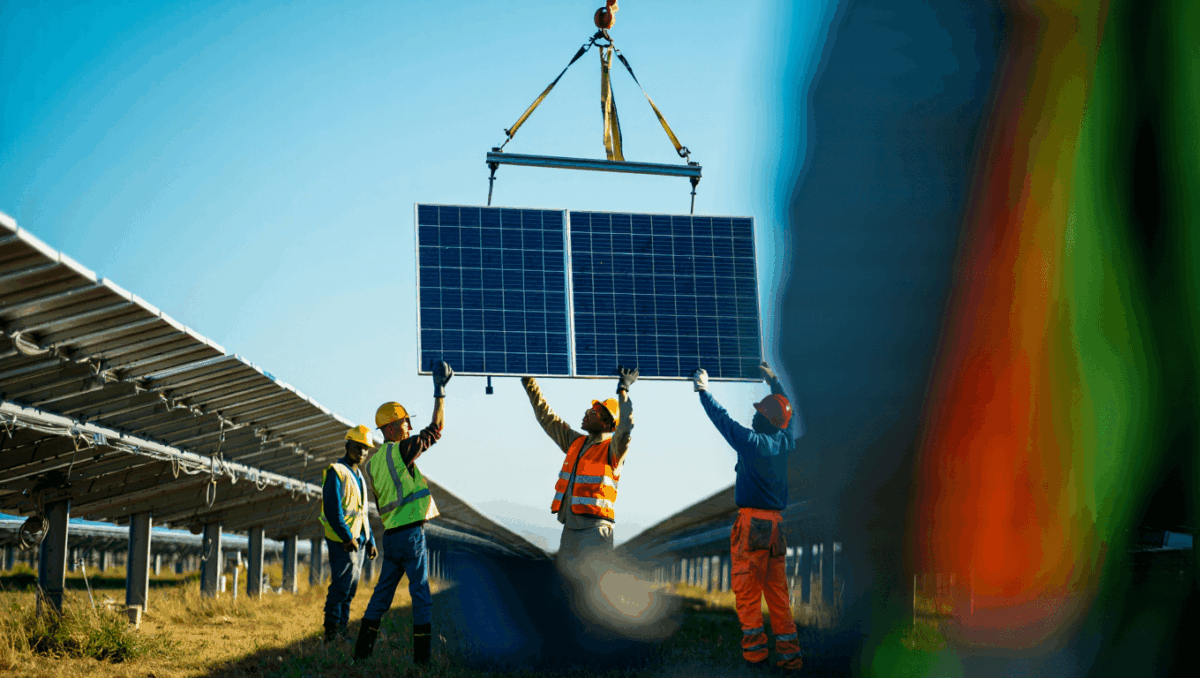
Energy sector momentum accelerates today as Scatec launches its 273 MW Grootfontein solar plant into commercial operation, signaling a major breakthrough for renewable capacity in emerging markets. Simultaneously, the European Union announced a sweeping grid modernization strategy to eliminate bottlenecks choking renewable expansion across the continent. Together, these developments illustrate how infrastructure investment and clean generation are finally synchronizing.
🔥 Quick Facts
- Scatec’s 273 MW Grootfontein project begins commercial operation today in South Africa, producing 700 GWh of clean energy annually
- The plant will eliminate 630,000 tonnes of CO2 emissions yearly, becoming the largest co-located solar cluster in the Western Cape region
- EU Energy Commissioner Dan Jorgensen warned of billions in losses from grid bottlenecks preventing renewable energy matching supply with demand
- Global grid investment reached $470 billion in 2025, with Europe needing €800 billion in transmission infrastructure over the coming years
Scatec Achieves Major Milestone in South African Solar Expansion
Intuit emerges as best software stock for 2026 while stock crashes to bargain levels analysts didn’t expect
2026 tax brackets shock Americans with hidden paycheck truth nobody expected
Scatec ASA, a leading renewable energy provider, formally commenced commercial operations at the Grootfontein solar facility on December 6, 2025. The 273 MW installation represents the first solar project to reach commercial operation under South Africa’s Round 5 REIPPPP program, marking a significant achievement for the renewable sector in sub-Saharan Africa.
The project operates under a 20-year power purchase agreement (PPA), ensuring long-term revenue stability and energy supply to the grid. Scatec retains 51% equity ownership, partnering with H1 Holdings (46.5% stake) and the Grootfontein Local Community Trust (2.5%), creating local economic participation in the clean energy transition. The company will provide ongoing Operations & Maintenance services throughout the project’s lifespan.
Environmental Impact and Capacity Metrics Reshape Energy Security
Marcus Lemonis takes CEO role at Bed Bath & Beyond with $25M cost-cutting plan and watch what industry experts are saying about his next move
SPX surges 34 points at open with shocking tech recovery, here’s what caused the unexpected Venezuela rally
The Grootfontein facility generates 700 GWh of clean electricity annually, making it one of South Africa’s most productive solar installations relative to capacity. This output translates to avoiding 630,000 metric tonnes of CO2 emissions every year, offsetting approximately 40 years of emissions from 135,000 passenger vehicles, according to environmental standards.
Positioned in South Africa’s Western Cape region, the plant leverages optimal solar irradiance and technical infrastructure to maximize generation efficiency. The co-located cluster design concentrates three solar units across a single site, reducing transmission losses and grid connection complexity.
| Project Parameter | Specification |
| Total Capacity | 273 MW |
| Annual Generation | 700 GWh |
| CO2 Abatement (Annual) | 630,000 Metric Tonnes |
| PPA Term | 20 Years |
| Location | Western Cape, South Africa |
EU Grid Package Addresses Infrastructure Crisis Constraining Renewable Growth
European leaders are implementing a coordinated infrastructure strategy after discovering that 1,700 GW of renewable energy capacity remains blocked by grid constraints across the continent. €7.2 billion in renewable generation was curtailed in 2024 within just seven European countries due to lack of transmission capacity, indicating systemic grid inadequacy. Energy Commissioner Dan Jorgensen stated the “biggest danger” to decarbonization lies in slow grid construction timelines.
The EU’s Grids Package initiative establishes a top-down approach where Brussels develops strategic plans identifying investment gaps and coordinating project deployment across member states. This represents the first unified European strategy to address transformers, cables, switchgear, and cross-border interconnection bottlenecks that currently prevent efficient renewable energy distribution. Germany alone faces €210 billion in new grid investment requirements by 2037.
Investment Scale and Global Momentum Reshape Energy Infrastructure Markets
Global grid capital spending achieved $470 billion in 2025, marking the first time infrastructure investment exceeded this threshold and representing double-digit growth for the second consecutive year. Europe accounts for a substantial share of this deployment, with over €584 billion mobilized across the continent for renewable integration and transmission expansion.
The European Commission announced 235 cross-border energy projects just days ago, addressing interconnectivity gaps that fragment the continent’s electricity system. These initiatives span 113 electricity transmission lines, offshore wind integration, and smart grid deployments, designed to create a unified European energy market capable of accommodating rapid renewable growth.
What Does Today’s Energy Announcement Mean for Global Markets?
The simultaneous launch of Scatec’s 273 MW facility and the EU’s grid modernization mandate signal that renewable energy deployment no longer awaits infrastructure completion. Instead, capital flows toward projects addressing both generation and transmission gaps. The PPA-backed investment model pioneered by Scatec reduces political risk and attracts institutional capital, while the EU’s coordinated approach creates government certainty that grid capacity will exist to absorb growing renewable supply.
For investors and utilities, this convergence means renewable energy projects increasingly require grid-ready locations and long-term offtake agreements to secure financing. Emerging market operators like South Africa benefit from this capital reallocation, as international players redirect funds toward regions with clear regulatory frameworks and infrastructure investment. The energy sector’s future belongs to integrated players managing generation through transmission, evidenced by Scatec’s expanded footprint across Africa, Asia, and Europe.

Patrick Graham is a business and finance journalist translating Wall Street’s complexities into stories that matter to everyday readers. With extensive experience in financial journalism and economic analysis, this expert journalist provides sharp insights on market trends, corporate developments, and the economic forces affecting daily life. His reporting helps readers make sense of the business world’s biggest moves.