
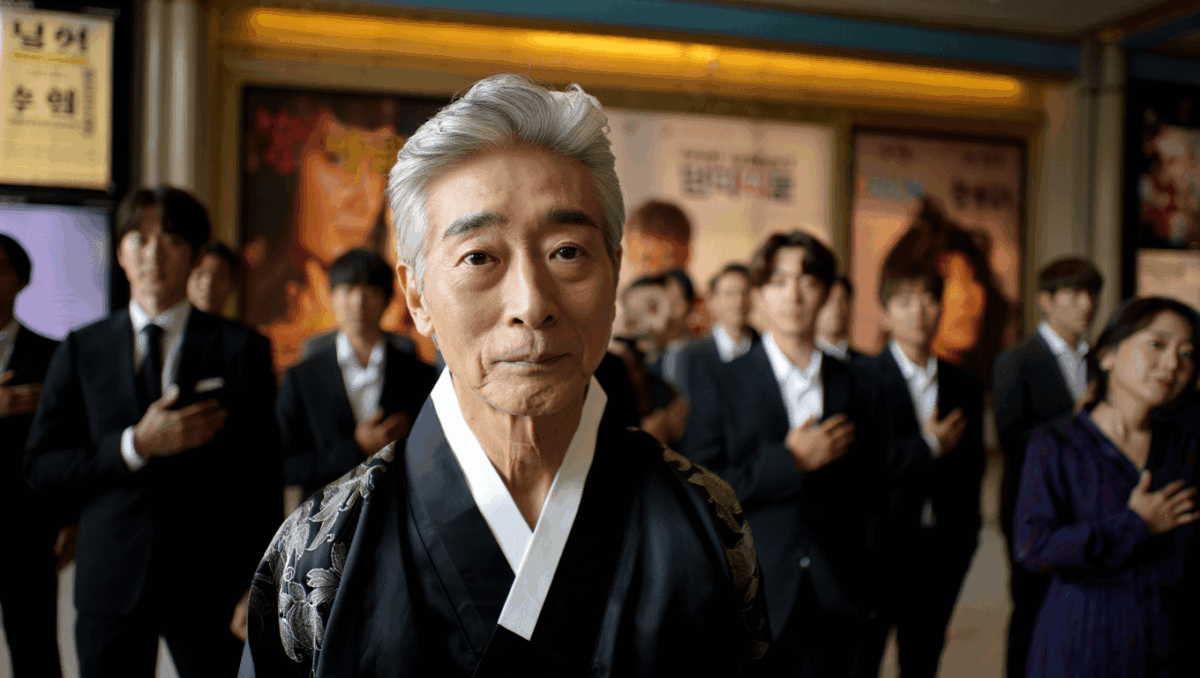
Ahn Sung-ki, South Korea’s most beloved actor whose prolific 60-year career and gentle public image earned him the legendary title “the Nation’s Actor,” died on January 5, 2026, at age 74. The veteran performer passed away at Soonchunhyang University Hospital in Seoul after battling blood cancer for years. He appeared in more than 170 films and became a cultural cornerstone of Korean cinema.
🔥 Quick Facts
- Diagnosed with blood cancer in 2019, initially declared cancer-free in 2020 before disease recurred
- Made film debut at age 5 in 1957 in “The Twilight Train,” becoming a child actor in roughly 70 films
- Appeared in over 130-180 films during his six-decade career spanning modern Korean cinema
- Received Bogwan Order of Cultural Merit in 2005 and numerous prestigious awards including Grand Bell Awards
A Legendary Career Spanning Seven Decades of Korean Film
America’s Next Top Model documentary drops today on Netflix with shocking revelations
Dana Eden dies at 52, Tehran producer found dead in Athens hotel
Born on January 1, 1952, in the southeastern city of Daegu, Ahn Sung-ki represented the growth and evolution of Korean cinema itself. His early work as a child actor established him as a reliable screen presence before he stepped away from the industry to live an ordinary life.
When he returned to acting, Ahn built one of the most prolific careers in Korean film history. His distinctive gentle demeanor and authentic performances made him reliable in everything from war dramas to crime thrillers. He became more than an actor—he became a moral compass and emotional anchor for Korean moviegoers across generations.
Tommy Lee Jones’ daughter was pregnant before her tragic death, court docs reveal
J Cole announces The Fall-Off world tour, first global dates in decades
Ahn graduated from Korea University of Foreign Studies, where he majored in Vietnamese, a detail reflecting his intellectual depth and diverse interests beyond the screen.
Notable Roles and Awards That Defined His Legacy
Ahn won the Asia-Pacific Film Festival Best Actor award in 1993 for his powerful role in “White Badge,” a film based on the acclaimed novel about the Vietnam War. His performances in films like Silmido (2003), where he played Commandant Choi Jae-hyun, showcased his ability to command prestige productions.
Throughout his career, he earned multiple Grand Bell Awards, Blue Dragon Film Awards, and recognition from the Korean Association of Film Critics. His filmography reads like a history book of Korean cinema, including titles such as “Mandala” (1981), “A Fine, Windy Day” (1980), “Radio Star” (2006), and “Unbowed” (2011).
| Notable Film | Year | Significance |
| The Twilight Train | 1957 | Film debut at age 5 |
| White Badge | 1992 | Asia-Pacific Film Festival Best Actor |
| Silmido | 2003 | Major war drama role as Commandant |
| Radio Star | 2006 | Korean Association Film Critics Award |
The Final Chapter: December Hospitalization and January Passing
On December 30, 2025, Ahn collapsed at his residence after choking on food and was rushed to the hospital in critical condition. Despite medical intervention at Soonchunhyang University Hospital, his blood cancer had weakened him significantly. He remained hospitalized for just over a week before passing away at 9:00 AM on January 5, 2026.
His agency, Artist Company, released a statement expressing deep sadness at the loss. The medical crisis came after years of battling his illness—he had been diagnosed in 2019, briefly entered remission in 2020, but the disease returned with renewed strength. He is survived by his wife, Oh So-yeong, and their two sons.
The Nation’s Actor: Tributes Pour In from South Korea and Beyond
President Lee Jae-myung led tributes across South Korea, stating that Ahn “left a big footprint on Korean film” and writing: “For all of my life, making movies has been my dream and acting my passion.” Fellow actors and industry figures flooded social media with heartfelt messages honoring his contributions.
Actress Hwang Shin-hye and leading actors including Ko Kyung-pyo and Lee Dong-hwi posted tributes. The Korean film industry recognized that it had lost not just a prolific performer but a symbol of their nation’s cinematic identity. From Hollywood to Chinese film communities, international figures acknowledged a cinema legend.
His legacy transcends the 170+ films he completed—Ahn embodied the rise of Korean cinema from a developing industry to a global powerhouse, appearing alongside its greatest directors and mentoring younger generations through the strength of his performances.
Why Did Korea’s Beloved Actor Leave Such a Permanent Mark on Cinema?
Ahn Sung-ki became “the Nation’s Actor” not through one breakthrough role but through consistency, versatility, and an authenticity that audiences recognized across seven decades. From child actor in the 1950s to respected elder statesman by the 2010s, he represented stability and moral integrity on screen.
His ability to disappear into characters while maintaining a gentle, relatable humanity made him different from many action stars or comedians. Whether playing commanders, fathers, or ordinary men, Ahn brought a quiet intensity that elevated every production he touched. He worked with Korea’s most important directors, appeared in over 170 films, and never dominated headlines with controversy—only his extraordinary performances.
The Korean film industry mourns not just a legendary actor but a living connection to their cinema’s entire modern history. With his passing, South Korea has lost one of its most important cultural anchors—a figure whose face appeared in theaters for seven straight decades and whose presence defined what it meant to be a working actor in Korea.
“For all of my life, making movies has been my dream and acting my passion.”
— Ahn Sung-ki, from his personal reflection
Sources
- The New York Times – Coverage of Ahn Sung-ki’s death and career legacy in Korean cinema
- Associated Press – Reporting on the beloved actor’s passing and blood cancer battle
- Deadline Hollywood – Film industry tributes and filmography details for “The Nation’s Actor”

Jessica Morrison is a seasoned entertainment writer with over a decade of experience covering television, film, and pop culture. After earning a degree in journalism from New York University, she worked as a freelance writer for various entertainment magazines before joining red94.net. Her expertise lies in analyzing television series, from groundbreaking dramas to light-hearted comedies, and she often provides in-depth reviews and industry insights. Outside of writing, Jessica is an avid film buff and enjoys discovering new indie movies at local festivals.