
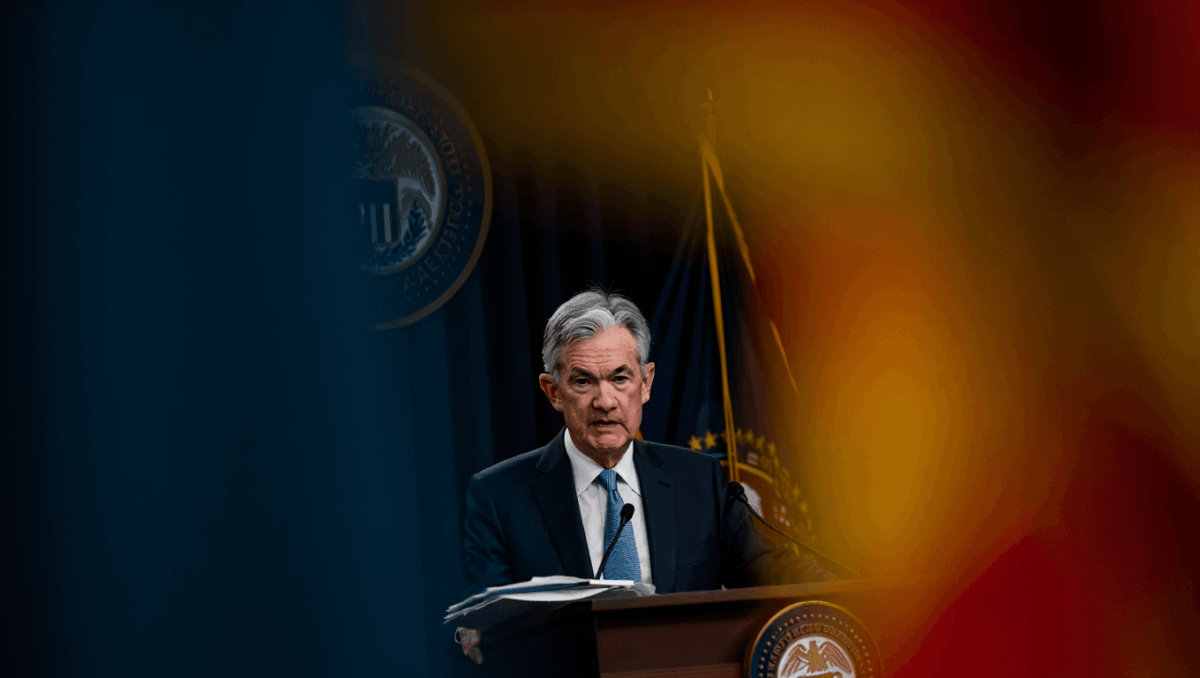
The Federal Reserve decision on December 10, 2025 delivered its third consecutive interest rate cut this year, bringing the benchmark federal funds rate to a range of 3.5% to 3.75%. The move came amid a divided board and signals a markedly slower pace of rate reductions heading into 2026. Investors and economists are now focusing on what comes next for borrowing costs as inflation concerns persist.
🔥 Quick Facts
- The Fed cut rates by 25 basis points (0.25%) to reach the 3.5%-3.75% range, the lowest level since November 2022
- This marks the third rate cut in consecutive meetings (September, October, and December 2025)
- The vote was split with three officials dissenting, indicating significant disagreement on monetary policy direction
- Fed officials project just one additional rate cut in 2026, signaling a substantial slowdown from the 2025 cutting cycle
Fed Decision Signals Hawkish Approach with Pause on Horizon
Intuit emerges as best software stock for 2026 while stock crashes to bargain levels analysts didn’t expect
2026 tax brackets shock Americans with hidden paycheck truth nobody expected
The Federal Reserve approved its third consecutive cut despite mounting economic uncertainty and lingering inflation concerns. Chair Jerome Powell emphasized that the central bank remains cautious about reducing rates further, noting concerns about inflation have not fully dissipated.
The decision represents what market participants call a “hawkish cut,” meaning policymakers are reducing rates while simultaneously signaling they won’t continue cutting indefinitely. This contrasts sharply with the market expectations of more aggressive easing earlier in the year.
Marcus Lemonis takes CEO role at Bed Bath & Beyond with $25M cost-cutting plan and watch what industry experts are saying about his next move
SPX surges 34 points at open with shocking tech recovery, here’s what caused the unexpected Venezuela rally
The divided vote reflects substantial tension within the Federal Open Market Committee (FOMC). Three Fed governors dissented, preferring to hold rates steady rather than cut further in the near term.
Economic Data Gaps Challenge Fed’s December Decision
The central bank grappled with incomplete economic data as a government shutdown delayed critical employment and jobs reports. Two months of labor market data remained missing when the FOMC met, making risk assessment particularly challenging.
Despite these gaps, the Fed proceeded with the cut to support employment while balancing inflation risks. The committee noted that reserve balances have declined to ample levels, prompting the announcement of new Treasury security purchases to maintain appropriate market functioning.
This move indicates the Fed sees value in maintaining accommodative financial conditions even as it signals fewer cuts ahead.
2026 Outlook: Just One Cut Projected by Fed Officials
| Timeframe | Projected Rate Cuts |
| December 2025 (Just Completed) | 1 cut of 25 basis points |
| Full Year 2025 Total | 3 cuts (100 basis points) |
| Projected for 2026 | 1 cut average |
| Current Federal Funds Rate | 3.5% to 3.75% |
Federal Reserve officials have signaled a dramatically slower pace of rate reductions moving into 2026 compared to this year’s activity. The economic projections show a median expectation of just one additional cut throughout the entire year ahead.
This represents a significant shift from the cutting cycle that dominated 2025. Inflation remains elevated by historical standards, and Fed policymakers want to avoid prematurely loosening monetary policy if price pressures re-emerge.
Inflation Concerns Keep Fed on Cautious Path Forward
Throughout his press briefing, Powell emphasized enduring inflation risks that prevent the committee from making firm commitments to additional rate cuts. He stated concerns about inflation “remain” and did not commit to lowering rates later in the easing cycle.
The Fed’s pivot toward a slower cutting pace reflects mounting evidence that inflation, while trending downward from its 2022 peak, remains above the central bank’s 2% target. Some Fed policymakers worry that cutting too aggressively now could reignite price pressures.
Market participants expect volatility as investors recalibrate expectations for borrowing costs in coming months.
What Does the Fed Decision Mean for Your Wallet and the Economy?
The lower federal funds rate eventually affects consumer borrowing costs through mortgage rates, credit card rates, and auto loans. A 3.5%-3.75% range means cheaper borrowing than the elevated rates of 2023-2024, but expects significantly less relief than markets may have hoped for in 2026.
For savers, lower rates mean reduced returns on savings accounts and money market funds. Businesses face easier access to credit but less incentive to accelerate expansion projects. The labor market should benefit from accommodative policy, supporting job growth even as wage growth potentially moderates.
The Fed’s more cautious tone signals that the era of rapid rate cuts has passed, setting the stage for a prolonged period of stable or slowly declining interest rates rather than the aggressive easing some had anticipated.