
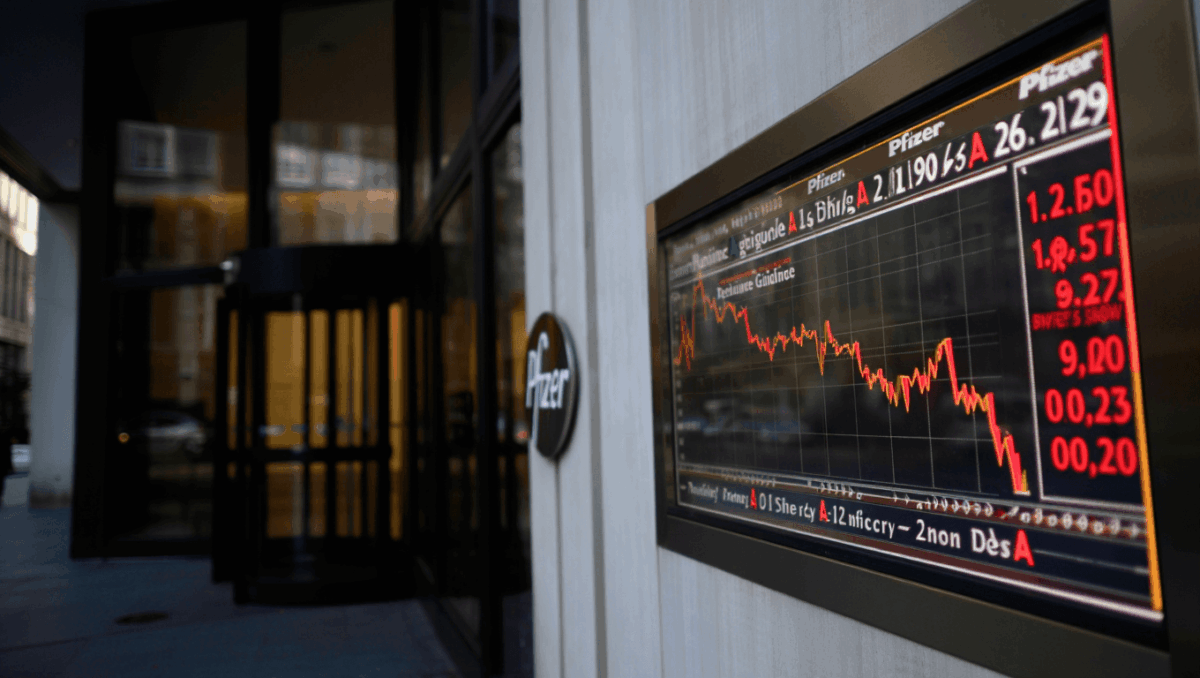
Pfizer stock took a significant hit this week as the pharmaceutical giant slashed its 2026 revenue guidance, sending shockwaves through investor portfolios. The company revealed that COVID-19 product sales will decline dramatically, marking a turning point for the drugmaker that rode pandemic profits to record heights. Markets are now grappling with what this slowdown means for Pfizer’s ability to maintain shareholder returns in an increasingly challenging landscape.
🔥 Quick Facts
- 2026 revenue guidance reduced to $59.5-62.5 billion, below analyst expectations
- COVID-19 sales projected to fall $1.5 billion to just $5 billion in 2026
- Stock plunged 5% following the December 16 guidance announcement
- Adjusted EPS outlook of $2.80-$3.00 trails consensus estimate of $3.05-$3.09
The COVID Cliff Finally Hits Pfizer’s Bottom Line
Intuit emerges as best software stock for 2026 while stock crashes to bargain levels analysts didn’t expect
2026 tax brackets shock Americans with hidden paycheck truth nobody expected
After years of blockbuster revenue from its COVID-19 vaccine and treatment portfolio, Pfizer now confronts the inevitable decline as pandemic demand normalizes. The company previously booked massive sales from these products, positioning them as cornerstone revenue generators throughout 2024 and 2025. Now reality sets in with a projected $1.5 billion revenue drop in the coming year.
This decline reflects broader pharmaceutical industry trends where temporary pandemic products fail to sustain their outsized contribution once emergency demand fades. Pfizer’s acknowledgment that COVID products will generate merely $5 billion in 2026 signals management’s realistic reckoning with market conditions. The company is essentially admitting what investors feared during the pandemic boom: these revenues were cyclical, not structural.
Investor Nerves Frayed by Lower Earnings Impact
Marcus Lemonis takes CEO role at Bed Bath & Beyond with $25M cost-cutting plan and watch what industry experts are saying about his next move
SPX surges 34 points at open with shocking tech recovery, here’s what caused the unexpected Venezuela rally
The guidance cut hits investors on multiple fronts simultaneously. Not only is total revenue facing headwinds, but earnings per share is also expected to compress. The company’s revised $2.80-$3.00 adjusted EPS range sits materially below what Wall Street anticipated, creating immediate portfolio pressure.
This divergence between company projections and analyst estimates matters enormously for institutional investors managing billions in pharmaceutical sector exposure. When a major pharma player signals that earnings growth will prove weaker than consensus, it raises uncomfortable questions about industry-wide profitability trends. Investors paying attention are asking whether other large drugmakers face similar headwinds waiting to be disclosed.
Financial Metrics Paint a Challenging Picture for 2026
| Financial Metric | 2026 Guidance | Previous Range |
| Total Revenue | $59.5-$62.5B | Not provided |
| COVID Product Revenue | $5 billion | $6.5 billion (2025) |
| Adjusted EPS | $2.80-$3.00 | Consensus: $3.05-$3.09 |
| COVID Revenue Decline YoY | -$1.5 billion | — |
Patent Cliffs and Strategic Investments Compound the Pressure
Beyond COVID-related headwinds, Pfizer faces additional structural challenges ahead. The company is confronting multiple patent expirations on established products, a predictable but serious threat to revenue stability. Management is banking on strategic investments in its pipeline to offset these losses, but investors remain skeptical given the scale of the challenge.
The pharmaceutical giant has acquired companies like Seagen to bolster its oncology portfolio, yet these acquisitions themselves create near-term dilution to earnings per share. The market is clearly questioning whether new pipeline products can generate sufficient revenue to compensate for both the COVID cliff and approaching patent expirations. These execution concerns directly contributed to the stock’s sharp 5% decline following the announcement.
What Comes Next for Pfizer and Pharmacy Investors?
The real question facing the market is whether this guidance adjustment represents a bottom from which recovery is possible, or merely the first of several downward revisions. Pharmaceutical sector investors are watching closely to see if competitors face similar pressures or if Pfizer’s struggles are particularly acute. The stock’s reaction suggests investors are pricing in extended uncertainty about the company’s ability to execute its turnaround strategy.
Management must now deliver on promises that emerging therapies and strategic acquisitions will offset pandemic revenue losses. Delayed product launches, regulatory setbacks, or disappointing clinical trial results could easily trigger additional guidance cuts. Until Pfizer demonstrates it can stabilize earnings through new product success, the stock likely remains vulnerable to further selling pressure in an already nervous healthcare market.
“The next few years will be bumpy, beginning with 2026, due to lower sales of its COVID vaccine and treatment.”
— Pfizer Management, Reuters
Sources
- Reuters – Pfizer guidance announcement and COVID revenue decline analysis
- CNBC – Portfolio impact and strategic context on 2026 outlook
- Wall Street Journal – Earnings per share guidance and investor expectations

Patrick Graham is a business and finance journalist translating Wall Street’s complexities into stories that matter to everyday readers. With extensive experience in financial journalism and economic analysis, this expert journalist provides sharp insights on market trends, corporate developments, and the economic forces affecting daily life. His reporting helps readers make sense of the business world’s biggest moves.