
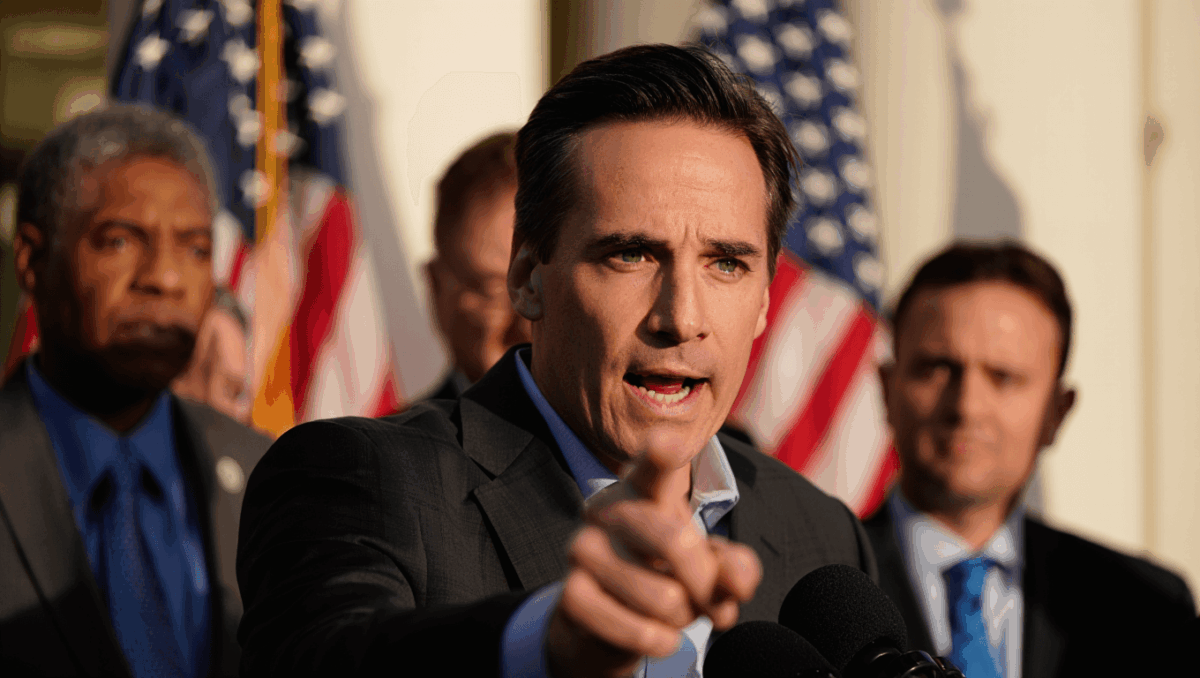
NYSEG faces unprecedented bipartisan opposition as lawmakers push back against rate hikes. Congressional leaders just introduced sweeping legislation to block utility executive bonuses. The controversial proposal marks a major escalation in the fight over energy costs.
🔥 Quick Facts
- Congressman Josh Riley and Republican Congressman Jeff Van Drew introduced the bipartisan No Bonuses for Utility Executives Act on December 10, 2025
- NYSEG sought rate increases of 35% on electricity and 39.4% on natural gas delivery in their June 2025 filing
- The bill prohibits bonuses whenever utilities raise rates faster than inflation, with caps of 25% of median employee compensation when rates stay stable
- Avangrid (parent company of NYSEG) paid its CEO $10.7 million last year while families struggled with rising bills
The Bipartisan Push Against NYSEG Rate Hikes
Intuit emerges as best software stock for 2026 while stock crashes to bargain levels analysts didn’t expect
2026 tax brackets shock Americans with hidden paycheck truth nobody expected
Upstate New York families face a serious problem. NYSEG, the major utility serving the region, requested extraordinary rate increases that would devastate household budgets. Working families are already stretched thin, cutting back on groceries and essentials just to keep their lights on.
This reality sparked unprecedented action in Congress. On December 10, Congressman Josh Riley (D-NY-19) and Congressman Jeff Van Drew (R-NJ-02) crossed party lines to introduce sweeping legislation. The move signals real frustration on both sides of the political aisle about how utility companies operate.
How the New Legislation Works
Marcus Lemonis takes CEO role at Bed Bath & Beyond with $25M cost-cutting plan and watch what industry experts are saying about his next move
SPX surges 34 points at open with shocking tech recovery, here’s what caused the unexpected Venezuela rally
The No Bonuses for Utility Executives Act takes a direct approach. If a utility company raises rates faster than inflation, its executives cannot receive bonuses of any kind—period. It’s designed to align executive interests with customer wellbeing.
When rate increases stay at or below inflation, bonuses are allowed but capped at 25% of median compensation earned by non-executive workers. The bill also establishes enforcement mechanisms, requiring utilities to report to the Federal Energy Regulatory Commission within one week of their fiscal year ending, with FERC having 30 days to determine compliance.
| Provision | Details |
| Rate Hike Above Inflation | No bonuses allowed for any executives |
| Rate Hikes At or Below Inflation | Bonuses capped at 25% of median employee pay |
| Penalty for Violations | Entire bonus pool forfeited to IRS, returned to customers as stimulus payments |
| Coverage | Foreign-owned state-regulated electric utilities, effective January 1, 2025 |
Why This Legislation Matters Right Now
The timing of this proposal is significant. NYSEG and its parent company Avangrid haven’t been transparent about executive compensation while seeking massive rate increases. Last year, Avangrid’s CEO received $10.7 million in compensation while families struggled.
Congressman Riley emphasized the absurdity of the current system. “Folks are cutting back on everything from school clothes just to keep the lights on. Meanwhile, utility monopolies are rewarding their CEOs with millions of dollars per year. My bill stops utility monopolies from rewarding corporate executives who are ripping us off.”
NYSEG Responds to the Challenge
The utility company pushed back hard against Riley’s proposal. Shelby Cohen, NYSEG’s Director of New York Communications, claimed the legislation doesn’t address “the real drivers of utility bill increases.” NYSEG argues that approximately 65% of customer bills represent pass-through costs for energy supply and statewide programs, not the company’s own charges.
The company also contends that delivery rates fund necessary grid modernization and infrastructure upgrades. NYSEG maintains that the bill “cherry picks facts for political points” rather than addressing underlying cost pressures including inflation and unregulated supply prices.
What Happens Next with This Bipartisan Bill?
The legislation faces an uncertain path through Congress. Despite bipartisan sponsorship, utility companies have significant lobbying resources to fight restrictions on executive pay. However, the level of public opposition to rate hikes provides momentum for reform advocates.
Riley built this proposal on his earlier Keep the Lights Local Act, part of a broader push to lower utility costs and challenge utility monopolies. The fact that a Republican from New Jersey joined forces with a Democrat from New York demonstrates this isn’t a partisan issue—families on both sides are suffering under rising utility bills.
Sources
- Representative Josh Riley’s Office – Official press release on the No Bonuses for Utility Executives Act
- WBNG NewsChannel – Coverage of Riley’s legislation and NYSEG’s response
- Federal Energy Policy Institute – Data on utility CEO compensation versus customer hardship

Patrick Graham is a business and finance journalist translating Wall Street’s complexities into stories that matter to everyday readers. With extensive experience in financial journalism and economic analysis, this expert journalist provides sharp insights on market trends, corporate developments, and the economic forces affecting daily life. His reporting helps readers make sense of the business world’s biggest moves.