
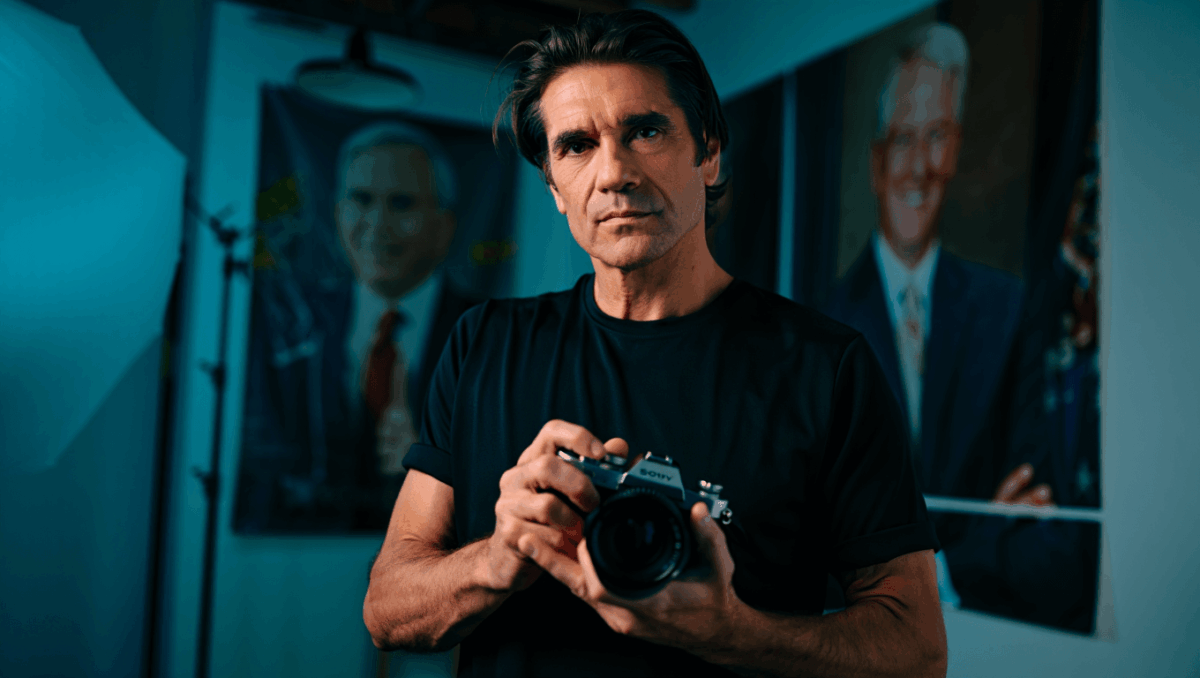
Vanity Fair’s White House photos by photographer Christopher Anderson have ignited intense debate across the internet. The raw, unretouched close-up portraits of Trump’s inner circle—including Chief of Staff Susie Wiles, **Press Secretary Karoline Leavitt**, Secretary of State Marco Rubio, and Vice President JD Vance—reveal every freckle, blemish, and makeup detail. Now, the photographer is defending his unflinching vision and explaining the artistic intent behind the provocative images that broke the internet.
🔥 Quick Facts
- Vanity Fair published the two-part story by Chris Whipple on December 16, 2025, featuring interviews with Trump’s closest advisors
- Photographer Christopher Anderson spent 15-40 minutes with each subject, standing extremely close for ultra-tight portrait shots
- The images caused massive online reactions, with viewers debating Anderson’s artistic choices and the meaning of unretouched photography
- Anderson has photographed four U.S. presidents and brought his journalistic eye to document power behind the curtain
How the Assignment Became a Controversial Moment
America’s Next Top Model documentary drops today on Netflix with shocking revelations
Dana Eden dies at 52, Tehran producer found dead in Athens hotel
Christopher Anderson almost turned down the Vanity Fair assignment. The acclaimed photographer with roots in political journalism initially worried the magazine wanted him to be a celebrity photographer, which conflicted with his journalistic principles.
Jennifer Pastore, Vanity Fair’s global creative director, persuaded Anderson that his qualification was to come as a journalist—bringing clear-eyed observation and skepticism. Anderson agreed because it aligned with his historical work documenting power. He spent an entire day at the White House photographing Trump’s team in their offices throughout the West Wing.
Tommy Lee Jones’ daughter was pregnant before her tragic death, court docs reveal
J Cole announces The Fall-Off world tour, first global dates in decades
The timing proved explosive. Anderson later noted he never imagined the level of internet interest the photos would generate once published. The raw imagery sparked broader conversations about AI, filters, and how American public figures present themselves.
Standing Extremely Close: The Photography Technique
Anderson’s extreme close-up portraits were intentional, not cropped. He physically stood very close to his subjects, sometimes uncomfortably so. When Susie Wiles told him “You’re too close,” he backed up, but the intimate approach remained his signature for the assignment.
Sessions ranged from brief 15-minute meetings to longer 35-40 minute shoots. Anderson also photographed subjects at normal portrait distances to show their office environments—exposed wiring, paint marks, and chosen décor. He shot primarily on film rather than digital.
The photographer explained that he wanted viewers to experience the atmosphere he felt in the West Wing. He used both formal, controlled portraits and candid moments of unguarded observation. This dual approach gave the story texture and complexity, revealing both the theatrical presentation of power and the mundane reality behind the scenes.
Defending the Unretouched Images and Artistic Choices
| Aspect | Anderson’s Perspective |
| Artistic Philosophy | Photography is about seeing, observing, and communicating truth—not making things look pretty |
| Role as Photojournalist | Professional noticer offering viewers his point of view as eyes of the public |
| Subject Treatment | Civil servants carry responsibility for millions; entertainers do not—context determines approach |
| Internet Response | Sparked discussion about what photography means in age of AI, filters, and social media images |
Anderson directly addressed the most discussed image—Karoline Leavitt’s portrait showing visible injection marks on her lips. He stated: “I don’t believe in shaming anyone for their physical appearance. But she makes choices in how she presents herself and in how she alters her physical appearance that she presents to the world.”
He continued: “I made a choice in photographing her choices in a way that is revealing about her choices. And I didn’t choose not to remove those things you see in the picture or to hide them or to minimize them.” This wasn’t cruelty—it was commitment to documenting reality.
Anderson emphasized the difference between his approach to civil servants versus celebrities. Singer Rosalía, whom he also photographs in close-up, benefits from different treatment because “she’s a performer and she doesn’t have the responsibility on her shoulders for the well-being of millions of people.”
Behind the Scenes: Memorable Moments Inside the White House
Anderson’s day inside the West Wing provided unexpected drama and human moments. During the shoot, the entire Cabinet was called to the Situation Room. Anderson and the Vanity Fair team speculated about what could cause such an emergency gathering—potentially a military deployment or international crisis.
Later, they discovered Congress member Lauren Boebert had been summoned to the Situation Room regarding pressure not to release the Epstein files. The episode gave Anderson insight into the inner workings of power and military muscle applied to political pressure.
His most interesting encounter was with Stephen Miller. The deputy White House chief of staff asked numerous questions about Anderson’s process—why film instead of digital, how the pictures would look, whether he was slouching. Miller then told Anderson: “You have a lot of power in the discretion you use to be kind to people.” Anderson replied: “Yeah, you know, you do too.” The moment felt significant in its quiet recognition of mutual respect between observer and observed.
What Does the Internet Debate Around the Photos Really Mean?
Anderson found the online reaction fascinating. One art historian published updates analyzing composition references to historical paintings and deeper contextual meanings. The photographer didn’t expect to start a broader discussion about the nature of photography itself in the modern age.
He suggested the conversation reveals something important: “Maybe we have sort of become a—we’ve fallen asleep at the idea of what a photograph is and what a public image is.” In an era of AI filters, social media fakery, and artificial enhancement, Anderson’s unretouched images jarred viewers awake to the difference between authentic documentation and manufactured presentation.
Marco Rubio even briefly changed his Twitter profile picture to one of Anderson’s portraits—a surprising vote of confidence from the subject. JD Vance joked that he’d pay Anderson $100 for every subject made to look worse than him and $1,000 if it was Rubio. Anderson later told Vance: “You know what, you owe me a few hundred bucks,” and Vance laughed back: “Yeah, yeah, yeah, it’s in the mail.”
“I’m a professional noticer. And I go in to observe and be the eyes for the public in that sense. My job is not to decorate a magazine, it’s to show the viewers what the experience was.”
— Christopher Anderson, Vanity Fair Photographer
Sources
- Vanity Fair – Photographer interview and White House photo essay by Christopher Anderson
- CNN Style – Analysis of close-up photography and public reaction
- The Washington Post – Coverage of photographer’s defense of unvarnished portraits

Jessica Morrison is a seasoned entertainment writer with over a decade of experience covering television, film, and pop culture. After earning a degree in journalism from New York University, she worked as a freelance writer for various entertainment magazines before joining red94.net. Her expertise lies in analyzing television series, from groundbreaking dramas to light-hearted comedies, and she often provides in-depth reviews and industry insights. Outside of writing, Jessica is an avid film buff and enjoys discovering new indie movies at local festivals.