
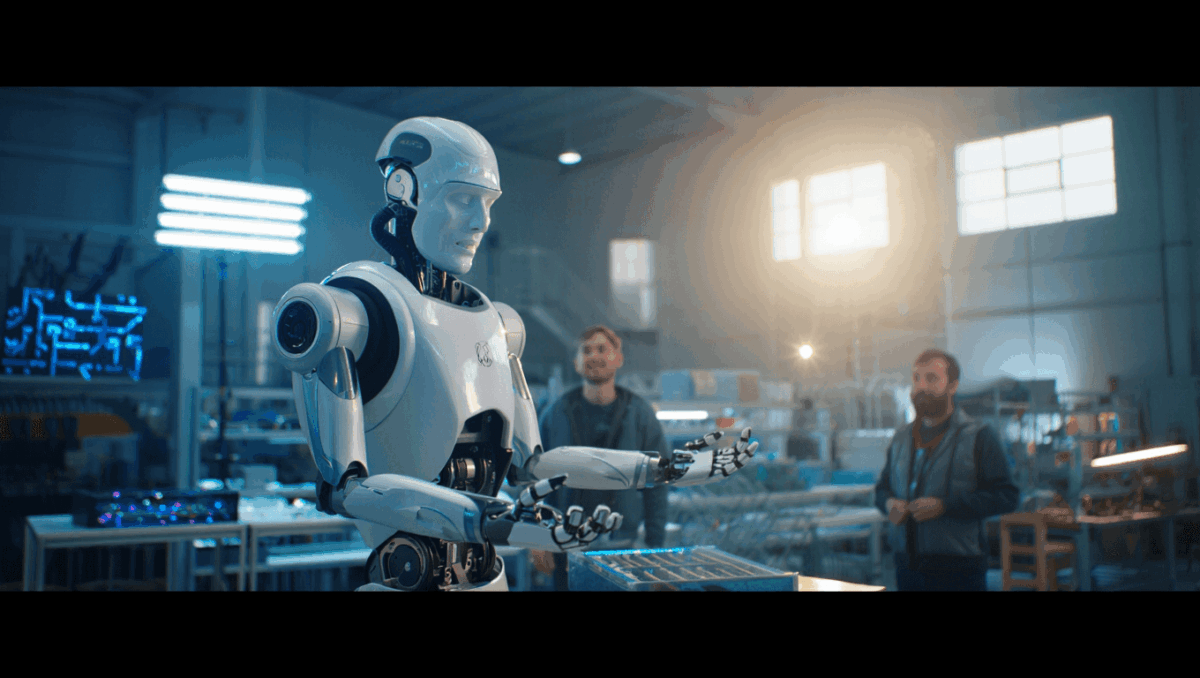
Mr Robot is coming to life. What once seemed like science fiction—humanoid robots seamlessly performing complex tasks alongside humans—is now reshaping the future of work. Humanoid robot startups are surging toward $2.8 billion in investments, transforming fantasy into practical AI workers poised to revolutionize industries worldwide.
🔥 Quick Facts
- Figure AI raised $1 billion in Series C funding in September 2025, reaching a $39 billion valuation
- Global robotics investments topped $21 billion in 2025, with humanoid-focused startups capturing significant capital
- The humanoid robot market is projected to grow from $2.92 billion in 2025 to $15.26 billion by 2030 at 39.2% annual growth
- Major investors including Nvidia, Salesforce, Brookfield Asset Management, and Intel Capital are backing humanoid robotics companies
The Humanoid Robotics Investment Boom Reshapes Workforce Markets
TurboTax Expert Full Service opens January 5, 2026, and what new tax law changes mean for your refund will surprise you
Intel stock soars 4% at open with analyst predicting $50 target, here’s why Panther Lake launch today changes everything
The robotics sector experienced a watershed moment in 2025. Capital flowing into humanoid robot development exceeded all previous records, with over $6 billion invested just through July 2025 alone. This extraordinary surge represents a 75.6% increase in U.S. startup funding for AI, signaling that investors see humanoid robots not as speculative ventures but as essential infrastructure for future economies.
Figure AI’s $1 billion Series C round epitomizes this confidence. Led by Parkway Venture Capital with participation from Nvidia, Salesforce, Qualcomm, Intel Capital, and Macquarie Capital, the funding round validates the commercial viability of general-purpose humanoids. The company’s post-money valuation skyrocketed to $39 billion, positioning it alongside traditional tech giants in market valuation.
Samsung Galaxy S26 Ultra drops at $1,299 but kept one jaw-dropping feature completely secret until February 25
CES 2026 unveils $99 AI memory wearable and smart glasses that finally look normal, but Samsung’s 6K 3D display will blow your mind
This investment wave isn’t limited to U.S. firms. Generative Bionics, an Italian humanoid robotics startup, raised €70 million ($81.2 million) in December 2025, demonstrating global appetite for humanoid technology across multiple continents.
Tesla, Boston Dynamics, and Unitree Lead the Hardware Race
Tesla’s Optimus Gen 2, Boston Dynamics’ Electric Atlas, and Unitree Robotics’ G1 represent the pinnacle of current humanoid capability. These platforms combine advanced AI with mechanical precision, creating robots designed for real-world labor in factories, warehouses, and service environments. Each company approaches the challenge differently—Tesla emphasizes manufacturability and scalability, Boston Dynamics focuses on mobility and agility, while Unitree prioritizes affordability. This diversity accelerates innovation across the entire sector.
Unitree Robotics and Singapore’s Otsaw announced initial public offerings in 2025, bringing humanoid robotics directly to public capital markets. This milestone signifies growing confidence that these companies can sustain profitability and deliver shareholder value long-term. Meanwhile, Foundation’s aggressive scaling plans include building 40 robots in 2025, 10,000 in 2026, and 40,000 by the end of 2027.
Market Forecasts: $51 Billion Humanoid Robot Market by 2035
| Market Milestone | Value / Timeframe |
| Global humanoid market (2025) | $2.92 billion |
| Global humanoid market (2030) | $15.26 billion |
| Global humanoid market (2035) | $51 billion |
| Industrial humanoid TAM by 2035 | $1.75 trillion potential |
| Annual growth rate (CAGR) | 39.2% |
Analysts at Morgan Stanley project the humanoid robot market will exceed $5 trillion by 2050, suggesting exponential adoption curves ahead. Yole Group’s research identifies three adoption waves: early deployments, rapid scaling, and mass production, with each phase unlocking new use cases and markets. The humanoid robot-specific chip market alone is expected to expand from $796 million in 2025 to $5.33 billion by 2034.
Commercial Viability and Labor Cost Parity Drive Adoption Momentum
Humanoid robots are rapidly approaching cost parity with human labor. Bain & Company analysis indicates that within five years, humanoid robots will take on physical jobs across industries at competitive labor rates. This economic inflection point—where robots cost less to deploy than hiring and managing human workers—represents the true inflection for mass adoption.
Labor shortages accelerate this transition. China is positioned to lead global humanoid robot adoption as population decline accelerates labor shortages across manufacturing and logistics sectors. European and North American markets face similar demographic pressures, making humanoid robotics an attractive solution for maintaining economic productivity.
Robotics market analysts predict global robot installations will reach 575,000 units by 2025, growing at 6% annually until surpassing 700,000 units by 2028. Humanoids represent the fastest-growing segment within this broader robotics expansion.
The Mr Robot Reality: From TV Fiction to Practical Implementation?
The Mr Robot television series showcased sophisticated technology used by skilled operatives. Today’s humanoid robots pursue a similar mission from a different angle—automating complex, physical work previously requiring human intelligence and dexterity. While television’s Mr Robot involved hacking corporate systems with unrealistic speed, real humanoid robots are learning to perform warehouse tasks, manufacturing assembly, and service operations with increasing reliability.
The difference lies in speed and scope. TV depiction compressed complex hacking into minutes; real robotics compress complex learning into months and years. Yet both narratives share a common thread: artificial intelligence reshaping human institutions and labor economics. The $2.8 billion rushing into humanoid robot startups represents collective investor belief that this technology will be as transformative as the internet was for information, and as revolutionary as the industrial robot was for manufacturing.
Morgan Stanley’s estimates of a $5 trillion market by 2050 suggest humanoid robots will eventually reshape labor economics fundamentally. Every factory, warehouse, hospital, and logistics hub could employ humanoid workers. Unlike Mr Robot’s fictional narrative focused on disruption, the real humanoid robot revolution promises productivity gains, cost reductions, and solutions to chronic labor shortages.
Sources
- Business Insider – Comprehensive analysis of leading humanoid robot companies and market dynamics
- The Robot Report – Figure AI Series C funding details and Generative Bionics capital raises
- Forbes – Humanoid robotics investment trends and Foundation’s expansion plans

Lee Ann Anderson is a technology journalist specializing in consumer tech, digital innovation, and Silicon Valley trends. With a talent for breaking down complex technical concepts into accessible insights, this skilled journalist keeps readers informed about the gadgets, apps, and breakthroughs shaping our digital future. Her coverage bridges the gap between tech enthusiasts and everyday users.