
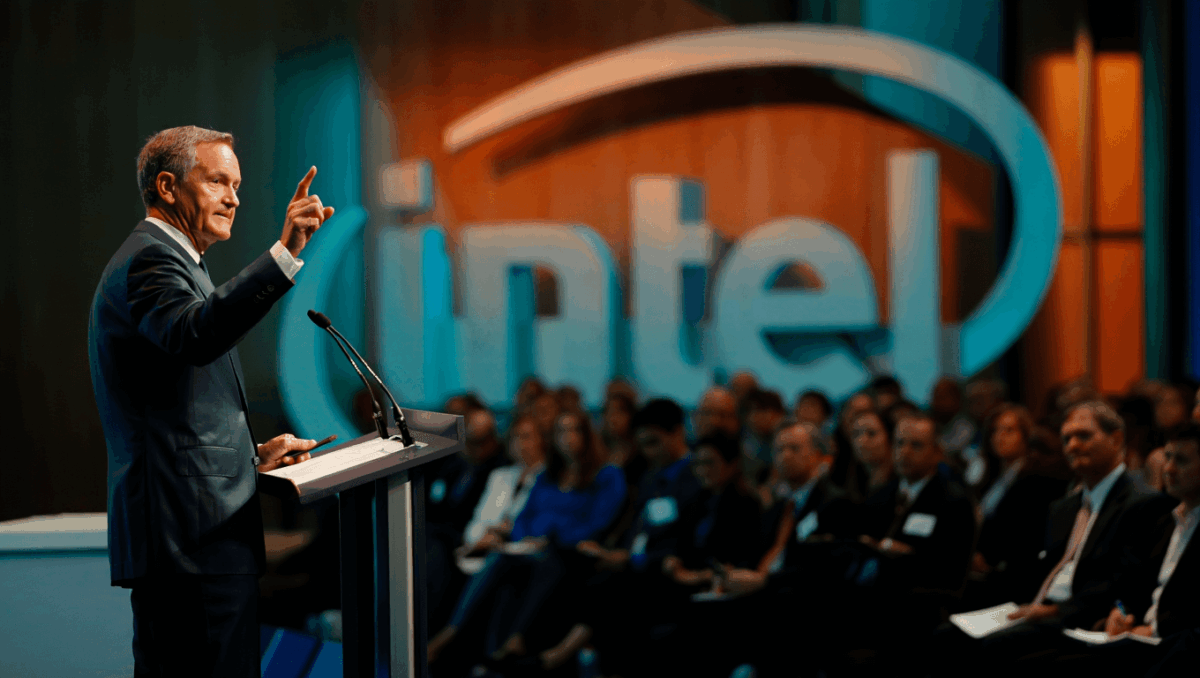
Intel stock is soaring today, hitting 52-week highs fueled by mounting speculation over an Apple foundry partnership. The chip giant climbed 7.11%, making it the Nasdaq 100’s best performer on December 2, 2025. Market confidence is rebuilding around Intel’s manufacturing potential and strategic positioning.
🔥 Quick Facts
- Intel stock trading at $42.86, up $2.85 or 7.11% on December 2
- Reaches new 52-week high of $42.51, highest close since April 2, 2024
- Momentum from analyst Ming-Chi Kuo’s report suggesting Apple could use Intel foundry for low-end M-series chips by 2027
- Year-to-date surge of 113.74%—best performance since Intel’s exceptional 1996 gain of 130.73%
Intel Captures Nasdaq 100 Leadership Today
TurboTax Expert Full Service opens January 5, 2026, and what new tax law changes mean for your refund will surprise you
Intel stock soars 4% at open with analyst predicting $50 target, here’s why Panther Lake launch today changes everything
Intel stole the spotlight in the Nasdaq 100 on Tuesday morning, emerging as the day’s strongest performer. The stock surged to $42.86, marking a 7.11% gain and securing a new 52-week high. This represents the highest close since April 2, 2024, when Intel finished at $43.94.
The rally comes after five of the past six trading sessions showed gains. Intel is on pace for one of its strongest individual days this year. Trading volume surged with Intel becoming the second most active stock on the Nasdaq 100, signaling strong retail and institutional interest in the historic chipmaker’s comeback narrative.
Apple Foundry Deal Speculation Drives Momentum
Samsung Galaxy S26 Ultra drops at $1,299 but kept one jaw-dropping feature completely secret until February 25
CES 2026 unveils $99 AI memory wearable and smart glasses that finally look normal, but Samsung’s 6K 3D display will blow your mind
The catalyst behind today’s surge traces directly to credible industry reporting about Apple potentially choosing Intel as a foundry partner. Renowned analyst Ming-Chi Kuo revealed that Apple could begin shipping its lowest-end M-series chips through Intel’s advanced nodes as early as the second or third quarter of 2027. This partnership would utilize Intel’s 18AP process node, representing Intel’s return to Apple’s supply chain after over a decade of separation.
Though limited in scope initially—targeting approximately 15-20 million units of entry-level laptops and tablets—the deal signals strategic positioning. Apple seeks to reduce dependence on Taiwan’s TSMC, mitigating geopolitical risks tied to Taiwan manufacturing. Intel’s California headquarters offers supply chain resilience and aligns with Apple’s diversification strategy for future processor sourcing.
| Metric | Value |
| Current Stock Price | $42.86 |
| Daily Gain | 7.11% (+$2.85) |
| 52-Week High | $42.51 |
| 52-Week Low | $18.13 |
| Year-to-Date Performance | +113.74% |
Intel Transforms 2025 Into Best Year Since the Late 1990s
Intel’s 2025 performance ranks among the most spectacular turnarounds in semiconductor history. Climbing 113.74% year-to-date, Intel is tracking toward its strongest calendar year since 1996, when the stock delivered a 130.73% return. The company has reversed a devastating 2024, climbing from a 52-week low of $18.13 back in April.
The resurgence reflects positive momentum from Intel’s Q3 2025 earnings beat, where the company demonstrated strong revenue growth and effective cost management. Manufacturing leadership restoration remains the central investment thesis. New foundry services targeting both internal and external customers signal Intel’s pivot toward contract manufacturing models.
“Apple’s plan is for Intel to begin shipping its lowest-end M processor, utilizing the 18AP advanced node, as early as the second or third quarter of 2027.”
— Ming-Chi Kuo, Supply Chain Industry Analyst
What Could This Apple Partnership Mean for Intel’s Long-Term Recovery?
If Intel successfully manufactures Apple’s M-series chips, the symbolism matter as much as the financials. Apple moving production to Intel represents validation of Intel’s advanced manufacturing capabilities and signals technology leadership. Industry observers estimate the foundry contract could generate $500 million to $1 billion annually by 2028, contingent on successful 18AP node deployment.
The partnership creates a foundation for broader collaboration. Apple continues diversifying foundry relationships to reduce Taiwan exposure, while Intel gains a marquee customer validating its foundry transformation. Success here could position Intel for expanded roles supplying premium Apple chips in subsequent years, though TSMC remains the primary supplier for high-end processors.
