
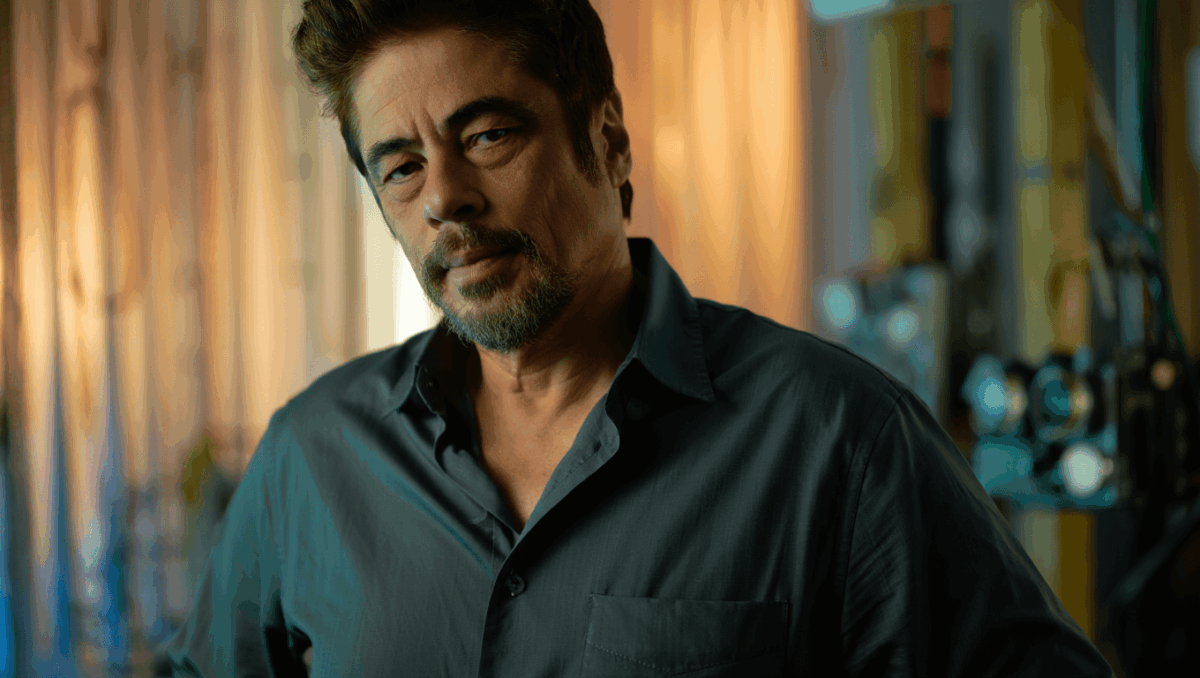
Benicio Del Toro’s casting in Paul Thomas Anderson’s ‘One Battle After Another’ proved so transformative that production halted for two and a half months just to secure the acclaimed actor. The decision ultimately reshaped the entire third act, with Anderson crediting Del Toro’s innovative character choices for inspiring a completely new ending to the $140 million production.
🔥 Quick Facts
- Production shut down for 2.5 months while waiting for Del Toro to finish filming “Phoenician Scheme” with Wes Anderson
- Leonardo DiCaprio praised Del Toro’s immediate chemistry and “specificity” upon arriving to set on day one
- Benicio Del Toro suggested Sensei St. Carlos would not help Bob Ferguson if he killed someone, completely changing the script’s final act
- The cast built a new set in El Paso in just two days to accommodate the reimagined road-trip climax inspired entirely by Del Toro’s ideas
How Benicio Del Toro Changed ‘One Battle After Another’ Forever
America’s Next Top Model documentary drops today on Netflix with shocking revelations
Dana Eden dies at 52, Tehran producer found dead in Athens hotel
In conversations at the BFI IMAX in London on December 11, 2025, DiCaprio revealed the astonishing scale of the production shutdown. He explained that Anderson made the decision to pause filming rather than recast the role of Sensei Sergio St. Carlos, Del Toro’s character in the black comedy action thriller that has grossed over $203 million worldwide.
“We shut down production for two and a half months to wait for Benicio to play Sensei,” DiCaprio stated. “Because he was doing ‘Phoenician Scheme,’ and we knew there was just nobody else to play that role.” The willingness to halt a $140 million production underscores Anderson’s confidence in casting and his commitment to artistic vision over conventional scheduling pressures.
Del Toro’s Immediate Impact on Set Chemistry
Tommy Lee Jones’ daughter was pregnant before her tragic death, court docs reveal
J Cole announces The Fall-Off world tour, first global dates in decades
The wait proved worthwhile instantly. DiCaprio recalled that upon Del Toro’s arrival, the actor brought “a cacophony of incredible specificity and ideas” about his character. “The first day on set, I just felt, I know who these guys are,” DiCaprio explained. “And it’s rare when you get that with an actor. Usually, there are some stumbling blocks, but he was Sensei from the moment he arrived.”
The chemistry between the two actors became almost supernatural in its immediacy. DiCaprio emphasized that Del Toro understood the dynamic between his character’s stable, philosophical presence and DiCaprio’s manic energy as Bob Ferguson, the washed-up former revolutionary. “I just got to react off those ocean waves,” DiCaprio said, drawing a metaphor for how Del Toro’s grounded performance anchored their scenes.
How Del Toro Rewrote the Entire Third Act
| Story Element | Original Script | Del Toro’s Idea |
| Bob’s Actions | Kills someone in Lockjaw’s circle | Sensei refuses to help unless no killing occurs |
| Final Act Structure | TBD/unfinished | New road-trip climax set in El Paso |
| Tone Shift | Darker trajectory planned | More hopeful, focused on moral consequences |
In his TIME magazine “Entertainer of the Year” conversation with Martin Scorsese, DiCaprio revealed the specific script change that Del Toro championed. Originally, Bob Ferguson was supposed to kill someone affiliated with Colonel Lockjaw (played by Sean Penn). But Del Toro objected.
“He’s like, ‘Well, if Bob kills somebody—because originally in the script, I was going to kill somebody that was a part of Lockjaw, Sean Penn’s crew—’Now I won’t help him as much,'” DiCaprio recalled Del Toro saying. This single comment triggered a cascade of creative revisions. Anderson incorporated Del Toro’s moral framework into the script before filming, fundamentally altering the trajectory of the final act and the film’s ultimate ending.
Building El Paso in 48 Hours
The creative breakthrough led to unprecedented production logistics. After DiCaprio and Del Toro improvised with Anderson’s “next play” directorial philosophy, the production team constructed an entirely new set in El Paso in just two days. “They built this set within two days,” DiCaprio marveled. “All that stuff with Benicio and me was based on those ideas and the specificity that Benicio brought to that character.”
The resulting road-trip sequence, which Del Toro improvised elements of including an unexpected dance as he parted ways with DiCaprio’s character during a police stop, became a defining highlight. According to Anderson, those brilliant moments of spontaneity—like Del Toro’s playful exit choreography—were pure invention. “No, god no, that’s him,” Anderson said. “That’s the magic of Benicio del Toro.”
Why Did One Academy Award Winner Transform Production?
“The fact that he was this Harriet Tubman for immigrants, that he would have this underground sort of revolutionary center for himself, that what he would do for Bob and what he wouldn’t do for Bob was very specific.”
— Leonardo DiCaprio, discussing Del Toro’s character vision with Martin Scorsese
Del Toro previously won the Academy Award for Best Supporting Actor in 2001 for “Traffic,” making him one of only a handful of Latino actors to achieve that distinction. His insights into the character of Sensei St. Carlos—a contemporary Harriet Tubman figure helping oppressed immigrants navigate dangerous territory—brought historical and cultural weight to Anderson’s script.
Anderson’s flexibility to pivot dramatically based on actor contributions separated this production from studio-mandated filmmaking. DiCaprio praised the director’s “ability to take chances” and recognize when an actor brings a superior idea to the table. “Paul takes one good idea and expands it. He zooms in on it,” DiCaprio noted, crediting Anderson’s creative responsiveness for the film’s elevated final act.
What Does This Reveal About ‘One Battle After Another’s’ Development?
‘One Battle After Another’ has emerged as a major Oscar contender for 2026, with The Guardian naming it the best film of 2025. The production’s willingness to completely restructure its third act—pausing work for months and rebuilding sets—speaks to Anderson’s unusual directorial confidence compared to most tentpole productions.
The film, loosely adapted from Thomas Pynchon’s novel “Vineland,” stars Leonardo DiCaprio, Sean Penn, Benicio Del Toro, Teyana Taylor, and Chase Infiniti. It hits HBO Max later this month following its theatrical success, making the behind-the-scenes story of its creative evolution particularly resonant as audiences encounter the finished film. The fact that Del Toro’s improvisational genius and moral clarity fundamentally reshaped the ending adds another layer of appreciation to what fans are watching on screen.

Jessica Morrison is a seasoned entertainment writer with over a decade of experience covering television, film, and pop culture. After earning a degree in journalism from New York University, she worked as a freelance writer for various entertainment magazines before joining red94.net. Her expertise lies in analyzing television series, from groundbreaking dramas to light-hearted comedies, and she often provides in-depth reviews and industry insights. Outside of writing, Jessica is an avid film buff and enjoys discovering new indie movies at local festivals.