
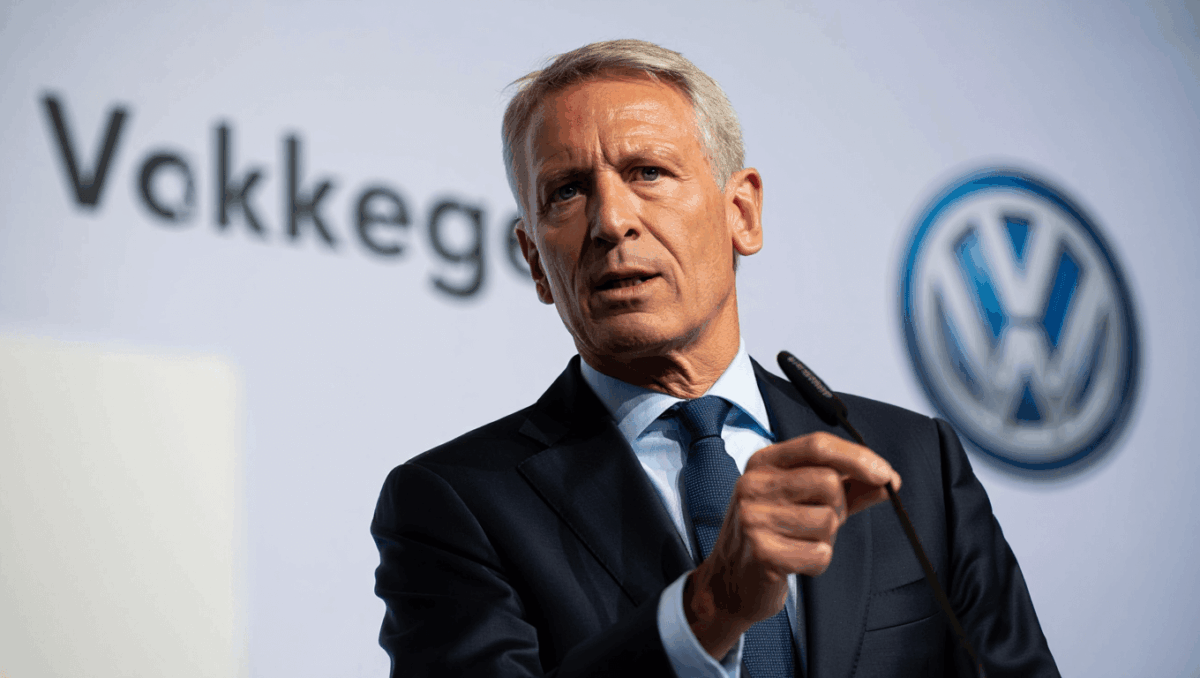
Volkswagen invests $186 billion through 2030 as the German automotive giant ramps up electrification while tightening costs amid fierce EV competition. CEO Oliver Blume announced the €160 billion five-year investment plan on December 6, 2025, reflecting strategic belt-tightening as Europe’s largest automaker battles challenges in China and the United States.
🔥 Quick Facts
- Investment total: €160 billion ($186 billion) through 2030 representing pared-down spending from original plans
- Geographic focus: Germany and Europe take priority over China and US amid tariff and competition pressures
- EV commitment: €60 billion ($65 billion) allocated to keep combustion engines competitive while scaling electric models
- Timeframe announcement: December 6, 2025 marks CEO Oliver Blume’s confirmation of rolling five-year capital plan
Volkswagen’s Strategic Investment Belt-Tightening Amid Global Headwinds
Intuit emerges as best software stock for 2026 while stock crashes to bargain levels analysts didn’t expect
2026 tax brackets shock Americans with hidden paycheck truth nobody expected
Volkswagen Group, which includes Porsche and Audi brands, revealed a scaled-down investment trajectory reflecting serious pressures threatening European automakers. The €160 billion budget through 2030 signals CEO Oliver Blume’s cost-cutting priorities as the company navigates an increasingly competitive global landscape. This represents a recalibration of capital allocation previously announced, showing the company is tightening its belt while maintaining crucial technology and infrastructure investments.
The reduced spending plan acknowledges mounting headwinds in two critical markets. China, where Volkswagen once dominated, now faces relentless pressure from domestic champions like BYD and NIO. US tariffs threaten profitability, with the company facing a $5.8 billion tariff hit in recent months. Meanwhile, competition from Chinese EV makers continues heating up globally, requiring Volkswagen to defend market share without overextending resources.
European Focus: Germany, Technology, and Infrastructure Priority
Marcus Lemonis takes CEO role at Bed Bath & Beyond with $25M cost-cutting plan and watch what industry experts are saying about his next move
SPX surges 34 points at open with shocking tech recovery, here’s what caused the unexpected Venezuela rally
CEO Blume emphasized that the five-year plan prioritizes Germany and Europe, covering products, technology development, and manufacturing infrastructure. This strategic reallocation pulls focus away from global expansion to strengthen positions in home markets where Volkswagen maintains stronger competitive footing. The company acknowledges that defending European territory takes precedence as Chinese brands project their market share will grow from five percent in 2025 to ten percent by 2030.
The investment breakdown shows €60 billion dedicated to keeping combustion engine vehicles competitive alongside electrification efforts. This dual-track approach reflects market realities where traditional engines remain profitable while transition timelines extend. Manufacturing restructuring includes closing three German factories while consolidating production, demonstrating Blume’s commitment to operational efficiency and cost discipline across the sprawling group.
EV Battles: Affordability Strategy Takes Center Stage Against Chinese Competition
| EV Initiative | Details |
| ID.Polo Launch | Arriving 2026, affordable entry-level EV positioning |
| Base Price Strategy | Entry-level model at approximately €20,000 |
| Electric Urban Car Family | Multi-brand offering launching 2026 across VW Group brands |
| China Strategy | Locally made models priced 40-50% less than current offerings |
Volkswagen’s EV strategy centers on affordability to counter both established competitors and Chinese manufacturers. The ID.Polo and ID.EVERY1 represent entry-level ambitions, with base prices around €20,000 targeting mass-market consumers. This aggressive pricing takes aim at democratizing electric mobility when Chinese rivals like BYD dominate affordable EV segments globally.
In China specifically, Volkswagen announced plans for locally manufactured vehicles priced 40-50% below current model offerings, a dramatic repositioning to regain market share. The company’s market share plummeted from 62% in 2020 to 35% as the Chinese market went electric, making affordable EV production essential for competitive survival. Investment in affordable models represents Volkswagen’s recognition that traditional pricing strategies cannot withstand Chinese competition.
Global EV Sales Momentum: Can Volkswagen Maintain Market Position?
Volkswagen Group reported delivering approximately 50% more all-electric vehicles worldwide in the first half of 2025, with global deliveries climbing over 1% overall. The surge illustrates growing EV demand and proof that electrification strategy gains traction when execution follows strategy. However, EV sales growth masks deeper concerns about margin compression and pricing pressure in emerging markets where Chinese competitors aggressively undercut Western automakers.
In Europe, Volkswagen nearly doubled EV sales during H1 2025, cementing leadership in its strongest region. The company raced ahead of Tesla in Europe’s EV market, demonstrating competitive strength on home turf. Yet global growth masks regional weaknesses—US market challenges mount from tariffs and Tesla competition, while China increasingly looks locked against foreign competitors despite Volkswagen’s localization efforts and investment.
What Does Volkswagen’s $186 Billion Gamble Mean for the EV Industry’s Future?
Volkswagen’s scaled-down investment plan signals that European automakers face genuine existential pressures from Chinese competitors and trade barriers. The $186 billion commitment shows the company is not backing down from electrification, yet the strategic reorientation toward Europe and cost discipline suggests realistic reassessment of global ambitions. CEO Blume’s belt-tightening approach acknowledges that growth investments cannot remain unlimited when margins compress and competition intensifies.
Industry observers question whether defensive cost-cutting mixed with aggressive EV expansion represents sustainable strategy or delayed decline. Volkswagen’s five-year plan demonstrates commitment to transformation, yet execution challenges loom large. The company must simultaneously defend profitability, prevent market share collapse in Europe, regain footing in China, and launch competitive affordable EVs—all while managing tariff impacts and production restructuring. The true test arrives when new ID.Polo and ID.EVERY1 models compete directly against established Chinese champions and American upstarts, determining whether Volkswagen’s investment choices prove prescient or insufficient.