
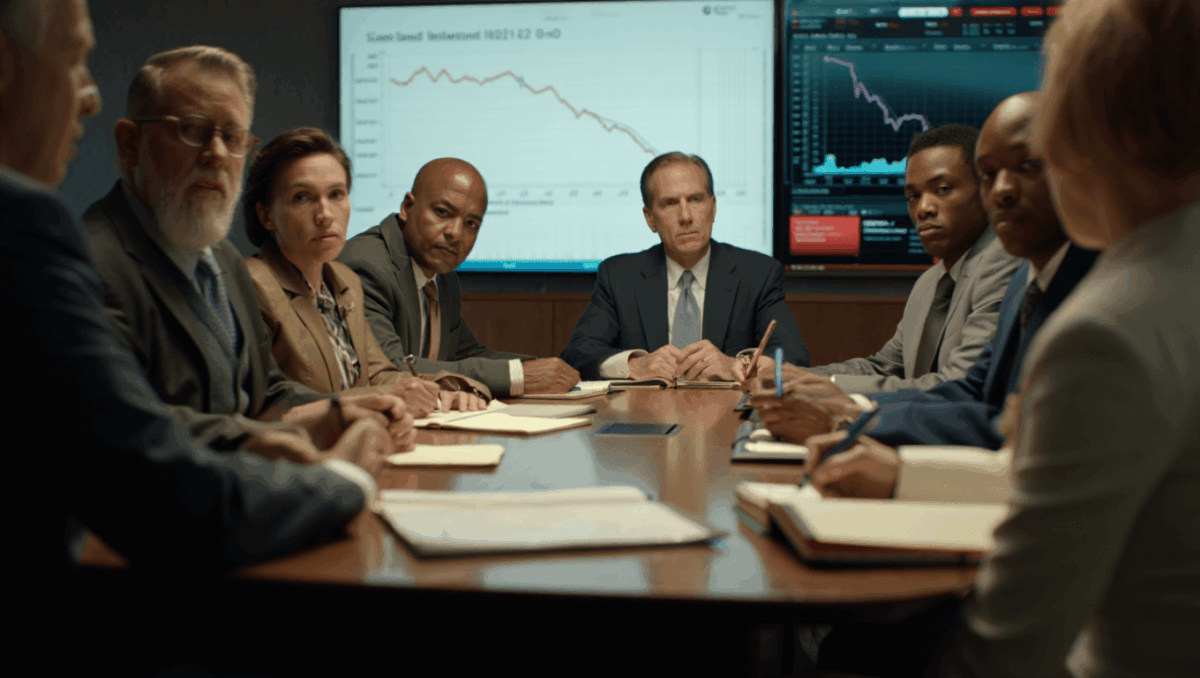
The U.S. economy is finishing the year strong as inflation continues to cool and the Federal Reserve signals multiple rate cuts ahead for 2026. With 82% of economists expecting a quarter-point cut at the December 9-10 meeting and projections for two more cuts next year, financial markets are responding with optimism despite lingering inflation concerns.
🔥 Quick Facts
- 82% of economists surveyed by Reuters expect a 0.25% rate cut on December 9-10, 2025
- Bond markets price in 87% odds of a December rate cut after inflation data cooled sharply
- Goldman Sachs forecasts two additional cuts in 2026, bringing rates to 3.0-3.25%
- U.S. Q3 GDP expanded 3.0% while jobless claims remain elevated at 4.4% unemployment
Economy Hits Final Stretch With Surprising Momentum
Intuit emerges as best software stock for 2026 while stock crashes to bargain levels analysts didn’t expect
2026 tax brackets shock Americans with hidden paycheck truth nobody expected
The U.S. enters December 2025 riding unexpected economic strength despite months of Fed caution. After third-quarter growth reached 3.0%, the economy is decelerating more gradually than feared, with GDP projected to slow to 0.8% in Q4 but averaging 2.0% growth for the full year. This resilience defies earlier predictions of recession despite multiple interest rate hikes that began over a year ago.
Major forecasters including Bank of America and Goldman Sachs report that the economy has proven surprisingly durable in 2025. Consumer spending remained solid through tariff announcements, investment held steady, and business confidence stabilized after periods of volatility. The labor market shows signs of cooling rather than cratering, with private payrolls declining 32,000 in November but still maintaining underlying employment strength from earlier months.
Inflation Cooling Tilts the Scale Toward Rate Cuts
Marcus Lemonis takes CEO role at Bed Bath & Beyond with $25M cost-cutting plan and watch what industry experts are saying about his next move
SPX surges 34 points at open with shocking tech recovery, here’s what caused the unexpected Venezuela rally
Core inflation data released last week provided the clearest signal yet that price pressures are finally moderating. The Personal Consumption Expenditures index, the Fed’s preferred measure, has moved closer to the central bank’s 2% target after running persistently elevated for nearly five years. Market reaction was swift and decisive—bond yields fell sharply and stock indices surged on the news that cutting rates posed minimal inflation risks.
This inflation cooling represents a turning point in the Fed’s calculus. Fed Chair Jerome Powell had expressed caution in recent weeks, citing sticky inflation concerns and limited data from the 43-day government shutdown that disrupted economic reporting in October. However, new data released in late November changed the equation. Four Fed officials—New York’s John Williams, Michelle Bowman, Christopher Waller, and Stephen Miran—publicly endorsed further cuts as inflation concerns diminished. The timing proved crucial, with economists noting that fresh data removes Powell’s previous concerns about reigniting price pressures.
| Economic Indicator | Current Level | Fed Target / Expectation |
| Federal Funds Rate (after Dec 9-10) | 3.50%–3.75% | Down from 3.75%–4.00% |
| PCE Core Inflation Rate | Above 2.0% | 2.0% target |
| Unemployment Rate | 4.4% | Stable near current level |
| Projected 2026 Cuts | Two additional 0.25% cuts | March and June/September likely |
Federal Reserve Signals Patient But Steady Rate Reduction Path
The Fed faced a genuine policy dilemma in 2025. Sticky inflation forced earlier rate hikes to remain in place longer than initially expected, yet persistent labor market weakness created recession risks. The FOMC’s October cut was contentious, with some members wanting to hold rates steady and others outright opposing the reduction. The December decision was initially treated as uncertain, with only 40% odds in mid-November, before economists and market traders shifted expectations dramatically upward.
Powell stressed that a December cut was far from a foregone conclusion, citing inflation concerns and data gaps from the shutdown. However, economists like Thomas Simons at Jefferies argue Powell’s caution was mostly a function of incomplete information. With fresh economic reports arriving in December, the argument for cutting rates strengthened significantly. Goldman Sachs, JP Morgan, Bank of America, and Schwab all endorsed the December-plus-2026 approach, providing intellectual cover for any Fed members still skeptical of easing.
What Happens to Your Wallet When Rates Fall?
Lower federal funds rates typically translate into easier credit conditions for consumers and businesses. Mortgage rates, auto loans, and credit card interest usually decline several months after Fed rate cuts take effect. A quarter-point cut reduces the Fed’s benchmark rate by 25 basis points, which banks eventually pass through to customers—though some institutions may keep rates higher to maximize profits.
For savers, lower Fed rates mean reduced returns on high-yield savings accounts and certificates of deposit. However, consumers with variable-rate debt—credit cards, adjustable-rate mortgages, home equity lines of credit—benefit immediately as monthly payments decline. The January-through-December 2026 projection of two additional cuts means rates could fall another 50 basis points by year-end 2026, compounding savings and investment returns over multiple quarters. Economists warn that persistent inflation expectations—particularly consumer surveys showing inflation near 4% while market-based measures sit much lower—could constrain how aggressively the Fed cuts.
“Some of the reflationary forces at play, whether it’s on the fiscal side with the big spending bill or the persistent stickiness in goods prices driven by tariffs—that’s going to keep the Fed a bit restricted in what they can do next year.”
— Kevin Gordon, Head of Macro Research and Strategy, Schwab Center for Financial Research
Can the Fed Really Cut Rates Twice More in 2026 Without Reigniting Inflation?
The core tension facing policymakers involves fiscal stimulus uncertainty, tariff impacts, and inflation psychology. The administration’s sweeping tax cuts and spending proposals could inject demand into an already-growing economy, potentially pushing inflation back higher. Simultaneously, tariff uncertainties create conflicting price signals—some goods become expensive while substitution effects could cool demand elsewhere. This policy cross-current means the Fed cannot simply cut, cut, cut without monitoring inflation indicators.
Economists disagree on 2026’s path precisely because survey forecasts show no clear consensus on which quarter will see rate reductions. Some predict March and June cuts, while others see June and September as more likely. A few economists even question whether two cuts will occur, given inflation expectations that remain elevated relative to market-implied gauges. The stark gap between consumer surveys predicting 4% inflation and TIPS markets pricing 2.5% or less creates genuine uncertainty about inflation risks.
Despite these tensions, the most likely scenario involves two gentle 25-basis-point cuts in 2026, bringing the federal funds rate to 3.0-3.25% by year-end—nearly a 100-basis-point reduction from 2025’s peak, but still restrictive relative to historical norms. This patient approach reflects Fed officials’ desire to avoid repeating the premature 2021 pivot that contributed to the 2022-2023 inflation surge.