
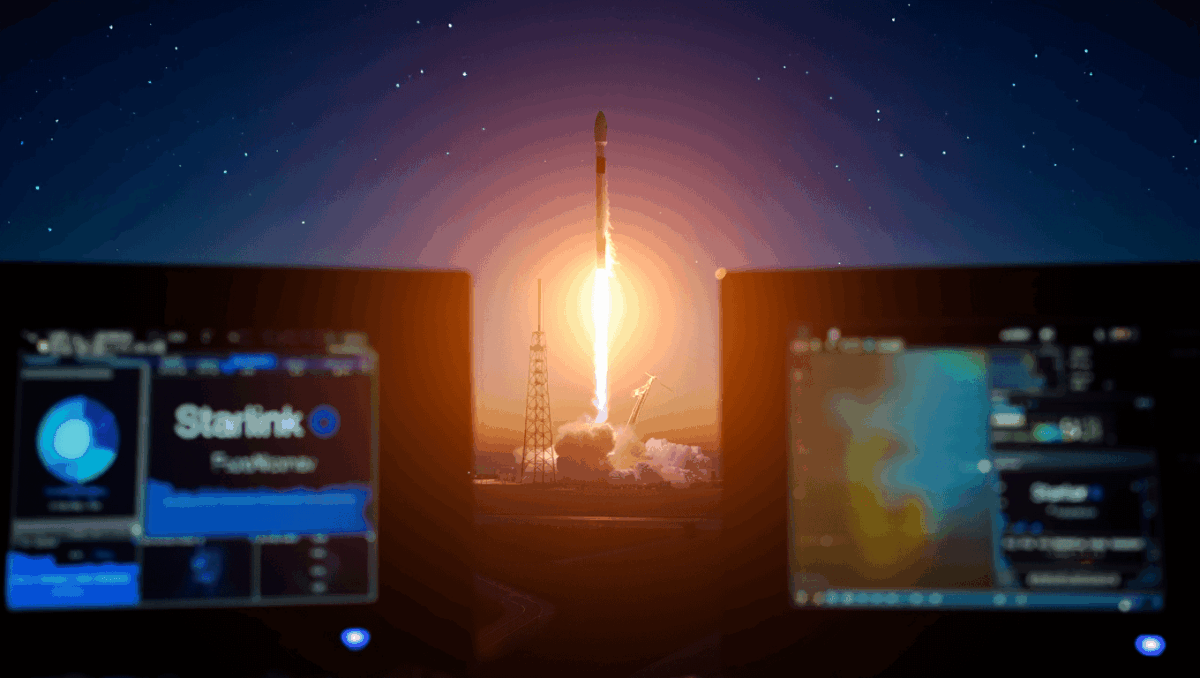
Starlink satellites narrowly escaped a potential collision with a Chinese spacecraft launched on December 9, 2025, highlighting growing space traffic concerns as SpaceX achieves a historic milestone. The close encounter occurred just 200 meters between the vehicles, prompting industry experts to call for improved coordination among satellite operators.
🔥 Quick Facts
- Starlink-6079 satellite performed evasive maneuver to avoid collision with Chinese spacecraft on December 10, 2025
- Close approach distance was approximately 200 meters in low Earth orbit
- 100th Falcon 9 launch completed on December 14, 2025, from Cape Canaveral Space Force Station
- 145,000 collision avoidance maneuvers performed by Starlink constellation in first six months of 2025 alone
The December 9 Close Encounter in Orbit
Intuit emerges as best software stock for 2026 while stock crashes to bargain levels analysts didn’t expect
2026 tax brackets shock Americans with hidden paycheck truth nobody expected
A satellite deployed from a Chinese Kinetica 1 rocket launched from Jiuquan Satellite Launch Center came dangerously close to SpaceX’s Starlink-6079 satellite on December 10, 2025. The Chinese spacecraft passed within 200 meters of the Starlink satellite, traveling at speeds exceeding 17,400 miles per hour, according to SpaceX officials.
SpaceX’s vice president of engineering confirmed the incident was “disturbingly close” and emphasized the critical need for improved coordination between international satellite operators. The event underscores the escalating challenges of managing increasingly congested orbital zones.
Current Starlink Constellation Size and Operations
Marcus Lemonis takes CEO role at Bed Bath & Beyond with $25M cost-cutting plan and watch what industry experts are saying about his next move
SPX surges 34 points at open with shocking tech recovery, here’s what caused the unexpected Venezuela rally
As of late October 2025, SpaceX maintains approximately 8,811 Starlink satellites in orbit, with roughly 8,795 functioning normally, according to astronomer Jonathan McDowell’s tracking data. The constellation continues to expand rapidly, deploying 24 to 29 satellites per Falcon 9 mission.
The sheer volume of satellites increases the probability of collision encounters. During the first six months of 2025 alone, Starlink spacecraft performed a staggering 145,000 collision avoidance maneuvers to navigate around tracked space debris and other satellites.
SpaceX Reaches 100 Falcon 9 Launches in 2025
| Launch Milestone | Details |
| 100th Falcon 9 Launch Date | December 14, 2025 |
| Launch Location | Cape Canaveral Space Force Station, Florida |
| Mission Payload | 29 Starlink satellites (Starlink 6-99) |
| Historical Significance | Marks SpaceX dominance with majority of global orbital launches |
| Total Falcon 9 Launches (All-Time) | 591 (as of December 15, 2025) |
SpaceX executed its 100th Falcon 9 launch on December 14, 2025, from Cape Canaveral Space Force Station in Florida, marking an unprecedented achievement for the company. The launch occurred during challenging windy conditions but successfully deployed 29 Starlink V2 Mini satellites into low Earth orbit.
This milestone demonstrates SpaceX’s remarkable operational pace and confirms the company’s dominance in the global commercial launch market. As of December 15, 2025, the entire Falcon 9 family has reached 591 total launches with a 99.49% success rate.
Space Debris and Collision Risks Growing Rapidly
The December encounter between Starlink-6079 and the Chinese spacecraft highlights an escalating problem in low Earth orbit. Space domain awareness organizations track over 24,000 objects including satellites, spent rocket stages, and debris fragments.
Recent research from major astronomy institutions warns that satellite megaconstellations present unprecedented risks to space-based astronomy and orbital operations. Without improved tracking and coordination protocols, experts predict inevitable collisions that could generate cascading debris problems.
SpaceX officials stressed that international coordination remains essential to prevent catastrophic collision events. The company has implemented automated collision avoidance systems, but these require accurate tracking data from global space surveillance networks.
What does this narrow miss mean for satellite internet’s future?
The close approach between Starlink satellites and Chinese spacecraft raises critical questions about regulatory frameworks and international space operations standards. Currently, no binding treaty mandates pre-launch coordination for satellite deployments.
Industry leaders are calling for formal protocols requiring satellite operators to share trajectory information before launches. The success of expanding internet constellations depends on establishing shared responsibility for orbital safety and sustainable space operations.
As SpaceX continues aggressive expansion of Starlink and other mega-constellations prepare for launch, the December 2025 incident signals an urgent need for international cooperation to prevent space traffic jams that could render low Earth orbit unusable for future missions.
Watch: Starlink Launch Coverage

This video captures recent Starlink launch operations and the scale of SpaceX’s satellite deployment missions.
Sources
- Space.com – Coverage of Starlink-Chinese spacecraft collision avoidance incident
- Spaceflight Now – Documentation of SpaceX’s 100th Falcon 9 launch milestone
- The Verge – Analysis of orbital collision risks and space debris concerns

Patrick Graham is a business and finance journalist translating Wall Street’s complexities into stories that matter to everyday readers. With extensive experience in financial journalism and economic analysis, this expert journalist provides sharp insights on market trends, corporate developments, and the economic forces affecting daily life. His reporting helps readers make sense of the business world’s biggest moves.