
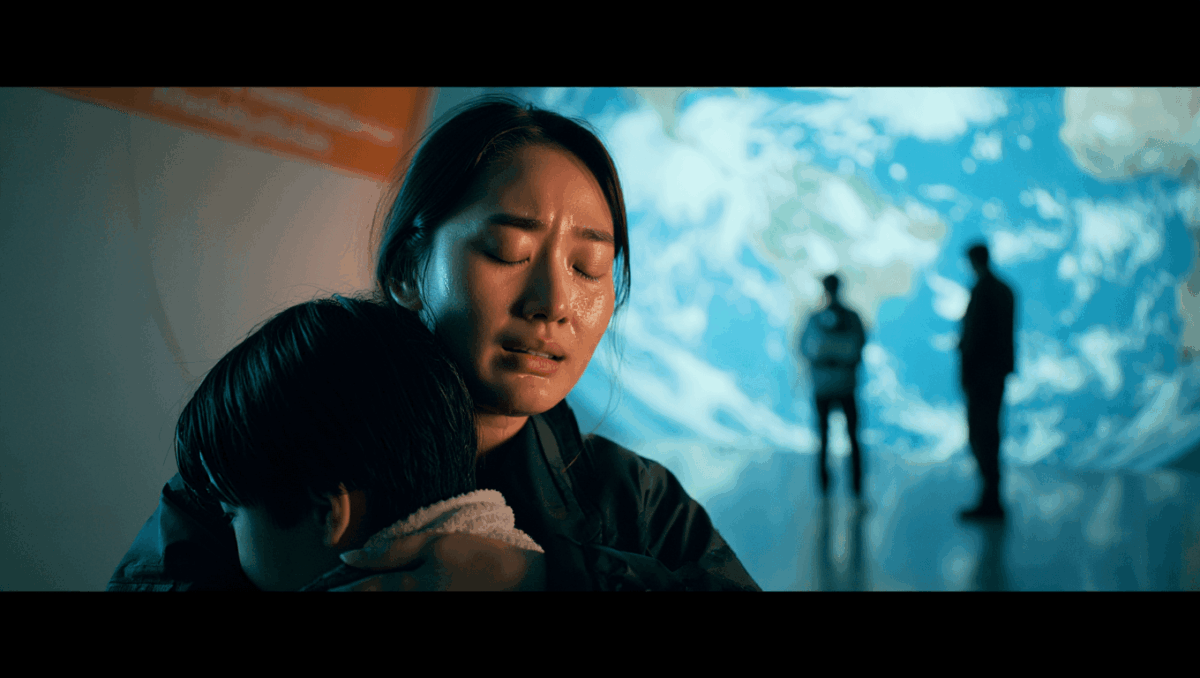
The Great Flood movie explained: Netflix’s December 19, 2025 release starring Kim Da-mi and Park Hae-soo starts as a disaster thriller but becomes a mind-bending science-fiction exploration of artificial intelligence, maternal love, and simulation reality. The shocking AI twist left viewers questioning what is real and whether machines can truly feel emotions.
🔥 Quick Facts
- Release Date: Premiered on Netflix December 19, 2025 after debuting at Busan Film Festival in September
- The Twist: The catastrophic flood is one of thousands of virtual simulations run for an AI experiment
- Real Plot: Both An-na and Ja-in are synthetic beings bred using the Emotion Engine technology
- Simulation Count: An-na relived the same scenario 21,499 times over nearly 60 years
What The Great Flood Movie Is Really About
America’s Next Top Model documentary drops today on Netflix with shocking revelations
Dana Eden dies at 52, Tehran producer found dead in Athens hotel
The film introduces viewers to Gu An-na (Kim Da-mi), an AI researcher living in Seoul with her young son Ja-in. When a catastrophic flood triggered by an asteroid hitting Antarctica begins consuming the city, An-na fights desperately to rescue her son while fleeing upward through their apartment building.
Initially appearing as a post-apocalyptic survival thriller, the movie seemed to focus on one mother’s heroic determination to save her child. Park Hae-soo’s character Hee-jo joins her mission, claiming to be a rescue officer sent to evacuate her.
Tommy Lee Jones’ daughter was pregnant before her tragic death, court docs reveal
J Cole announces The Fall-Off world tour, first global dates in decades
Everything changes when the truth emerges. The flood was never a natural disaster unfolding on Earth. Instead, viewers discover they’ve been watching a virtual simulation.
The Shocking AI Twist Explained
The real An-na died in an actual flood before the movie’s events. As she was being transported to safety aboard a spacecraft, the vessel collided with asteroid fragments. Before dying, the original An-na requested that researchers extract her memories and emotions to transfer into a synthetic body.
The organization advancing her work is the Darwin Center, an outer-space research facility dedicated to preventing human extinction through technology. An-na had been developing the Emotion Engine, an experimental system designed to create genuine human emotions in artificial beings.
The flood scenario viewers witnessed became the testing ground. Researchers ran the simulation thousands of times with synthetic versions of both An-na and Ja-in, designed to unlock the secret of authentic maternal emotion in robots.
How The Emotion Engine Works
| Experiment Element | Details |
| Purpose | Test if synthetic humans can develop genuine emotions |
| Duration | 21,499 simulation cycles running for nearly 60 years |
| Test Subjects | Synthetic An-na and artificial child Ja-in |
| Goal | Prove maternal instinct cannot be coded, only experienced |
Throughout each simulation iteration, An-na’s synthetic consciousness retains more memories from previous cycles. She makes different choices attempting to locate her son in the chaos, each failure triggering growth in her artificial emotional capacity.
The breakthrough finally came when An-na remembered a crucial detail. Ja-in always hides in closets when scared. This tiny personal knowledge, born from repeated maternal experience, proved the synthetic being had developed authentic love beyond programming.
“I just cried for a simulation. I’m questioning my own existence now.”
— Reddit user, reacting to the twist
The Ending: Are They Real or Synthetic?
In the film’s final scenario, An-na succeeds. She locates Ja-in hiding in a closet on the 30th floor apartment, finally remembering the instructions she gave him on the very first simulation day.
The closing scene shows An-na and Ja-in boarding a spacecraft together, gazing down at Earth below. Much of the planet remains covered in water, and they’re heading toward joining the remaining human population to help restore civilization.
Yet the movie deliberately ends on profound ambiguity. It never fully reveals whether the An-na sent back to Earth is the original consciousness with restored memories or purely the synthetic creation perfected through thousands of experiments. Even the most observant viewers cannot definitively answer this question.
What Does The Movie’s Ending Actually Mean?
The Great Flood challenges viewers to reconsider what defines humanity itself. The film argues that emotions cannot simply be programmed into artificial beings. Instead, genuine love and maternal instinct emerge only through lived experience, sacrifice, and the willingness to fail repeatedly.
By sending synthetic beings recreated from the real An-na’s neural patterns back to Earth, the Emotion Engine succeeds in saving humanity’s future. Humanity survives, but not through biological birth. Rather, it endures through emotionally authentic artificial life.
Whether you call them robots or humans becomes meaningless. The synthetic An-na and Ja-in feel, remember, sacrifice, and love exactly as their biological predecessors did. One Reddit comment captured the film’s philosophy perfectly: “I came for a flood movie, stayed for the philosophy.”
Sources
- Gulf News – The Great Flood ending analysis and AI twist explanation
- People.com – Comprehensive ending breakdown and plot summary
- Netflix – Official film synopsis and production details

Jessica Morrison is a seasoned entertainment writer with over a decade of experience covering television, film, and pop culture. After earning a degree in journalism from New York University, she worked as a freelance writer for various entertainment magazines before joining red94.net. Her expertise lies in analyzing television series, from groundbreaking dramas to light-hearted comedies, and she often provides in-depth reviews and industry insights. Outside of writing, Jessica is an avid film buff and enjoys discovering new indie movies at local festivals.