
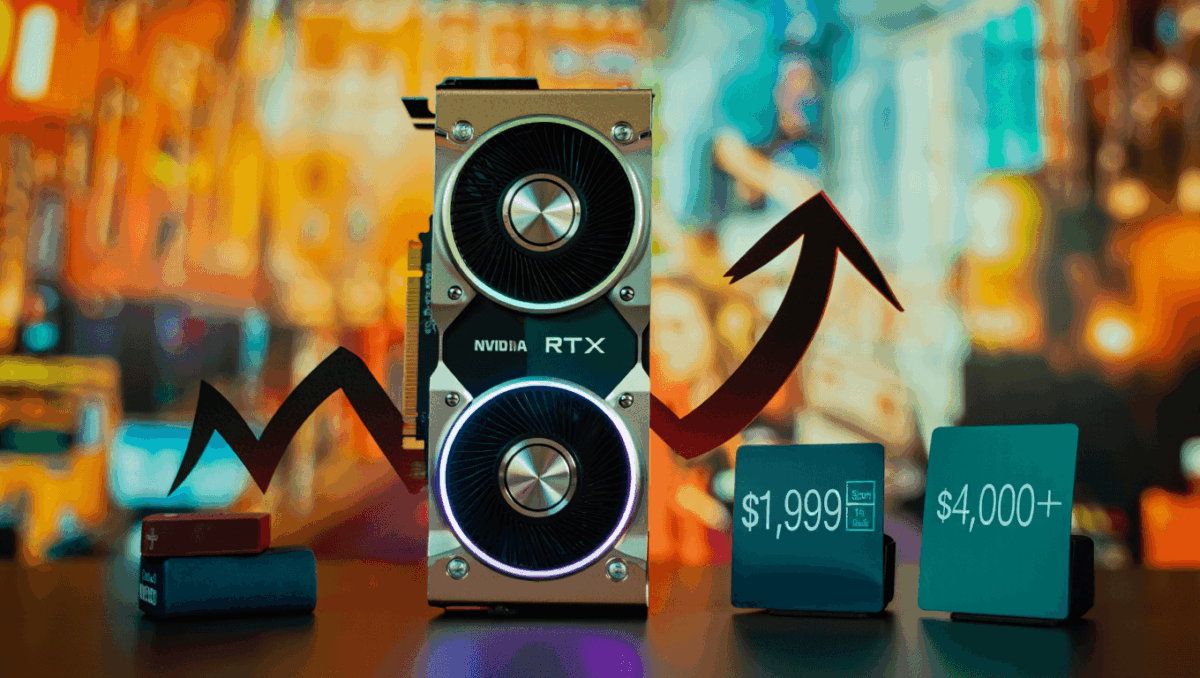
RTX 5090 prices are skyrocketing beyond anyone’s expectations. The flagship GPU launched at $1,999 just months ago, but today prices have already climbed toward $4,000 at major retailers. Industry leaks now predict prices could hit $5,000 before year’s end, representing a shocking 150% price increase driven by relentless AI demand.
🔥 Quick Facts
- RTX 5090 launched at $1,999 MSRP on January 30, 2025, with 32GB GDDR7 VRAM
- Prices reached $3,500-$4,000 range within one month as supply tightens
- Leaks predict $5,000 price tag by year-end, a 150% increase
- Memory costs account for 80% of GPU manufacturing, with DRAM prices rising 40% by Q2 2026
The Shocking Price Climb in January 2026
TurboTax Expert Full Service opens January 5, 2026, and what new tax law changes mean for your refund will surprise you
Intel stock soars 4% at open with analyst predicting $50 target, here’s why Panther Lake launch today changes everything
On the very first day of 2026, RTX 5090 pricing broke new records across major retailers. The $1,999 MSRP for the Founders Edition is now only available through NVIDIA’s official store via random Verified Priority Access drops. Retailers wasted no time capitalizing on the shortage, with most AIB custom models starting at $2,499 before quickly jumping to the $3,500-$4,000 range. MicroCenter listings show cards at $3,059, while Newegg and Best Buy cards exceed $3,500. Amazon’s cheapest option sits at $2,999 for Prime members.
This single month saw the GPU climb from theoretical MSRP to nearly double its launch price. Sources indicate the shortage stems from limited supply hitting exceptional demand, creating a perfect storm for price increases.
Why AI Demand is Destroying Gaming GPU Supply
Samsung Galaxy S26 Ultra drops at $1,299 but kept one jaw-dropping feature completely secret until February 25
CES 2026 unveils $99 AI memory wearable and smart glasses that finally look normal, but Samsung’s 6K 3D display will blow your mind
The RTX 5090 isn’t being hoarded by gamers anymore. AI companies and data center operators are buying these consumer cards in bulk, starving the gaming market. Memory shortages directly support this theory, as DRAM represents 80% of a GPU’s manufacturing cost according to TechPowerUp sources.
According to Korean publication Newsis, both NVIDIA and AMD are planning permanent price increases starting in January 2026. Memory prices alone are expected to surge 40% by Q2 2026, creating a compounding cost crisis. SK Hynix has forecasted tight memory supplies lasting through 2028, suggesting these price increases are here to stay.
Inside the 150% Price Surge Breakdown
| Pricing Milestone | Price Point | Timeline |
| NVIDIA MSRP Launch | $1,999 | January 30, 2025 |
| AIB Models Starting Price | $2,499 | January 2026 |
| Current Average Retail Price | $3,500-$4,000 | January 1-2, 2026 |
| Predicted Peak Price | $5,000 | By December 2026 |
The 150% increase compounds along two fronts. First, NVIDIA and board partners are deliberately increasing wholesale prices starting in February 2026. Second, retailers are marking up card prices to reflect scarcity, with some expecting sustained premium pricing through 2026 as supply remains constrained.
How Memory Shortages Created The Perfect Storm
The root cause traces back to GDDR7 memory that powers the RTX 5090. By accounting for 80% of the GPU’s bill of materials cost, any memory price spike devastates end-user pricing. With 32GB of ultra-fast GDDR7 packed inside, every dollar increase in memory costs directly translates to consumer sticker shock.
ASUS announced price increases starting January 5, 2026, explicitly citing memory and component cost pressures. Dell, Lenovo, and other systems integrators are trapped in the same squeeze. When Micron exited the consumer business this month, it further tightened an already stressed supply chain, leaving fewer options for smaller GPU manufacturers.
“Gaming is suffering under an affordability crisis, with increased demand for AI-capable GPUs and DDR5 memory resulting in rising prices for gamers and other far-reaching side effects.”
— TechPowerUp, Technology News Source
Can Gamers Expect Relief Before 2027?
The outlook remains grim for gaming enthusiasts hoping for relief. NVIDIA has no plans to officially increase MSRP according to available reports, which means the company may simply delist the Founders Edition rather than fight the secondary market. This strategy worked during the RTX 4090 shortage but ultimately frustrated consumers.
For gamers, the RTX 5070 Ti offers significantly better value at current pricing despite being a less powerful card. Secondary market RTX 4090 cards are selling at lower prices than the new flagship, making them surprisingly competitive options for those unable to justify $4,000-plus purchases. By the one-year anniversary of the RTX 5090, widespread availability at MSRP seems virtually impossible given current market conditions.
