
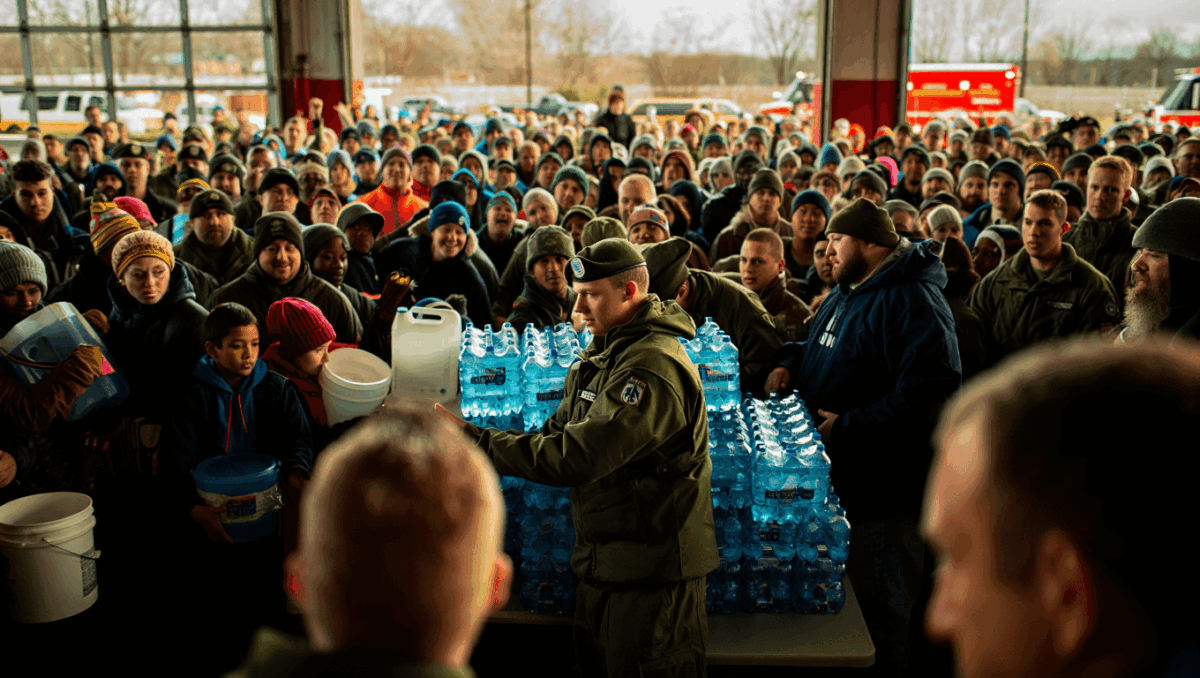
A catastrophic water main break in Waterbury, Connecticut has left over 100,000 residents without water service as the city grapples with an unprecedented infrastructure crisis. The massive 36-inch transmission main on Thomaston Avenue ruptured late Friday night, forcing state and federal emergency response teams to mobilize immediately. What started as a infrastructure nightmare has now escalated into a critical public health emergency affecting hospitals, schools, and essential services across the region.
🔥 Quick Facts
- A 36-inch transmission water main ruptured on Thomaston Avenue on December 13, 2025
- Over 100,000 residents in Waterbury lost water service, with Wolcott and Watertown also affected
- Connecticut National Guard deployed to assist with bottled water distribution efforts
- Schools remained closed Monday following the break, and residents must boil water before consumption
The Catastrophic Thomaston Avenue Main Failure
Intuit emerges as best software stock for 2026 while stock crashes to bargain levels analysts didn’t expect
2026 tax brackets shock Americans with hidden paycheck truth nobody expected
The infrastructure failure occurred late Friday night when the high-pressure transmission main simply ruptured, unleashing water throughout the system. This massive 36-inch transmission main serves as a critical artery for water distribution across much of Waterbury. Officials immediately initiated emergency protocols. The rupture forced crews to begin containment efforts that would ultimately consume multiple days of intensive work.
Initial crews struggled to access the underground break site due to the explosive force of water pressure. Weather conditions and the scale of the rupture complicated repair efforts throughout the weekend. Residents woke Saturday morning to discover water pressure dropping significantly across the city. Within hours, most of Waterbury’s population faced complete water service loss with minimal warning.
Widespread Devastation Across Three Towns
Marcus Lemonis takes CEO role at Bed Bath & Beyond with $25M cost-cutting plan and watch what industry experts are saying about his next move
SPX surges 34 points at open with shocking tech recovery, here’s what caused the unexpected Venezuela rally
The impact extended far beyond Waterbury’s city limits. Neighboring municipalities Wolcott and Watertown also experienced major water service interruptions due to their connection to the damaged transmission main. Critical infrastructure suffered immediate consequences. Two major hospitals scrambled to maintain operations with limited water supply, requiring emergency protocols to continue patient care.
Monday’s school closures affected thousands of students across the region. Local restaurants and businesses faced impossible circumstances unable to operate without water service. Essential services ground to a halt. The Connecticut National Guard mobilized with soldiers arriving on Saturday to assist with emergency response operations and prepare for large-scale water distribution.
National Guard Mobilization and Emergency Response
| Response Element | Status/Details |
| National Guard Deployment | Connecticut Army National Guard soldiers arrived for emergency relief |
| Water Distribution Setup | Multiple bottled water distribution sites established throughout city |
| Warehouse Operations | National Guard assisting with warehouse operations for supplies |
| Timeline | Deployment began Saturday, December 14, 2025 |
Mayor Paul Pernerewski coordinated with Governor Ned Lamont to request military support for the crisis response. The Connecticut National Guard arrived Saturday morning with soldiers tasked to assist with bottled water distribution operations. Soldiers deployed to warehouse operations to coordinate massive supply logistics. Volunteers from the city also stepped in to help residents navigate the emergency situation.
The scale of the response reflected the disaster’s severity. Water shipments began arriving at multiple distribution points across Waterbury. Residents lined up for bottled water throughout the day. Officials announced locations for distribution sites as supplies arrived. The National Guard’s presence marked an escalation in emergency response typically reserved for major disasters.
Long-Term Challenges and Boil Water Order
Officials warned residents that restoration could take multiple days given the repair scope required. The ruptured section of the 36-inch main requires complete replacement rather than simple patching. Once service restoration begins, residents must still boil water before consumption despite water flowing from taps. The boil water order affects the entire city until water quality testing confirms safety.
Infrastructure experts noted that repairs to a transmission main of this size demand precision and extensive testing. Crews cannot simply seal the break and restore pressure immediately. Complete sections require removal and replacement. Testing must occur under controlled conditions. The process typically takes several days minimum for a rupture of this magnitude affecting a metropolitan area.
What This Water Crisis Means for Waterbury’s Future?
The catastrophic failure raises fundamental questions about aging water infrastructure across American cities. Waterbury’s transmission main system dates back decades, revealing vulnerability in critical utilities. The city must now confront long-term infrastructure investment needs while managing immediate emergency response. Officials face pressure to modernize water systems to prevent future disasters of similar magnitude from crippling the community again.
“We’re doing everything we can to bring water back as quickly as possible while ensuring safety for residents.”
— City Officials, Waterbury Emergency Management
Sources
- WFSB (Channel 3) – Comprehensive coverage of water main break and emergency response
- CT Insider – National Guard deployment details and crisis updates
- CT News Junkie – School closures and restaurant impacts from water emergency

Patrick Graham is a business and finance journalist translating Wall Street’s complexities into stories that matter to everyday readers. With extensive experience in financial journalism and economic analysis, this expert journalist provides sharp insights on market trends, corporate developments, and the economic forces affecting daily life. His reporting helps readers make sense of the business world’s biggest moves.