
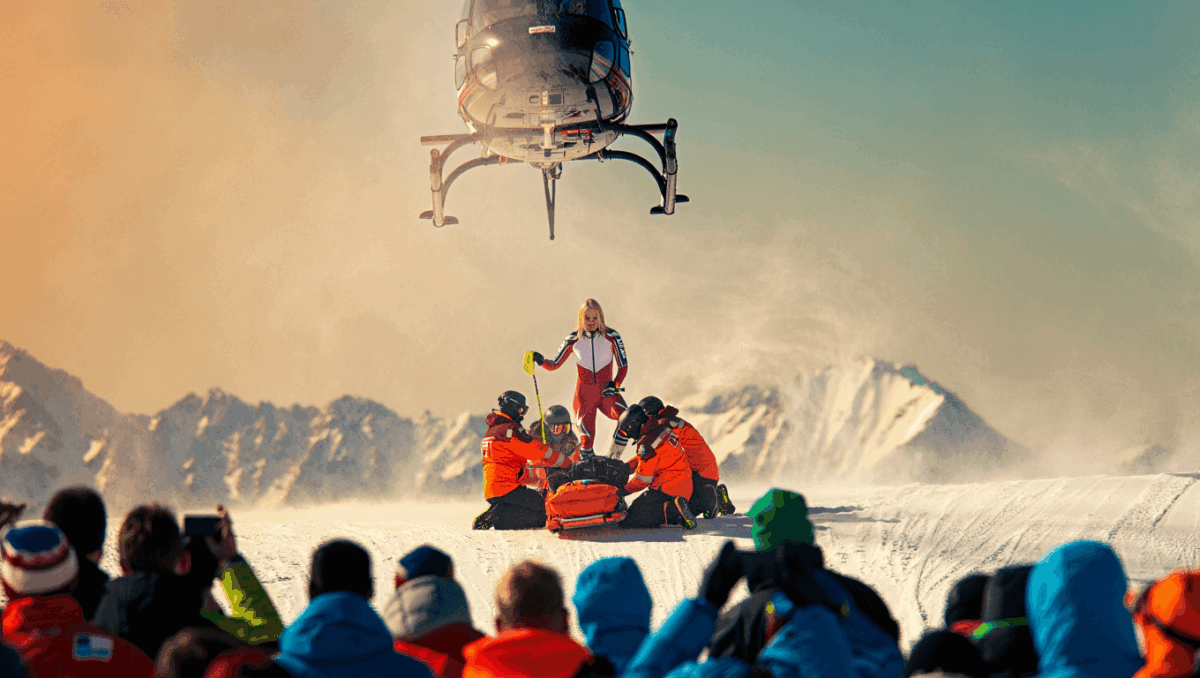
Lindsey Vonn suffered a devastating left leg tibia fracture after a horrific crash just 13.4 seconds into the Olympic downhill on February 8. The 41-year-old legend was immediately airlifted from the course and underwent emergency surgery. What happened on that fateful mountain run reveals the extreme risks she took to chase Olympic gold.
🔥 Quick Facts
- Crash timing: Vonn crashed just 13.4 seconds into the women’s downhill race in Cortina
- Injury type: Broken left leg with tibia fracture requiring orthopedic stabilization surgery
- Return status: Stable condition after emergency surgery at Ca’Foncello Hospital in Treviso, Italy
- Prior injury: She had ruptured her left ACL only 9 days earlier but chose to race anyway
The Impossible Comeback That Ended in Tragedy
Cagliari faces Lecce tonight in Serie A showdown, Rossoblu seek top-half push
Girona faces Barcelona tonight in La Liga showdown, Barcelona chases lead
Lindsey Vonn returned to Olympic competition after 6 years of retirement with a titanium knee replacement and the odds stacked heavily against her. She had ruptured her left ACL just over a week before Sunday’s downhill, yet remained determined to race. Medical experts had suggested it was theoretically possible for her to compete at elite speeds without the ACL, citing her exceptional muscle strength and years of compensation from previous injuries. But the mountain had other plans.
As the 2026 Winter Olympics got underway in Milan-Cortina, Vonn was the story everyone wanted to see unfold. Her journey from retirement to competing at age 41 had captivated the world. She had trained on the Tofane course at startling speeds in the days before the race. Yet the decision to race on a torn ACL would prove catastrophic when conditions changed during competition.
How the Crash Unfolded on the Mountain
East Texas A&M faces Southeastern in Family Fun Day matchup today
Macclesfield faces Brentford tonight in FA Cup fourth-round showdown
Vonn’s right ski pole snagged a gate at the crest of her jump, according to Team USA. The American skier lost control immediately, flying sideways through the air before striking her head on the snow. She came to rest on the course, responsive but unable to remove her skis, audibly crying out in pain. Medical personnel responded within seconds, with a helicopter rescue team airlifting her off the iconic Olympia delle Tofana slope.
The crash happened so early in the race that most competitors had not yet started. Spectators sat in stunned silence as the legendary skier was transported off the mountain. Her father, Alan Kildow, watched helplessly from the stands as his daughter required immediate evacuation to medical care.
Injury Details and Surgery Response
| Medical Detail | Status |
| Fracture type | Left leg tibia fracture |
| Hospital | Ca’Foncello Hospital, Treviso Italy |
| Surgery type | Orthopedic operation to stabilize fracture |
| Current status | Stable condition, multidisciplinary care team |
Ca’Foncello Hospital released a statement confirming that Vonn underwent orthopedic surgery to stabilize the fracture in her left leg. The U.S. Ski Team reported she was receiving treatment from a multidisciplinary medical team combining American and Italian physicians. Anouk Patty, chief of sport for U.S. Ski and Snowboard, emphasized that while Vonn would recover, the incident underscored the brutal nature of competitive downhill skiing at extreme speeds.
Her Remarkable History of Injuries and Comebacks
Vonn’s career had already been marked by extraordinary resilience through multiple surgeries and fractures. Before this crash, she had competed with three tibia fractures, a bone bruise, fractured ankles, broken arms, and injuries to nearly every finger. In a prior Olympic appearance, she won a bronze medal despite racing with a torn lateral collateral ligament and multiple tibial fractures. Her titanium knee replacement in 2024 was supposed to restore quality of life, not send her back to racing mountains.
She had announced her comeback just months earlier in November 2025. Her determination stemmed from pure love of the sport. “If there’s one thing I know how to do, it’s a comeback,” she had written on Instagram before Sunday’s race. Her record on the Cortina course was exceptional, with 12 World Cup wins at Tofane, the most iconic downhill run in the world. Yet all the preparation and prowess could not protect her from the inherent risks of racing at 70 miles per hour down an icy mountain with a completely ruptured knee.
“This sport’s brutal and people need to remember when they’re watching that these athletes are throwing themselves down a mountain and going really, really fast.”
— Anouk Patty, Chief of Sport, U.S. Ski and Snowboard
What Her Sacrifice Means for Women’s Alpine Skiing
Vonn’s decision to race despite the torn ACL had sparked global conversation about athlete determination, risk tolerance, and the price of competitive excellence. She had been transparent about the 100 percent severity of her ACL rupture, stating she had zero healthy anterior cruciate ligament. Yet she believed her muscle strength and decades of skiing experience could compensate. The crash proved the limitations of even extraordinary human resilience.
Her fellow American skier Breezy Johnson went on to win gold in the downhill on Sunday, taking advantage of excellent conditions. Johnson’s victory came bittersweet, overshadowed by concern for her mentor. Jacqueline Wiles, another Team USA competitor, came in fourth. But the emotional energy of the day belonged entirely to Vonn and her recovery.
Will Lindsey Vonn’s Olympic Dreams End Here
With a major left leg fracture requiring surgery, questions about Vonn’s future return to skiing remain urgent. Earlier in her career, she had demonstrated remarkable healing capacity from broken bones and returned to competitive downhill racing. But at age 41, with multiple prior surgeries and the new hardware from recent titanium knee replacement, recovery timelines are unpredictable. Vonn’s supporters worldwide are holding onto hope, knowing her resilience has always been her defining characteristic. What happens next will depend on the severity of the tibia fracture, her willingness to endure another rehabilitation, and whether her body can withstand more punishment from mountains.

Michael Brown is a seasoned sports journalist bringing years of experience covering professional athletics and sporting culture. With a keen eye for breaking stories and player dynamics, this veteran journalist delivers in-depth analysis and exclusive insights from the world’s biggest sporting events. His passion for the game shines through in every story, keeping fans connected to the action both on and off the field.