
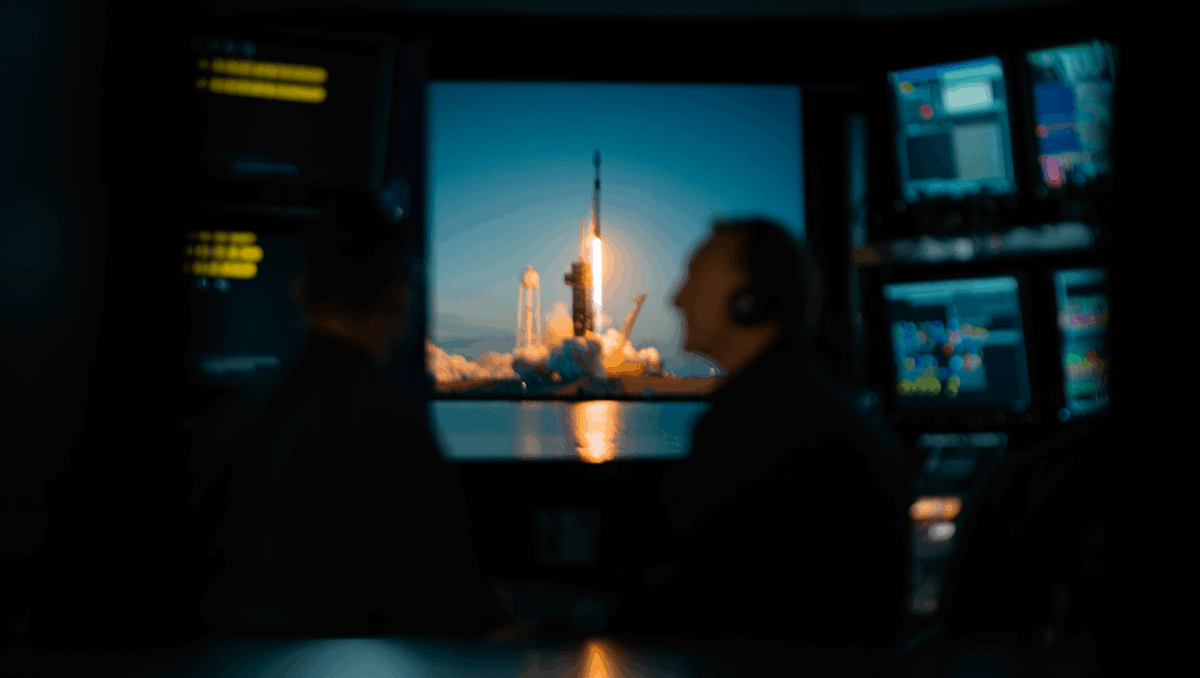
Kennedy Space Center stands ready for one of tonight’s most significant national security missions. A SpaceX Falcon 9 Block 5 rocket will lift off at 7:00 PM ET on December 30, 2025, carrying classified US Space Force payloads directly to geostationary orbit. This high-stakes launch represents critical infrastructure for American defense capabilities.
🔥 Quick Facts
- Mission Name: USSF-31, a classified Space Force national security mission
- Launch Time: 7:00 PM ET on December 30, 2025 from Kennedy Space Center
- Payload: Two classified satellites destined for geostationary orbit
- Vehicle: Falcon 9 Block 5 rocket, SpaceX’s proven heavy-lift system
What Is the USSF-31 Mission?
TurboTax Expert Full Service opens January 5, 2026, and what new tax law changes mean for your refund will surprise you
Intel stock soars 4% at open with analyst predicting $50 target, here’s why Panther Lake launch today changes everything
The USSF-31 represents a classified initiative by the United States Space Force to enhance national security capabilities in space. Two distinct payloads will be deployed directly to geostationary orbit, a prime location for communication and surveillance assets serving American defense interests.
Geostationary orbit positions satellites approximately 22,300 miles above Earth’s equator, allowing them to remain stationary relative to a fixed point on the surface. This altitude provides strategic advantages for long-duration monitoring and communications missions critical to national defense.
SpaceX’s Falcon 9 Block 5: The Launch Vehicle
Samsung Galaxy S26 Ultra drops at $1,299 but kept one jaw-dropping feature completely secret until February 25
CES 2026 unveils $99 AI memory wearable and smart glasses that finally look normal, but Samsung’s 6K 3D display will blow your mind
The Falcon 9 Block 5 variant represents SpaceX’s most advanced reusable launch system. Standing approximately 230 feet tall, the rocket combines proven reliability with exceptional payload capacity—delivering up to 8,300 kilograms to geostationary transfer orbit.
SpaceX’s Falcon 9 family has logged more than 590 successful missions as of mid-December 2025, establishing an exceptional track record for national security launches. The rocket’s first stage booster demonstrates reliable reusability, landing on either coastal sites or offshore droneship platforms after payload separation.
| Launch Detail | Specification |
| Rocket Type | Falcon 9 Block 5 |
| Launch Site | Kennedy Space Center, Florida |
| Lift-off Time | 7:00 PM ET, December 30, 2025 |
| Payload Destination | Geostationary Orbit (GEO) |
| Mission Status | TBD – Classified National Security |
Kennedy Space Center’s Role in National Security
Kennedy Space Center serves as one of America’s primary spaceports for national security missions. The facility hosts advanced launch infrastructure capable of supporting complex, classified government operations for the US Space Force and intelligence community.
Tonight’s launch advances critical defensive capabilities in space. The US Space Force operates the Space Operations Command, responsible for space superiority, cyberspace defense, and rapid launch capabilities. Access to geostationary orbit remains essential for maintaining American military communication and surveillance dominance globally.
Classified Payloads and Orbit Deployment Strategy
The mission carries two distinct classified payloads destined for geostationary orbit. Details regarding these satellites remain restricted due to national security classification. The Falcon 9’s sophisticated guidance systems enable precise orbital insertion, deploying payloads with exacting accuracy to their assigned locations.
Geostationary positioning offers permanence unavailable from lower orbital altitudes. Satellites stationed at this altitude maintain constant watch over assigned Earth regions, supporting real-time communication relay and persistent surveillance requirements. The mission’s classification underscores its strategic importance to American defense architecture.
Why Does Tonight’s USSF-31 Launch Matter for National Security?
Tonight’s mission represents more than a routine rocket launch. It demonstrates America’s sustained capability to project power and maintain superiority in the space domain—increasingly critical to modern military operations and national defense. Access to space assets determines command and control effectiveness across all military operations globally.
The successful deployment of these classified payloads enhances America’s situational awareness and communication capabilities. SpaceX’s partnership with the US Space Force through multiple USSF-designated missions has proven instrumental in modernizing America’s space infrastructure faster than traditional acquisition programs permitted. Tonight’s USSF-31 continues this critical national security mission cadence.

Lee Ann Anderson is a technology journalist specializing in consumer tech, digital innovation, and Silicon Valley trends. With a talent for breaking down complex technical concepts into accessible insights, this skilled journalist keeps readers informed about the gadgets, apps, and breakthroughs shaping our digital future. Her coverage bridges the gap between tech enthusiasts and everyday users.