
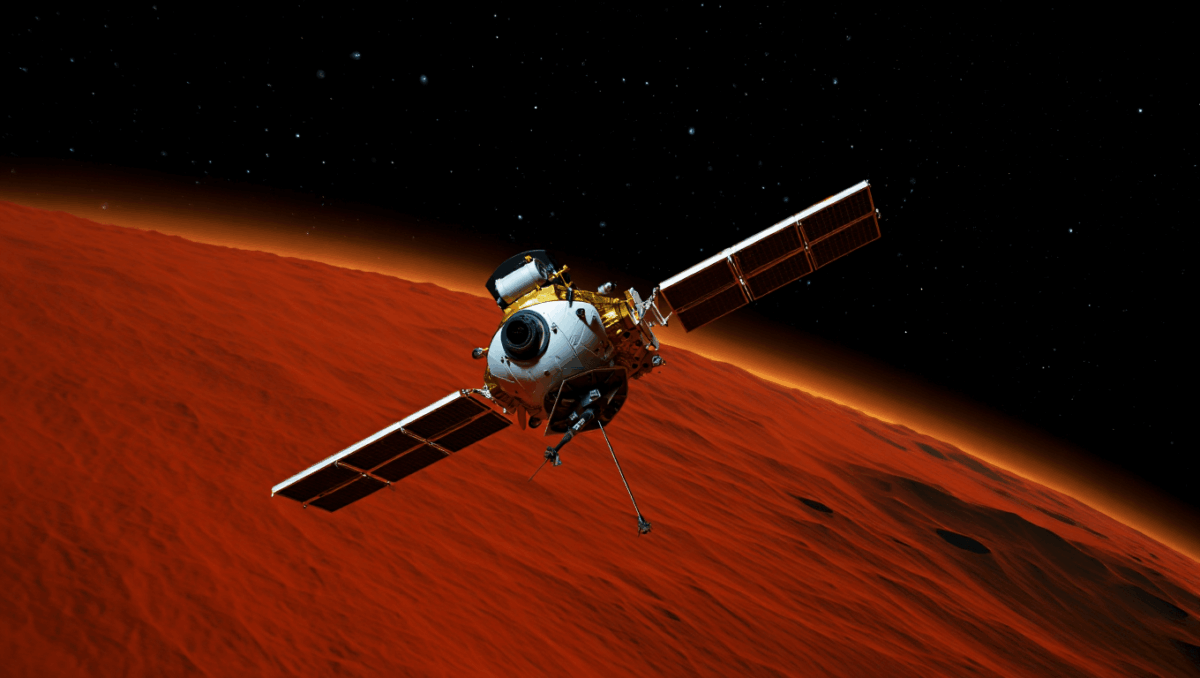
Maven spacecraft has been mysteriously silent since December 4, 2025, raising serious concerns at NASA. The decade-old Mars orbiter stopped communicating with Earth over a week ago, and latest analysis reveals it’s spinning unexpectedly in orbit. NASA teams continue urgent recovery efforts to restore contact with this critical mission.
🔥 Quick Facts
- Maven spacecraft lost contact on December 6, 2025, with no successful recontact attempts to date
- Last brief telemetry fragment received December 4, confirming unexpected rotation pattern discovered
- The orbiter has served Mars research for over 10 years as a critical atmospheric science asset
- NASA’s Deep Space Network teams continue 24/7 recovery operations and analysis
What Happened to Maven on December 4th
Powerball winner scoops $1.817 billion on Christmas Eve, what happens next will change their life forever
Zendaya shuts down pregnancy rumors after viral London outing with Tom Holland goes too far—here’s what she actually said
NASA’s mission control experienced alarm when tracking signals indicated Maven’s orbit trajectory may have changed. A fragment of tracking data recovered from the Deep Space Network showed the spacecraft rotating in an extremely unusual manner as it emerged from behind Mars. This rotation pattern was completely unexpected by the engineering team.
What makes this particularly concerning is that no telemetry data has been received since December 4. The spacecraft should have automatically sent status updates during scheduled communication windows. Instead, operators encountered only silence.
Arkansas lottery wins $1.817 billion Powerball jackpot on Christmas Eve, here’s what happens to the money
Powerball winner scoops $1.817 billion jackpot on Christmas Eve, but nobody knows who they are yet
Earlier communication loss incidents haunted Maven’s history—in 2022, navigation sensor issues caused months without contact. Engineers successfully revived the probe then, fueling hope for recovery now.
Why Maven Matters for Mars Exploration
For over a decade, Maven has been humanity’s dedicated sentinel studying Mars’ thin atmosphere. The spacecraft monitors how solar wind strips away the Red Planet’s upper atmosphere—a crucial factor in understanding Mars’ geological history and future habitability. This data informs plans for human exploration.
Beyond science, Maven serves a critical infrastructure role. Four orbiters relay communications to NASA’s Perseverance and Curiosity rovers. With Maven offline, the remaining three orbiters (Mars Reconnaissance Orbiter, Mars Odyssey, and ESA’s ExoMars Trace Gas Orbiter) have absorbed additional communication duties.
NASA arranged additional orbital passes and adjusted daily rover schedules to maintain operations for the next two weeks. The team has proven rover missions can continue without Maven, though operations become less flexible.
Understanding the Unexpected Spinning Problem
| Status Factor | Current Situation |
| Last Confirmed Contact | December 4, 2025 |
| Signal Loss Notification | December 6, 2025 |
| Spacecraft Status | Rotating unexpectedly, orbit trajectory changed |
| Recovery Attempts | Not yet successful as of December 17 |
| NASA Teams Active | Yes, Deep Space Network coordinating 24/7 |
The unexpected rotation presents the most puzzling aspect of Maven’s failure. Spacecraft orientation is normally controlled by onboard thrusters and reaction wheels. An anomaly causing uncontrolled spinning would severely disrupt communications, power generation, and thermal control. Investigators analyze whether a thruster malfunction, solar panel damage, or onboard system failure triggered the rotation.
Analysis of the tracking data frequency suggests the orbit itself may have been affected, something extraordinarily difficult to cause without propulsion system involvement. The team considers solar particle events, micrometeorite impacts, or catastrophic component failures as possible culprits.
NASA’s Recovery Strategy and Timeline Ahead
The Deep Space Network continues transmitting recontact commands on multiple frequencies, hoping to trigger Manchester’s backup systems. Engineers designed Maven with recovery procedures for degraded communication scenarios. However, if the spacecraft’s receiver or essential computers are damaged, even these failsafes may be insufficient.
Recovery teams prioritize understanding the spinning mechanism before attempting additional interventions. Transmitting corrective commands to a spacecraft with malfunctioning attitude control could worsen the situation. The team analyzes every scrap of tracking data for clues about deployment status, power levels, and thermal conditions.
Time works both for and against recovery efforts. Maven carries sufficient fuel for several more years of operations if recovered. However, prolonged spinning could damage solar panels permanently through thermal cycling or micrometeorite accumulation, permanently ending the mission.
Will NASA restore Maven to service before it’s too late?
NASA faces a critical juncture with one of its most productive Mars assets. The decade-old orbiter represents billions in scientific infrastructure now in jeopardy. Previous successes recovering stricken spacecraft provide precedent—yet each hour of silence makes recovery increasingly difficult.
The agency views Maven as crucial infrastructure supporting the expanding robot presence on Mars. While rover operations can continue with three remaining orbital relays, Maven’s specialized atmospheric science mission fills an irreplaceable role. Mars scientists worldwide await news of recontact.
Whether the spacecraft spins silently in Martian orbit never to communicate again, or engineers find the key to reviving its systems remains the burning question in NASA’s operations center this December.
Sources
- NASA Science Official Blog – NASA Continues MAVEN Spacecraft Recontact Efforts (December 15, 2025)
- Space.com – NASA’s MAVEN Spacecraft Is Still Silent at Mars
- SpaceNews – MAVEN Telemetry Shows Changes to Spacecraft Orbit and Rotation

Daniel Harris is a specialist journalist focused on the crossroads of breaking news, extraordinary history, and enduring legends. With a background in historical research and storytelling, he blends timely reporting with timeless narratives, making complex events and ancient myths resonate with today’s readers. Daniel’s work often uncovers surprising links between present-day headlines and legendary tales, offering unique perspectives that captivate diverse audiences. Beyond reporting, he is passionate about preserving oral traditions and exploring how extraordinary stories continue to shape culture and identity.