
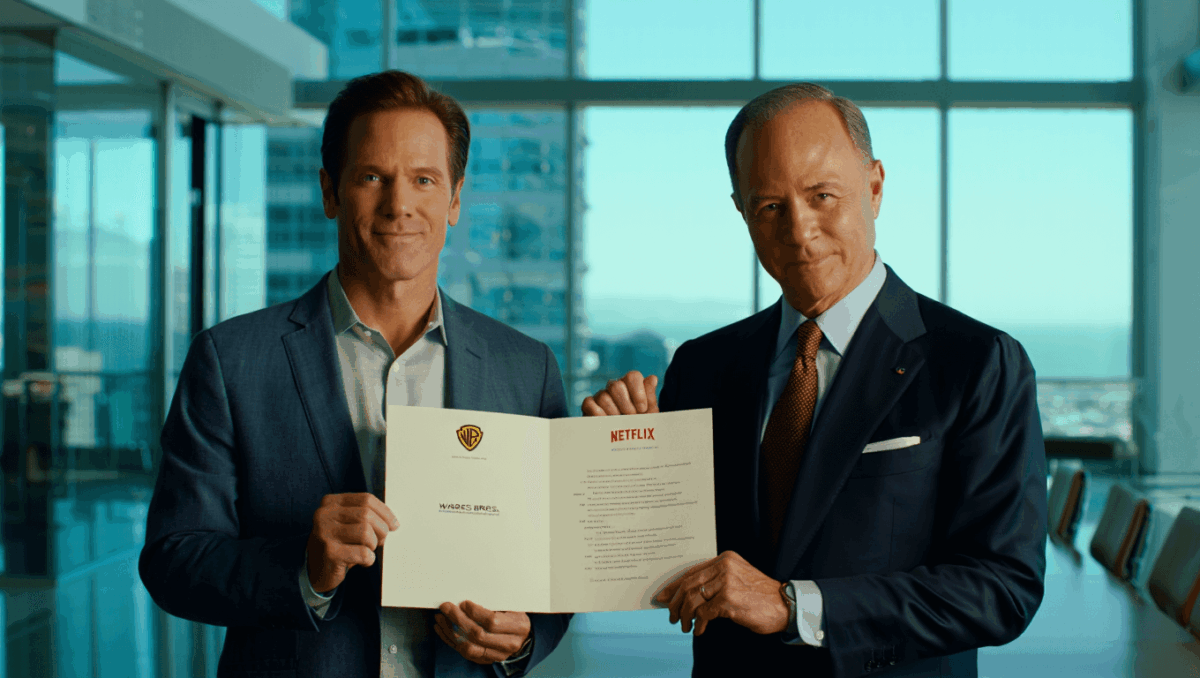
Netflix just made Hollywood history by agreeing to acquire Warner Bros. Discovery in an eye-watering $82.7 billion deal announced December 5, 2025. This mega-acquisition combines the world’s largest streaming platform with one of entertainment’s most iconic studios, fundamentally reshaping the entire industry. The transaction unites Netflix’s 260 million subscribers with Warner Bros.’ legendary franchises including DC Comics, Harry Potter, and Looney Tunes.
🔥 Quick Facts
- Deal Value: $82.7 billion enterprise value ($72 billion equity value announced in 2 days)
- Shareholder Compensation: WBD shareholders receive $23.25 cash plus $4.50 Netflix stock per share
- Closing Timeline: Expected to complete in Q3 2026, approximately 12-18 months away
- Content Included: Warner Bros. studios, HBO/HBO Max, DC Comics, Harry Potter franchise, Friends library, Looney Tunes
How This Deal Changes Everything
Intuit emerges as best software stock for 2026 while stock crashes to bargain levels analysts didn’t expect
2026 tax brackets shock Americans with hidden paycheck truth nobody expected
The acquisition marks the most significant media consolidation since the streaming wars began. Netflix will integrate Warner Bros.’ entire film and television production apparatus into its platform, creating an unprecedented content powerhouse. Each Warner Bros. Discovery shareholder accepted a combination of cash and Netflix equity, valuing the company at $27.75 per share total.
This deal doesn’t just add movies and shows to Netflix’s catalog. It fundamentally transforms Netflix from a streaming distributor into a vertically integrated studio control system. Netflix co-CEO Ted Sarandos emphasized the company will expand U.S. production capacity significantly. The transaction gives Netflix control of 100 years of entertainment intellectual property developed across generations.
What Netflix Actually Gets
Marcus Lemonis takes CEO role at Bed Bath & Beyond with $25M cost-cutting plan and watch what industry experts are saying about his next move
SPX surges 34 points at open with shocking tech recovery, here’s what caused the unexpected Venezuela rally
Netflix secures ownership of Warner Bros. film studio, HBO/HBO Max streaming service, and Warner Bros. Television operations. Critically, the deal includes beloved franchises that defined entertainment: Harry Potter, Fantastic Beasts, DC Comics characters, The Lord of the Rings, and the entire Looney Tunes catalog. Netflix also inherits the Friends library and hundreds of theatrical films.
However, important content stays separate. CNN, TNT, and HGTV cable networks are not included—Warner Bros. Discovery is first spinning off its Global Networks division. Netflix assumes $10 billion in Warner Bros. debt as part of the transaction. The deal includes a $5.8 billion breakup fee if regulatory approval fails.
| Financial Metric | Value |
| Enterprise Value | $82.7 billion |
| Equity Value | $72.0 billion |
| Per Share Cash | $23.25 |
| Per Share Netflix Stock | $4.50 |
| Expected Close | Q3 2026 |
How the Industry is Reacting
Hollywood studios openly expressed shock at the unprecedented scale and speed of negotiations. Both Paramount and Comcast reportedly submitted competitive bids, but Netflix prevailed decisively. Industry analysts compare this to the original studio system era when one company controlled everything from production to distribution.
Reactions remain deeply mixed. Some industry observers warn the combined entity could reduce theatrical film releases or shorten their theatrical windows. Theater owners expressed concern that Netflix-owned Warner Bros. movies might skip cinemas entirely. Labor unions immediately opposed the deal, fearing job consolidation and reduced production work. However, Netflix pledged to maintain current Warner Bros. operations and preserve employment.
What Happens to HBO Max and Netflix
The integration of HBO Max into Netflix represents one of the deal’s most critical questions. Sources indicate HBO Max remains a distinct premium service rather than immediate consolidation. Netflix’s massive library combined with HBO’s prestige content could create a dual-tier platform strategy. The companies expect regulatory approval despite obvious antitrust concerns.
Government review represents the biggest remaining hurdle. Some experts warn the combined entity would control approximately close to 50% of the streaming market, triggering potential monopoly questions. Regulatory agencies must approve the deal before closing in Q3 2026. Consumer impact remains uncertain—some predict price increases across both platforms, while optimists suggest expanded content justifies premium pricing.
What Does This Mean for the Future of Entertainment?
The Netflix-Warner Bros. deal signals the conclusive end of the streaming wars’ independence era. Rather than competing platforms, consolidation now appears inevitable. Disney, Amazon, and Apple now face pressure to pursue similar mega-deals or accept diminished market position. The deal essentially declares that streaming has won, and the future belongs to vertically integrated entertainment giants.
This acquisition reshapes Hollywood’s fundamental structure after nearly 120 years of separate manufacturing by major studios. Netflix’s stated mission emphasizes utilizing Warner Bros. studio expertise to enhance global production quality. Whether this translates into better content or merely corporate consolidation remains the great unanswered question facing the entertainment industry.
Watch: Netflix’s $82.7 Billion Acquisition Explained
Sources
- Netflix Newsroom – Official deal announcement with comprehensive transaction details
- Reuters – Financial analysis and market impact assessment
- The New York Times – Industry context and regulatory considerations

Patrick Graham is a business and finance journalist translating Wall Street’s complexities into stories that matter to everyday readers. With extensive experience in financial journalism and economic analysis, this expert journalist provides sharp insights on market trends, corporate developments, and the economic forces affecting daily life. His reporting helps readers make sense of the business world’s biggest moves.