
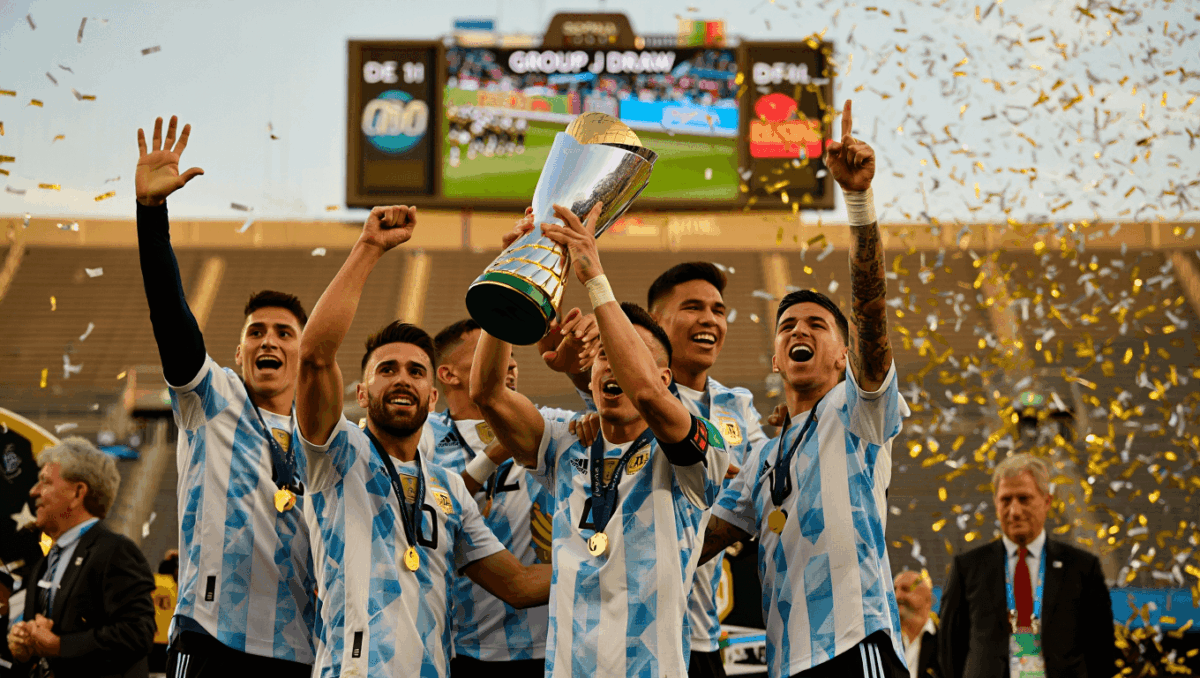
The 2022 World Cup champions Argentina will not face Australia again in the group stage of next summer’s tournament. The 2026 FIFA World Cup draw took place today in Washington, D.C., creating a dramatically different path for the two nations that last met in the Round of 16 at Qatar 2022. Argentina lands in Group J alongside Austria and Algeria, while Australia joins Group D with the United States and Paraguay.
🔥 Quick Facts
- Argentina was placed in Pot 1 alongside other elite nations like Spain, England, and France
- The 2026 World Cup will feature 48 teams split into 12 groups of 4 for the first time ever
- Australia was drawn as the lowest-ranked Pot 2 team but avoids the toughest defenses
- The tournament begins June 11, 2026 in Mexico City and runs through July 19, 2026
Argentina’s Path Avoids the Socceroos This Time
Cagliari faces Lecce tonight in Serie A showdown, Rossoblu seek top-half push
Girona faces Barcelona tonight in La Liga showdown, Barcelona chases lead
When the names were drawn today at the Kennedy Center, Argentina faced a notably different draw outcome. The defending champions received Austria and Algeria as their group opponents after sitting in the top seeding pot. This stands in stark contrast to their Round of 16 knockout meeting with Australia at the 2022 World Cup in Qatar. That December 3, 2022 match saw Argentina edge out Australia 2-1, with Lionel Messi and Julian Alvarez scoring to send the Socceroos home.
The 2026 group stage structure means Argentina will compete against European qualifying team Austria and African powerhouse Algeria in the opening matches. Group J runs from June 16-27, 2026, giving the reigning champions a manageable path through their pool.
Australia Earns Favorable Group D Draw in Los Angeles
East Texas A&M faces Southeastern in Family Fun Day matchup today
Macclesfield faces Brentford tonight in FA Cup fourth-round showdown
Australia was drawn into Group D alongside host nation United States and Paraguay. The Socceroos will play their tournament matches in North American cities, including fixtures at Los Angeles. Australia currently ranks 26th globally in the FIFA rankings and was classified as the lowest-ranked team in Pot 2 during today’s draw ceremony. This placement actually favors the Oceania representatives compared to drawing a stronger group.
Group stage play for Australia begins June 12, 2026, with matches occurring June 12-22, 2026. The Socceroos face their biggest test immediately against the USMNT in the group opener, meaning first impressions matter significantly.
| Team | Current Ranking | Group Assignment | Primary Opponent |
| Argentina | 2nd | Group J | Austria, Algeria |
| Australia | 26th | Group D | USA, Paraguay |
| 2022 Previous Meeting | Quarterfinal | Round of 16 | Argentina Won 2-1 |
How the Expanded Tournament Format Changed Everything
The 2026 FIFA World Cup represents a seismic shift in tournament structure from the traditional 32-team, 8-group format. With 48 teams now splitting into 12 groups of 4, the draw ceremonies become exponentially more complex. Today’s draw in Washington, D.C. saw FIFA implement strict confederation rules where teams from the same regional federation cannot face each other—except for European nations, where up to two UEFA teams can be grouped together.
This expansion means Argentina and Australia were unlikely to meet in the group stage purely by statistical probability. With CONMEBOL (South American confederation) and AFC (Asian confederation) regulations preventing regional clashing, the organization automatically separated these natural rivals into different pools. The top two teams from each group advance to a new knockout round of 32, with eight third-place finishers also progressing based on superior point accumulation.
Austria and Algeria: Argentina’s New Test in Group J
Austria brings European pedigree and competitive drive to Group J, having narrowly missed qualification for Qatar 2022. The Alpine nation qualified for Canada-Mexico-USA 2026 through UEFA qualifying and will test Argentina’s depth. Algeria, representing Africa’s CAF confederation, qualified after strong regional performances. The North African nation ranked 35th globally and provides a different tactical challenge than Australia would have presented.
For Argentina, this group composition suggests a pathway to knockout advancement without facing an CONMEBOL rival in the opening round. The 2022 World Cup champions will look to dominate early matches and secure top positioning before Group J concludes on June 27, 2026.
“The expanded format creates entirely new matchup possibilities that we could never have seen before,” according to FIFA‘s tournament officials describing today’s historic draw.
— FIFA Tournament Organization, 2026 World Cup Draw Commentary
Could Argentina and Australia Meet Again in 2026 Knockout Stages?
While Group J and Group D keep Argentina and Australia separated during the opening phase, both nations could theoretically cross paths again in the knockout rounds. If Argentina finishes first or second in Group J and Australia advances from Group D, a Round of 16 rematch remains possible depending on final group standings and bracket positioning.
For Australia to replicate their 2022 World Cup journey of reaching the quarterfinals, the Socceroos must first navigate Group D against continental heavyweights. Argentina, as defending champions, naturally carries higher championship expectations. The potential for a later-stage knockout meeting provides an intriguing narrative thread heading into summer 2026.
Sources
- The Athletic/New York Times – Live coverage of the 2026 World Cup draw
- ESPN – Historical data on Argentina vs. Australia meetings
- FIFA Official – Tournament structure and draw procedures

Michael Brown is a seasoned sports journalist bringing years of experience covering professional athletics and sporting culture. With a keen eye for breaking stories and player dynamics, this veteran journalist delivers in-depth analysis and exclusive insights from the world’s biggest sporting events. His passion for the game shines through in every story, keeping fans connected to the action both on and off the field.