
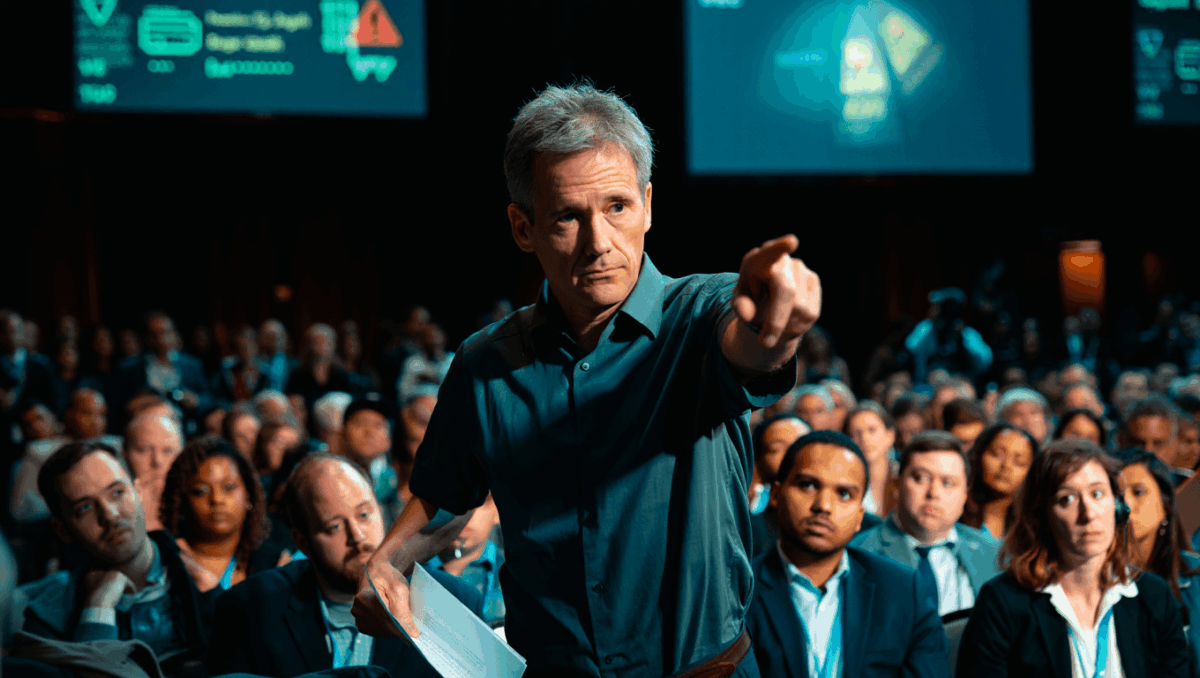
Major artificial intelligence companies including Anthropic, OpenAI, and Meta are failing catastrophically on safety standards, a comprehensive new study reveals. The 2025 Winter AI Safety Index report from the Future of Life Institute shows none of the eight evaluated companies have credible plans to control superintelligent systems. Experts warn this gap poses existential risks as tech firms race recklessly toward artificial general intelligence.
🔥 Quick Facts
- eight leading AI firms—including OpenAI, Anthropic, Google DeepMind, Meta, xAI, DeepSeek, Alibaba Cloud, and Z.ai—were evaluated across six critical safety areas
- No company achieved higher than a C+ grade, with Anthropic ranking best while others scored significantly lower for existential safety planning
- AI remains less regulated than sandwiches in the United States, according to MIT professor Max Tegmark, who leads the Future of Life Institute
- Independent experts found zero credible strategies for maintaining human control over highly capable AI systems capable of superintelligence
Study Exposes Critical Safety Gaps Across Industry Leaders
TurboTax Expert Full Service opens January 5, 2026, and what new tax law changes mean for your refund will surprise you
Intel stock soars 4% at open with analyst predicting $50 target, here’s why Panther Lake launch today changes everything
The Future of Life Institute’s latest assessment represents the most damning evaluation yet of major AI company practices. Researchers evaluated firms across six domains: risk assessment, current harms, safety frameworks, existential safety, governance, and information sharing.
Even companies praised for relative transparency face severe weaknesses. Anthropic discontinued human uplift trials and shifted toward training on user interactions, weakening privacy protections significantly. OpenAI faces criticism for ambiguous safety thresholds, lobbying against state safety legislation, and insufficient independent oversight. Google DeepMind relies on external evaluators who receive financial compensation from the company, undermining their independence.
Samsung Galaxy S26 Ultra drops at $1,299 but kept one jaw-dropping feature completely secret until February 25
CES 2026 unveils $99 AI memory wearable and smart glasses that finally look normal, but Samsung’s 6K 3D display will blow your mind
Chinese firms including DeepSeek demonstrated even greater shortcomings. DeepSeek lacks basic safety documentation despite rapid deployment. The report emphasizes that implementation inconsistency undermines global standards across the entire sector.
Existential Risks: Can Humans Control Superintelligence?
Stuart Russell, computer science professor at the University of California, Berkeley, highlighted the central failure: no company has proven it can reduce annual control-loss risk to acceptable nuclear reactor standards. Russell stated companies admit superintelligence control risks could be one in three, one in five, or even higher—numbers they cannot justify or improve.
The study found that zero companies produced testable plans for maintaining human control over highly capable systems. Instead, firms pursue superintelligence development while acknowledging they lack safety mechanisms. This represents perhaps the most critical finding: speed racing outpaces safety responsibility.
| Company | Overall Grade | Key Weakness |
| Anthropic | C+ | Discontinued human uplift trials, privacy concerns |
| OpenAI | C | Lacks independent oversight, lobbies against regulation |
| Google DeepMind | C | Evaluators financially compromised by company |
| Meta | D+ | Unclear methodologies, limited evaluation processes |
| xAI, DeepSeek, Z.ai, Alibaba | D or Below | Lacks documentation, limited transparency, safety gaps |
Real-World Harms Mount as Companies Race Forward
The safety study comes amid escalating real-world incidents directly linked to AI systems. ChatGPT faced lawsuits after allegations that the chatbot acted as a “suicide coach” for vulnerable teenagers. Other reports documented Anthropic’s systems being exploited for major cyberattacks by state-backed Chinese hackers. Cases of AI-driven psychosis and self-harm incidents continue accumulating.
Despite mounting evidence of harm, tech companies continue accelerating development while lobbying against binding safety standards. Max Tegmark, MIT professor and Future of Life President, expressed frustration: “Despite recent uproar over AI-powered hacking and driving people to psychosis, US companies remain less regulated than restaurants.”
The report emphasizes that current safety frameworks are fundamentally inadequate. All three top companies—Anthropic, OpenAI, and Google DeepMind—demonstrated serious current harms including child suicides, psychological damage, and massive cyberattacks contributing to their lower overall ratings.
Global Standards Emerging as Tech Companies Resist Regulation
International bodies and independent research groups have begun establishing AI safety benchmarks that companies consistently fail to meet. The report measured performance against six critical evaluation domains representing emerging global standards that the industry resists adopting.
Notably, lobbying efforts intensify precisely where regulation strengthens. OpenAI actively opposes state-level AI safety legislation while claiming commitment to responsible development. Meta similarly resists transparency requirements despite public safety incidents. xAI‘s narrow safety framework lacks clear mitigation triggers. Z.ai alone publicly shared external safety evaluations—demonstrating that transparency is achievable if companies prioritize it.
The contrast reveals that safety is a choice, not a technical limitation. Alibaba Cloud contributed to binding international standards on watermarking while still showing weaknesses in model robustness and trustworthiness metrics.
What Must Change Before Superintelligence Arrives?
Stuart Russell and other independent experts demand immediate, testable safety protocols before systems advance further. Companies must demonstrate they can achieve nuclear power plant safety standards—controlling risks to one in a hundred million annually—before deploying systems approaching human intelligence.
The report recommends binding safety standards replace voluntary commitments. Independent oversight must replace company-funded evaluators. Transparent documentation of risks and mitigations should be publicly available. Credible plans for human control over advanced systems must precede deployment rather than follow it.
Max Tegmark emphasized the unprecedented global consensus building against uncontrolled superintelligence: “From Trump’s deep MAGA base to faith leaders and labour movements, unprecedented political alignment emerged on this danger. People recognize that superintelligence eliminating all jobs creates existential economic and social risks regardless of political ideology.”
“I’m looking for proof that they can reduce the annual risk of control loss to one in a hundred million, in line with nuclear reactor requirements. Instead, they admit the risk could be one in ten, one in five, even one in three, and they can neither justify nor improve those numbers.”
— Stuart Russell, Computer Science Professor, University of California, Berkeley
Watch: Expert Analysis on AI Company Safety Failures
Sources
- Reuters – Breaking coverage of Future of Life Institute AI safety index study findings
- Euronews – Comprehensive analysis of eight company evaluations and expert commentary
- Future of Life Institute – Original 2025 Winter AI Safety Index report and methodology

Lee Ann Anderson is a technology journalist specializing in consumer tech, digital innovation, and Silicon Valley trends. With a talent for breaking down complex technical concepts into accessible insights, this skilled journalist keeps readers informed about the gadgets, apps, and breakthroughs shaping our digital future. Her coverage bridges the gap between tech enthusiasts and everyday users.