
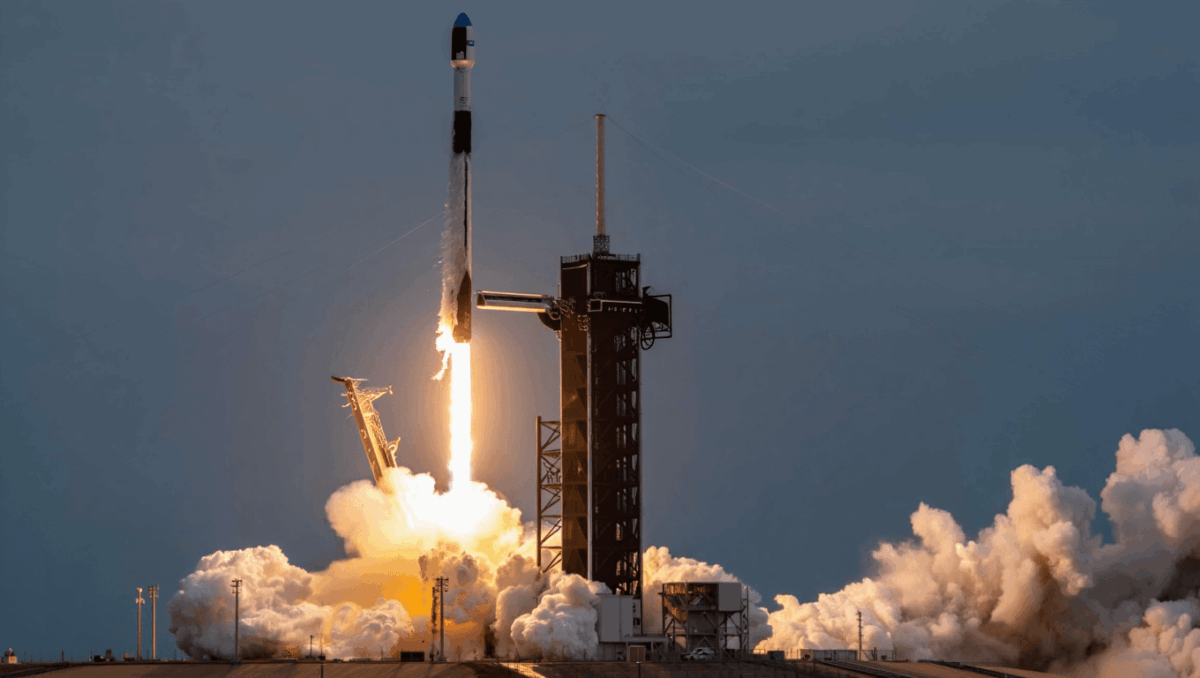
SpaceX successfully launched 29 Starlink satellites to orbit early this morning from Cape Canaveral Space Force Station, with another Falcon 9 mission scheduled for December 15. The consecutive launches underscore SpaceX’s aggressive deployment schedule. This marks continued momentum in the race to expand the Starlink constellation’s global internet coverage.
🔥 Quick Facts
- First launch completed: December 14 at 12:25 AM EST (9:25 PM PST) from Space Launch Complex 40
- Payload deployed: 29 Starlink satellites reaching low-Earth orbit after successful booster landing
- Second launch timing: December 15 from Launch Complex 39A, another Starlink mission scheduled
- Deployment capacity: Starlink now deploying over 5 terabits per second of capacity weekly via next-generation satellites
Rocket Launch Today Expands Starlink Coverage
Intuit emerges as best software stock for 2026 while stock crashes to bargain levels analysts didn’t expect
2026 tax brackets shock Americans with hidden paycheck truth nobody expected
The Falcon 9 rocket launch this morning delivered 29 Starlink satellites into low-Earth orbit after a flawless ascent from Cape Canaveral. SpaceX achieved this success after initially pushing back the launch window due to weather concerns, ultimately achieving liftoff at 12:25 AM Eastern Time, beating the forecast for poor conditions.
This mission represents another step in SpaceX’s massive constellation expansion. The company continues to maintain the world’s highest launch cadence, with two Starlink missions scheduled within 24 hours from Florida launch facilities.
Today’s Successful Mission Details and Booster Recovery
Marcus Lemonis takes CEO role at Bed Bath & Beyond with $25M cost-cutting plan and watch what industry experts are saying about his next move
SPX surges 34 points at open with shocking tech recovery, here’s what caused the unexpected Venezuela rally
The Falcon 9’s first stage booster supported the mission’s success with a successful landing on the droneship, contributing to SpaceX’s growing achievement of consecutive booster recoveries. Most recent data indicates SpaceX has completed its 550th successful booster landing milestone as of mid-December operations.
The satellites launched today will join thousands already in the Starlink constellation, contributing to global internet coverage expansion. Current operational documentation indicates the constellation is advancing rapid next-generation deployment, with satellite Direct-to-Cell capabilities enabling mobile network expansion in remote areas.
| Launch Parameter | Details |
| Launch Time | December 14, 2025, 12:25 AM EST |
| Launch Site | Space Launch Complex 40, Cape Canaveral Space Force Station, Florida |
| Payload | 29 Starlink Satellites (Group 6-82) |
| Booster Status | Successful landing on droneship recovery vessel |
| Next Launch Window | December 15, 2025 from LC-39A, Florida |
Back-to-Back Launches Signal SpaceX’s Increased Capacity
The second Falcon 9 launch scheduled for December 15 from Launch Complex 39A continues SpaceX’s remarkable launch cadence now operating across Florida’s Cape Canaveral facilities. This back-to-back launch strategy demonstrates operational readiness and infrastructure optimization across multiple launch pads.
Such consecutive launch windows require precise coordination between mission control, launch teams, and ground support equipment. The capability to execute multiple launches within 24 hours reflects SpaceX’s technological maturation and operational excellence across its Florida space infrastructure.
“Starlink is currently deploying over 5 Tbps (5,000 Gbps) of capacity per week to the constellation with the current second generation of satellites.”
— Starlink, Official Network Update
Why Back-to-Back Rocket Launches Matter for Starlink’s Mission
The accelerated launch schedule serves critical expansion goals for global internet coverage, particularly in underserved regions worldwide. Each mission adds satellite capacity directly contributing to improved network latency, bandwidth, and reliability metrics across Starlink’s growing service footprint.
SpaceX’s dual-launch approach during December 14-15 demonstrates the company’s investment in redundant launch infrastructure and personnel. This capability reduces orbital deployment timelines significantly compared to traditional single-launch-per-week operational models used by competitors.
What Does Today’s Launch Mean for SpaceX’s 2025 Goals?
This successful mission brings SpaceX closer to completing its aggressive Starlink deployment targets announced earlier this year. The company aims to maintain unprecedented orbital deployment rates throughout the fourth quarter and beyond, establishing market dominance in low-Earth orbit satellite internet services.
Each new generation of Starlink satellites launched this year features improved Direct-to-Cell capabilities, reducing dependence on ground infrastructure for emergency communications. This technological advancement expands potential service applications beyond residential broadband toward critical infrastructure and disaster response use cases.
What Should Starlink Customers Expect From Today’s New Satellites?
Users across multiple geographic regions should experience network improvements as these 29 satellites transition into operational status within the constellation. SpaceX typically requires several weeks for satellite commissioning and network integration before performance gains become measurable for end users.
For existing Starlink customers, the deployment milestone signals continued investment in constellation reliability and redundancy. New satellites replace aging units and expand capacity into markets currently experiencing coverage gaps. December’s aggressive launch schedule positions Starlink competitively against emerging competitors entering the satellite internet market segment.
Sources
- SpaceX – Official launch schedules and mission data
- Space.com – Real-time launch coverage and orbital mechanics reporting
- Spaceflight Now – Live launch tracking and mission details

Patrick Graham is a business and finance journalist translating Wall Street’s complexities into stories that matter to everyday readers. With extensive experience in financial journalism and economic analysis, this expert journalist provides sharp insights on market trends, corporate developments, and the economic forces affecting daily life. His reporting helps readers make sense of the business world’s biggest moves.