
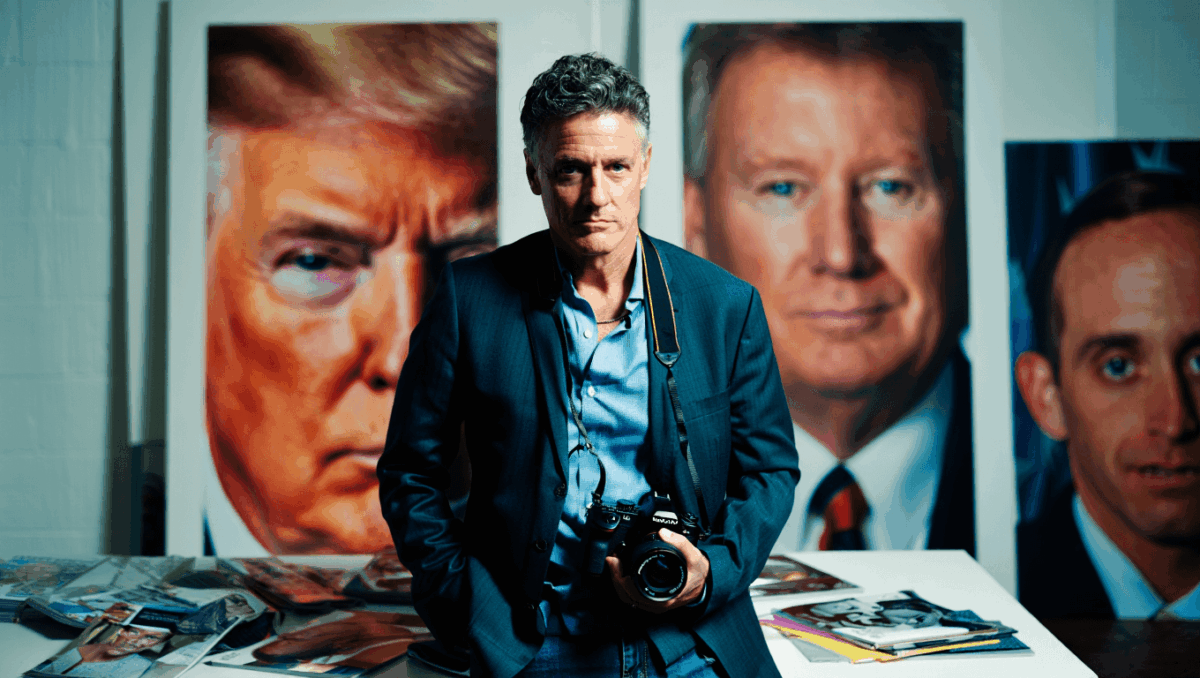
Vanity Fair White House photos by acclaimed photojournalist Christopher Anderson have ignited intense controversy since their December 16, 2025 release. The unvarnished close-up portraits of Trump’s inner circle—including Susie Wiles, JD Vance, Marco Rubio, and Karoline Leavitt—reveal facial blemishes and cosmetic imperfections rarely seen in official presidential photography. The images sparked immediate backlash from the administration while drawing praise from critics.
🔥 Quick Facts
- Articles published December 16, 2025 in a two-part Vanity Fair story by journalist Chris Whipple based on 11 separate interviews
- Christopher Anderson is a Magnum Photos conflict photographer known for gritty political portraiture since the late 2000s
- The close-ups show visible facial details including lip-filler injection marks on Press Secretary Leavitt and skin imperfections on multiple officials
- White House Chief of Staff Wiles revealed divisive comments about Trump, Vance, and other administration figures during candid interviews
Inside the Vanity Fair White House Photography Controversy
America’s Next Top Model documentary drops today on Netflix with shocking revelations
Dana Eden dies at 52, Tehran producer found dead in Athens hotel
The two-part article represented unprecedented access to Trump’s second administration. Photographer Christopher Anderson spent time at the White House photographing senior officials including Susie Wiles, the White House chief of staff, and her team members in extreme close-up format.
The images diverge dramatically from the carefully curated official portraits that typically represent powerful government figures. High-contrast lighting and extreme proximity to subjects create unflinching documentation. Wiles appears with facial texture visible under harsh lighting, while Leavitt is captured with lip contours showing cosmetic enhancements—generating the most intense backlash.
Christopher Anderson’s Photojournalism Career and Artistic Approach
Tommy Lee Jones’ daughter was pregnant before her tragic death, court docs reveal
J Cole announces The Fall-Off world tour, first global dates in decades
Anderson emerged as a major force in documentary photography through his work with Magnum Photos, a prestigious cooperative specializing in conflict documentation and editorial assignment photography. His transition to political portraiture during the late 2000s drew international attention when publications including the New York Times Magazine featured his unflinching campaign trail imagery.
His 2014 book “Stump” compiled portraits of multiple presidential candidates without editorial commentary—presenting Barack Obama, Mitt Romney, Chris Christie, and others with identical artistic intent. Anderson calls his approach “X-ray icons,” seeking to reveal what lies beneath the surface of American political theater.
| Subject | Position | Controversy Detail |
| Susie Wiles | White House Chief of Staff | Primary subject of extensive interviews; revealed critical comments about Trump and cabinet members |
| Karoline Leavitt | Press Secretary | Close-up portrait showing visible lip-filler injection marks drew most intense criticism |
| JD Vance | Vice President | Extreme close-up contrasts with standard formal photograph also captured during shoot |
| Marco Rubio | Secretary of State | Responded publicly calling images “deliberately manipulated” to damage administration |
The Backlash: What Administration Officials Are Saying
White House Chief of Staff Wiles denounced the entire piece as a “disingenuously framed hit piece” designed to embarrass the administration. Secretary of State Rubio stated explicitly that “Vanity Fair deliberately manipulated pictures and reported statements without context.” Defense Secretary Pete Hegseth escalated criticism, claiming “This is what the Left does: trash and smash our best and most effective people.”
Anderson himself pushed back forcefully against manipulation allegations. When asked by the Washington Post about photographing Leavitt’s facial features, he stated: “I didn’t put the injection sites on her. People seem shocked I didn’t use Photoshop to retouch out blemishes and injection marks. I find it shocking someone would expect me to retouch those things.”
“My job is to go in and draw on my experience as a journalist and photograph what I see. I go in not with the mission of making someone look good or bad. I go in wanting to make an image that truthfully portrays what I witnessed.”
— Christopher Anderson, Photojournalist
Critical Praise and Internet Reaction
Trump critics applauded the photographs as revealing visual documentation of the administration’s inner circle. Social media users noted the visual narrative embedded in the images—harsh lighting choices that accentuated features, extreme proximity that eliminated flattering distance, and the phenomenon some observers called “Mar-a-Lago face” reflecting cultural conversations about cosmetic procedures within certain elite circles.
The Guardian reported that supporters of the administration tended to attack the magazine’s editorial choices rather than defend individual officials. Republican House Majority Leader Steve Scalise called the piece “another hack job from mainstream media meant to smear President Trump.” Meanwhile, critics celebrated Anderson’s refusal to use digital retouching to hide natural human characteristics.
What Does the Vanity Fair Portfolio Mean for Political Photography?
The controversy reveals the tension between traditional presidential image control and documentary photography’s unvarnished approach. For decades, official photographers and magazine editors have collaborated to present power as polished and removed from human vulnerability. Anderson’s work directly challenges that convention.
CNN’s art critic noted that this represents a rare moment when PR teams and careful image crafting lost control over how officials appear publicly. The New York Times Magazine have featured Anderson’s gritty political work consistently since the 2000s. His 2017 cover photo showing Trump was similarly extreme in its proximity, suggesting Anderson applies consistent artistic standards regardless of party affiliation. Why did this administration approve such extensive, intimate photography access without anticipating this result?
Sources
- CNN – In-depth analysis of Christopher Anderson’s photographic style and political portraiture history
- The Guardian – Comprehensive coverage of administration reaction and public response to controversial images
- Washington Post – Direct quotes from photographer defending artistic integrity and documentation approach

Jessica Morrison is a seasoned entertainment writer with over a decade of experience covering television, film, and pop culture. After earning a degree in journalism from New York University, she worked as a freelance writer for various entertainment magazines before joining red94.net. Her expertise lies in analyzing television series, from groundbreaking dramas to light-hearted comedies, and she often provides in-depth reviews and industry insights. Outside of writing, Jessica is an avid film buff and enjoys discovering new indie movies at local festivals.