
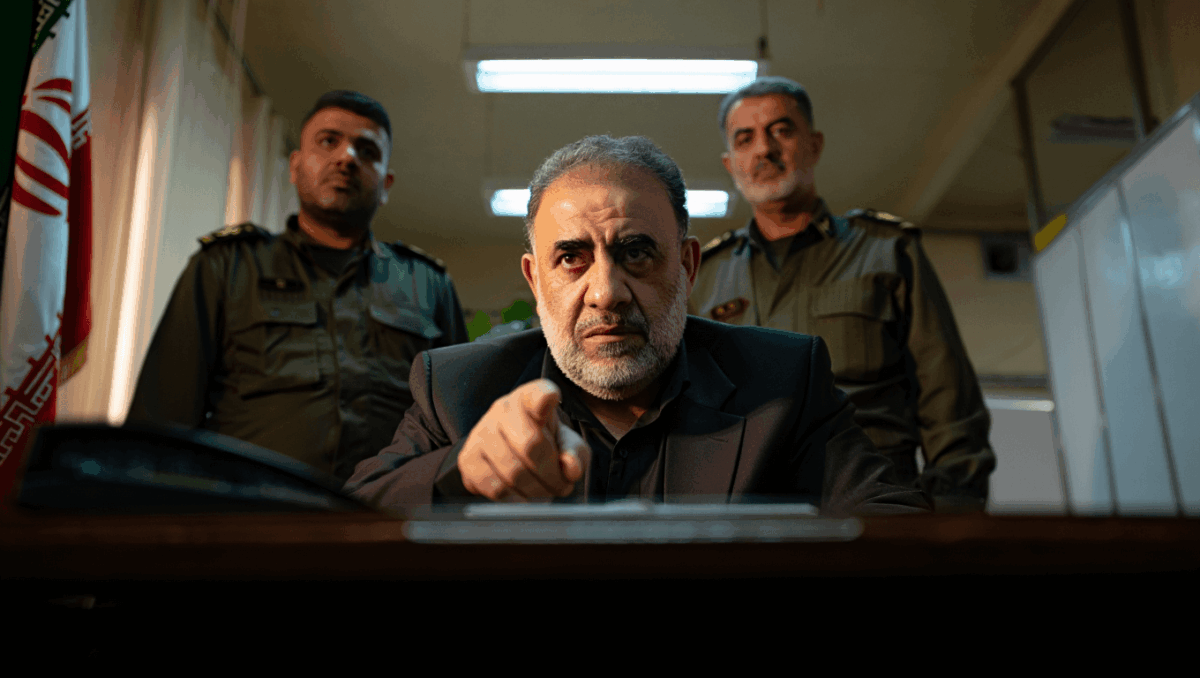
Iran’s nuclear program faces a critical juncture as President Masoud Pezeshkian escalated rhetoric on December 27, declaring his nation is in a “full-fledged war” with the United States, Israel, and Europe. The statement underscores years of escalating tensions since Israel’s June 2025 military strikes devastated Iran’s nuclear infrastructure, and reflects Tehran’s defiant stance as it rapidly rebuilds its enrichment capabilities while abandoning international nuclear agreements.
🔥 Quick Facts
- Iran officially terminated the 2015 JCPOA nuclear deal on October 18, 2025, ending a decade of international constraints
- Iran possesses 441 kilograms of uranium enriched to 60% purity as of June 2025, approaching weapons-grade levels
- Israel and the US conducted devastating strikes on Iranian nuclear facilities from June 13-23, 2025, in what became the “12-day war“
- Pezeshkian stated on December 27: “We are in a full-fledged war with America, Israel, and Europe. They do not want our country to stand on its feet”
The Collapse of International Nuclear Constraints
Intuit emerges as best software stock for 2026 while stock crashes to bargain levels analysts didn’t expect
2026 tax brackets shock Americans with hidden paycheck truth nobody expected
The Joint Comprehensive Plan of Action (JCPOA), signed in 2015, represented the world’s most ambitious attempt to constrain Iran’s nuclear ambitions through international diplomacy and verification mechanisms. However, the agreement unraveled following years of geopolitical pressure, sanctions, and ultimately, direct military strikes.
Iran officially announced the termination of the JCPOA on October 18, 2025, just months after surviving intense military attacks. The decision marks the effective end of international oversight that had limited uranium enrichment to lower levels. With the JCPOA abandoned, Tehran now operates its nuclear program with minimal external constraints, prioritizing rapid advancement across multiple enrichment sites.
Uranium Stockpiles Reach Near-Weapons Grade Levels
Marcus Lemonis takes CEO role at Bed Bath & Beyond with $25M cost-cutting plan and watch what industry experts are saying about his next move
SPX surges 34 points at open with shocking tech recovery, here’s what caused the unexpected Venezuela rally
Intelligence assessments reveal that Iran’s nuclear position has become dramatically more dangerous. As of June 2025, just before Israel’s strikes, Iran possessed 441 kilograms of uranium enriched to 60% purity, according to International Atomic Energy Agency (IAEA) reports. This enrichment level is perilously close to the 90% purity required for weapons-grade material.
| Uranium Status | Details |
| Current Enrichment Level | 60% U-235 purity (weapons-grade begins at 90%) |
| Total Stockpile (June 2025) | 441 kilograms of highly enriched uranium |
| Potential Weapon Count | Sufficient for multiple nuclear devices at current levels |
| JCPOA Limit (pre-2025) | 300 kilograms at lower enrichment levels |
The vast majority of Iran’s enriched uranium stockpiles remain within the country despite military strikes on production facilities. Rafael Grossi, director of the IAEA, confirmed in December 2025 that most of Iran’s highly enriched uranium is still located inside Iran, available for rapid weaponization if Tehran chooses that path.
The June 2025 Military Campaign and Its Limited Impact
For 12 days in June 2025, Israel and the United States conducted one of the largest coordinated military operations against nuclear infrastructure in history. The campaign, known as “Operation Rising Lion,” targeted Iran’s primary uranium enrichment facilities at Natanz and other critical nuclear sites.
Despite causing significant damage to enrichment plants and centrifuge cascades, the strikes failed to destroy Iran’s overall nuclear capability. The IAEA and international analysts assessed that sites suffered damage but Iran’s nuclear program was not destroyed. Satellite imagery released by US-based think tanks shows Iran has already resumed activity at damaged facilities, with new construction and centrifuge installation visible at the Natanz Pilot Fuel Enrichment Plant.
Intelligence assessments suggest Iran could resume full uranium enrichment operations within months according to IAEA statements from June 2025. This rapid reconstruction capability, combined with preserved uranium stockpiles and technical expertise, means the military strikes achieved only a temporary setback rather than a lasting constraint on Iran’s nuclear trajectory.
Escalating Rhetoric and the “Full-Fledged War” Declaration
On December 27, 2025, just days earlier than expected, President Pezeshkian unexpectedly escalated verbal rhetoric to unprecedented levels. “In my opinion, we are in a full-fledged war with America, Israel and Europe,” the Iranian leader stated, according to multiple international news agencies. “They do not want our country to stand on its feet.”
“In my opinion, we are in a full-fledged war with America, Israel and Europe. They do not want our country to stand on its feet.”
— Masoud Pezeshkian, President of Iran
The declaration frames the current geopolitical struggle not merely as sanctions or military strikes, but as comprehensive economic and military warfare designed to prevent Iran’s advancement. Iranian officials repeatedly cite ongoing economic sanctions, military strikes against nuclear and defense infrastructure, and diplomatic isolation as components of this “full-fledged war.” The rhetoric reflects Iran’s sense of existential threat and its determination to pursue nuclear advancement despite international opposition.
What Does Iran’s Nuclear Escalation Mean for Global Security?
Iran’s trajectory poses immediate questions about nuclear proliferation and regional stability. With the JCPOA abandoned, no international mechanism constrains Iran’s enrichment levels or production rates. The current stockpile of 60% enriched uranium, combined with technical expertise and determined reconstruction of damaged facilities, raises the possibility of rapid weaponization within months rather than years.
Western intelligence agencies assess that Iran’s decision to prioritize ballistic missile development following the June 2025 war indicates Tehran is building the delivery mechanisms crucial for a functional nuclear arsenal. This parallel development of missiles and enriched uranium suggests Iran may be positioning itself to cross the nuclear threshold at a moment of strategic advantage.
Diplomatic efforts collapsed in late 2025, with no agreement on revised nuclear constraints. Russia and China vetoed US-backed sanctions at the UN Security Council in December 2025, preventing coordinated international pressure. This diplomatic fragmentation leaves Iran effectively unencumbered in its nuclear pursuits, while the Biden and incoming Trump administrations face difficult choices about military intervention versus containment strategies.