
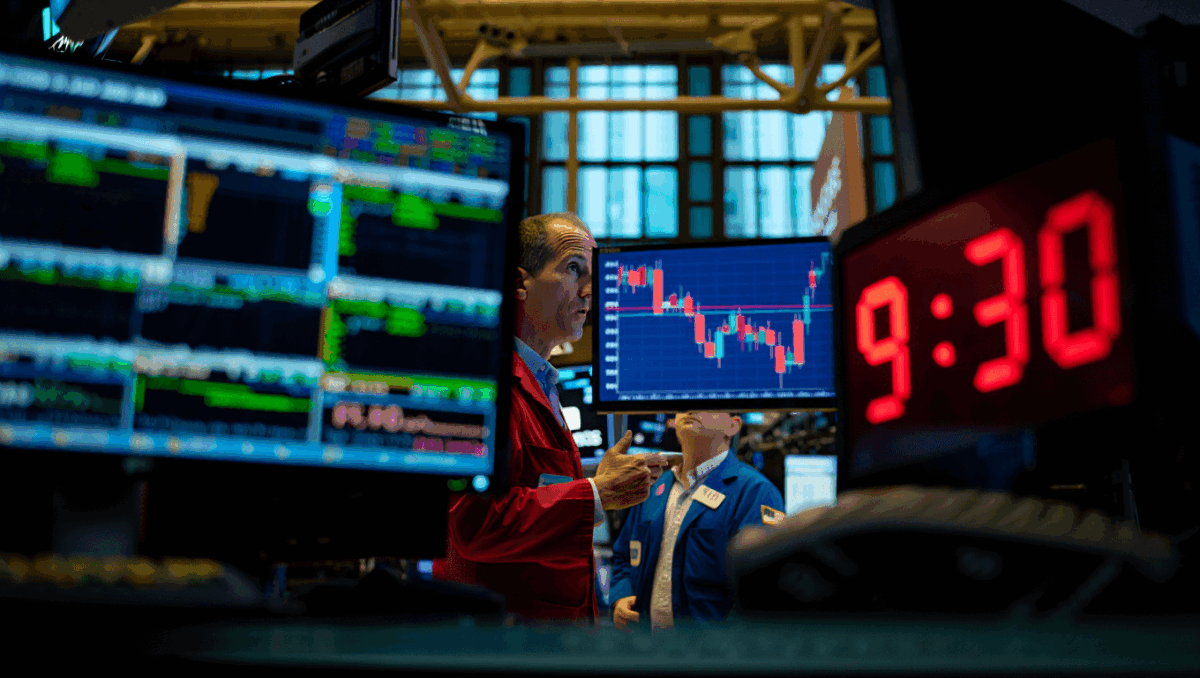
What time does the stock market open today? Both the NYSE and Nasdaq begin trading at 9:30 AM ET, marking the official start of the trading session. Traders and investors around the world synchronize their strategies to this exact moment. Here’s everything you need to know about market hours and how to prepare for today’s trading.
🔥 Quick Facts
- Both NYSE and Nasdaq open at 9:30 AM Eastern Time Monday through Friday
- Regular trading ends at 4:00 PM ET, giving traders 6.5 hours of core market activity
- Pre-market trading begins as early as 4:00 AM ET for interested investors
- The first 30 minutes (9:30-10:00 AM) typically see higher volatility due to overnight news absorption
NYSE and Nasdaq Open at the Same Time
Intuit emerges as best software stock for 2026 while stock crashes to bargain levels analysts didn’t expect
2026 tax brackets shock Americans with hidden paycheck truth nobody expected
The New York Stock Exchange and Nasdaq are the two largest stock exchanges in the United States, and they operate on identical schedules. Both markets ring their opening bell at 9:30 AM ET every weekday when the markets are open. This synchronized timing allows traders to access both exchanges simultaneously.
The actual opening process involves several phases. The Core Open Auction occurs precisely at 9:30 AM, where trading in all listed securities begins. In the seconds leading up to the opening (9:29:55 AM to 9:30 AM), the system performs the Core Open Auction Imbalance Freeze Period to establish fair opening prices.
Trading Hours and Market Closing Times
Marcus Lemonis takes CEO role at Bed Bath & Beyond with $25M cost-cutting plan and watch what industry experts are saying about his next move
SPX surges 34 points at open with shocking tech recovery, here’s what caused the unexpected Venezuela rally
After the opening bell rings, trading continues throughout the day at the 9:30 AM start time. Markets operate continuously from the opening through 4:00 PM ET without a lunch break. This allows brokers, institutional investors, and retail traders to execute orders throughout the entire 6.5-hour trading session.
The closing period mirrors the opening complexity. Between 3:50 PM and 4:00 PM ET, markets enter the Closing Auction Imbalance Freeze Period. The final closing bell sounds at exactly 4:00 PM ET, ending the core trading session. Extended-hours trading continues after this point for qualified investors.
Weekend and holiday schedules remain consistent year-round. December 29, 2025 is a Monday, so standard hours apply. Markets observe 10 federal holidays annually plus 4 scheduled early closures.
Understanding Pre-Market and After-Hours Trading
| Trading Session | Opening Time | Closing Time |
| Pre-Market Trading | 4:00 AM ET | 9:30 AM ET |
| Regular Market Hours | 9:30 AM ET | 4:00 PM ET |
| After-Hours Trading | 4:00 PM ET | 8:00 PM ET |
Smart traders recognize that the period before the 9:30 AM opening bell matters significantly. Pre-market trading starts at 4:00 AM ET, allowing early birds to react to overnight international market movements and breaking news. Volume and liquidity build as the 9:30 AM opening approaches.
After the 4:00 PM ET close, extended hours trading continues until 8:00 PM ET. This after-hours window lets traders respond to earnings announcements and late-breaking developments. However, liquidity drops substantially during these extended-hours sessions compared to the 9:30 AM-4:00 PM core window.
“The first hour of trading (9:30 a.m. to 10:30 a.m. ET) and the final hour (3 p.m. to 4 p.m. ET) are known for the highest levels of volatility and trading volume.”
— LuxAlgo Trading Research
What to Expect During the First Minutes After 9:30 AM Opens
The minutes immediately following the 9:30 AM ET opening represent the most active trading period of the day. Overnight news, international market performance, and accumulated orders from pre-market trading create significant price movements during this window. Gap openings, where stocks open sharply higher or lower than yesterday’s close, typically occur within the first few minutes.
Traders watch the first 30 minutes intensely because the 9:30 AM opening establishes the day’s directional bias. News from Asia and Europe during the previous 24 hours influences this critical opening period. Many institutional investors hold their major positions until after the market settles in around 10:00 AM ET, when patterns become clearer.
Volatility naturally declines after the initial rush, making mid-day sessions (10:30 AM to 2:30 PM ET) typically quieter than the 9:30 AM opening. Volume picks up again in the final hour before the 4:00 PM ET close, as portfolio managers adjust positions before the close.
Why Does the Stock Market Open at 9:30 AM ET Instead of Earlier?
The 9:30 AM ET opening time traces back to 1985, when exchanges standardized this schedule. Before computerization, traders needed time to prepare for the opening bell. The morning start time allows East Coast traders to prepare before work, while West Coast traders (for whom this is 6:30 AM) have already begun their trading day.
Today’s 9:30 AM schedule remains unchanged despite 24-hour global markets. Asian markets open during our late evening, and European exchanges start around 3:00 AM ET. The NYSE and Nasdaq maintain the 9:30 AM ET time because it maximizes participation from the world’s largest investor base in the United States.
Time Zone Conversions from 9:30 AM ET
Traders outside the Eastern Time Zone convert 9:30 AM ET accordingly: 8:30 AM CT (Central), 7:30 AM MT (Mountain), and 6:30 AM PT (Pacific). International traders use 2:30 PM UTC or 1:30 PM GMT as their reference point. These conversions help global participants synchronize their alerts and entry strategies.
How Can Traders Prepare for the 9:30 AM Market Opening Today?
Professional traders create a pre-market routine starting well before the 9:30 AM ET opening bell. They review: overnight earnings reports, futures market performance (S&P 500, Nasdaq, Dow), economic data releases, and breaking news from overnight international markets. Setting calendar alerts for 9:30 AM ensures no missed opportunities.
Technical setup preparation matters significantly. Traders identify key support and resistance levels from yesterday’s close and check pre-market trading (starting at 4:00 AM) to gauge early directional bias. Many set their limit orders 5-10 minutes before 9:30 AM to execute immediately upon opening. Watch for market-wide circuit breakers, which pause trading if the S&P 500 drops more than 7% from yesterday’s close.
Risk management requires setting stop-loss levels before the 9:30 AM opening, especially given the volatility that typically accompanies the opening bell. Experienced traders note that the first 5 minutes often contain the day’s most dramatic price swings, making this period ideal for observing rather than actively trading for beginners.
Creating Your Pre-Opening Checklist
Develop a checklist review at 9:00 AM ET (30 minutes before 9:30 AM opens): (1) Check overnight futures and pre-market stocks for your watchlist. (2) Review any earnings announcements or economic events scheduled for today. (3) Verify your brokerage platform connection and order entry functions work correctly. (4) Identify your trading edge for the day’s theme. This systematic approach increases confidence before the 9:30 AM opening bell rings.
Sources
- NYSE.com – Official trading hours and market schedules for 2025
- Nasdaq.com – Verified market hours and holiday schedules
- Fidelity Investments – Stock market hours and trading session documentation

Patrick Graham is a business and finance journalist translating Wall Street’s complexities into stories that matter to everyday readers. With extensive experience in financial journalism and economic analysis, this expert journalist provides sharp insights on market trends, corporate developments, and the economic forces affecting daily life. His reporting helps readers make sense of the business world’s biggest moves.