
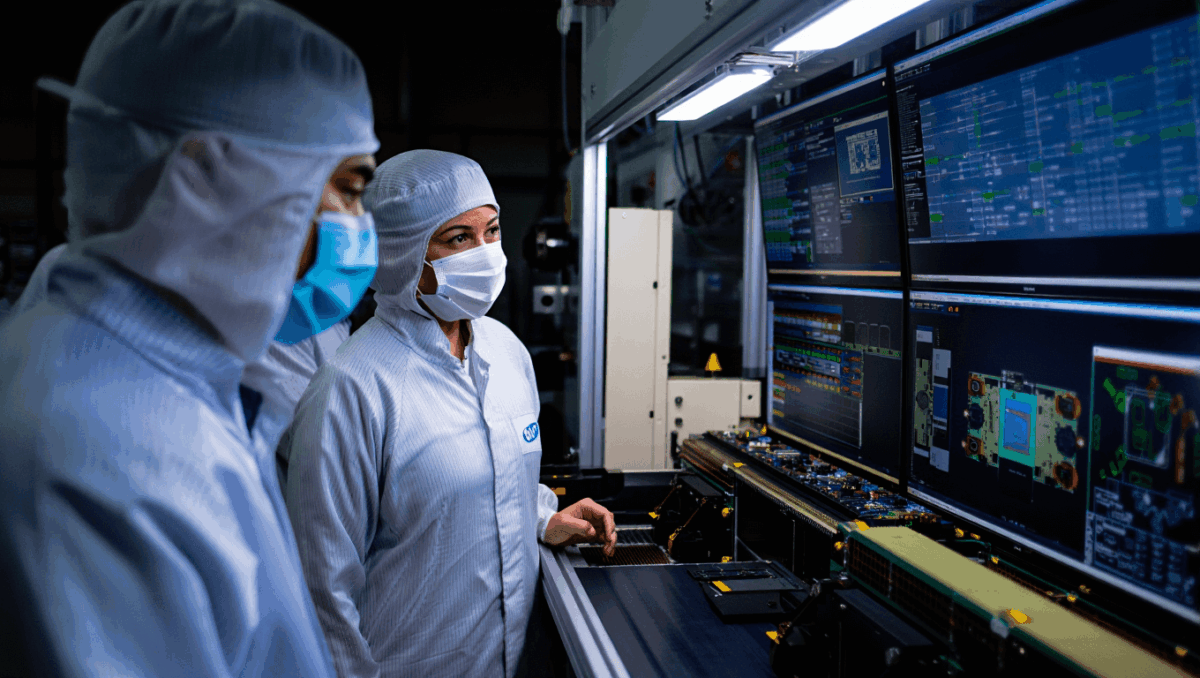
Samsung wins groundbreaking US approval to ship advanced chip tools to China throughout 2026. The South Korean giant secured an annual export license as Washington introduces a new framework for semiconductor equipment controls. The biggest surprise? Major HBM capacity expansion plans announced amid surging AI demand.
🔥 Quick Facts
- US approved Samsung and SK Hynix for year-round chipmaking tool shipments to China in 2026 under new annual review system
- Xi’an NAND plant operations will continue uninterrupted as Samsung secures critical equipment access
- Samsung plans 250,000 HBM units monthly capacity and targets February 2026 for HBM4 mass production launch
- 200,000 wafers monthly capacity of 1c DRAM targeted by end of 2026 for AI memory production
Samsung Wins Historic US Approval for China Operations
TurboTax Expert Full Service opens January 5, 2026, and what new tax law changes mean for your refund will surprise you
Intel stock soars 4% at open with analyst predicting $50 target, here’s why Panther Lake launch today changes everything
The US government granted Samsung Electronics an annual export license allowing unrestricted shipment of US-made semiconductor manufacturing equipment to its Chinese facilities throughout 2026. This marks a significant policy shift as Washington moves from ad-hoc approvals to a structured annual review system for chip tool exports.
According to multiple sources, the approval arrives just before December 31, 2025 deadline when Samsung’s Validated End User status expires. The timing is crucial as Samsung operates the Xi’an NAND flash plant in China, a facility that requires continuous equipment upgrades to maintain production schedules.
Samsung Galaxy S26 Ultra drops at $1,299 but kept one jaw-dropping feature completely secret until February 25
CES 2026 unveils $99 AI memory wearable and smart glasses that finally look normal, but Samsung’s 6K 3D display will blow your mind
The decision signals confidence in Samsung’s compliance with US regulations while maintaining competitive memory production capabilities in Asia’s largest economy.
New US Framework Reshapes Chip Export Controls
Washington introduced an annual approval system for semiconductor tool exports that replaces the previous case-by-case evaluation approach. This new structure provides Samsung and SK Hynix with greater operational certainty for 2026 planning and capital expenditure decisions.
Industry sources revealed that the annual system allows approved manufacturers to import critical fabrication equipment without requiring individual transaction approvals. It remains a temporary measure with potential renewal considerations, offering Samsung a one-year window to execute operations smoothly.
This framework balances US national security concerns regarding advanced chip technology reaching China while allowing established players like Samsung to maintain existing operations.
| Item | Details |
| Approval Type | Annual export license for chipmaking tools |
| Effective Period | Throughout 2026 |
| Primary Beneficiary | Samsung Xi’an NAND plant |
| Status Deadline | December 31, 2025 (VEU expiration) |
Samsung Accelerates HBM4 Production Timeline
The approval coincides with Samsung’s aggressive high-bandwidth memory expansion strategy. The company plans to achieve 250,000 HBM units monthly capacity and begin HBM4 mass production in February 2026, significantly ahead of previous timelines.
This acceleration positions Samsung competitively against SK Hynix as AI accelerator demand surges globally. Samsung’s HBM3E chips already cleared Nvidia GPU certification, establishing demand channels for its next-generation products targeting data centers and AI infrastructure.
Industry sources indicate Samsung aims to capture substantial market share from companies like Micron Technology as enterprise AI deployments accelerate throughout 2026.
“With HBM4 and expanded 1c DRAM capacity, Samsung positions itself as the primary memory supplier for enterprise AI expansion.”
— Industry analysis, semiconductor market research
DRAM Capacity Surge Supports Data Center Growth
Beyond HBM4, Samsung committed to expanding 1c DRAM wafer capacity to 200,000 units monthly by end of 2026. This eightfold increase mirrors SK Hynix’s expansion plans and reflects industry expectations of continued AI data center infrastructure buildout.
The dual expansion in both HBM4 and standard DRAM ensures Samsung captures revenue across different server architecture tiers. Premium AI accelerator platforms demand HBM while traditional servers require abundant DRAM for processing workloads.
Samsung’s Taylor, Texas fabrication plant and Chinese Xi’an facility together support this capacity roadmap, offering geographic diversification for critical memory production.
What Does Samsung’s Approval Mean for Global Chip Competition?
The approval demonstrates that US policy allows Chinese manufacturing by integrated memory leaders despite broader geopolitical tensions. Samsung’s dual approval alongside SK Hynix signals Washington’s nuanced approach distinguishing between memory commodity producers and advanced logic chip manufacturers.
For Samsung specifically, the annual approval system provides 12-month planning certainty critical for multibillion-dollar equipment purchases and production ramp schedules. SK Hynix similarly benefits, creating competitive parity in the Chinese market.
This approval positions both South Korean companies to capitalize on AI-driven memory demand while maintaining US compliance, ultimately strengthening Samsung’s competitive stance against rivals during 2026 market expansion.

Lee Ann Anderson is a technology journalist specializing in consumer tech, digital innovation, and Silicon Valley trends. With a talent for breaking down complex technical concepts into accessible insights, this skilled journalist keeps readers informed about the gadgets, apps, and breakthroughs shaping our digital future. Her coverage bridges the gap between tech enthusiasts and everyday users.