
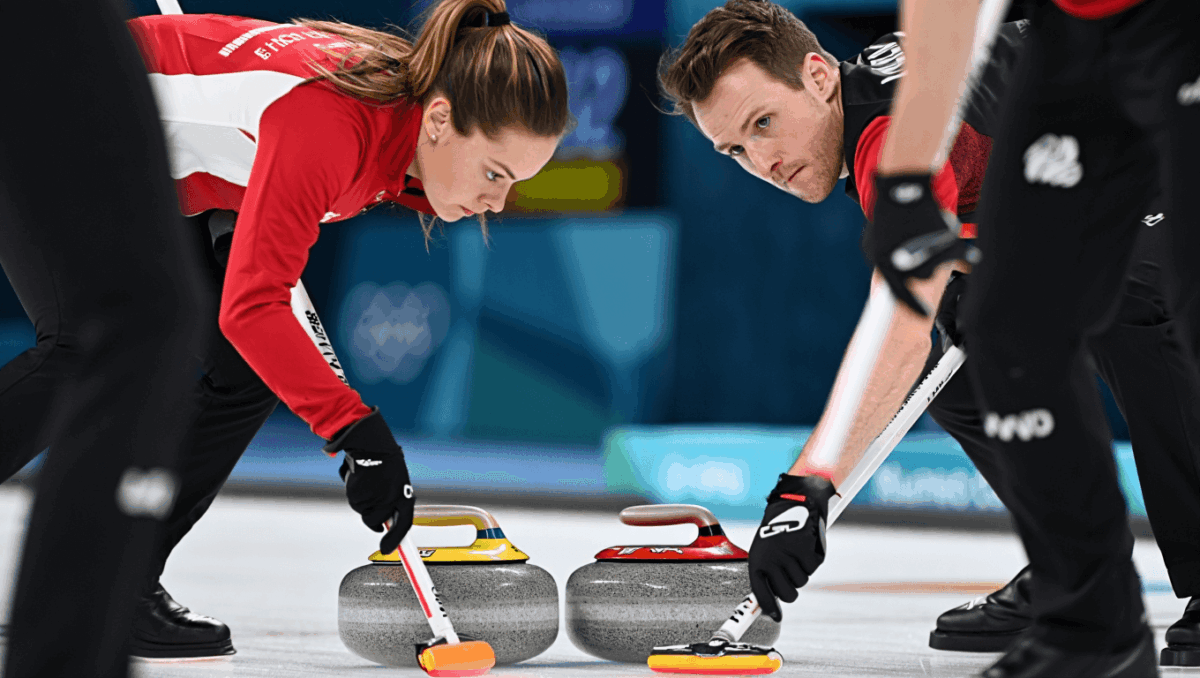
Curling’s power play is a game-changing rule that surprised many viewers at the 2026 Milano-Cortina Winter Olympics. This tactical maneuver in mixed doubles curling allows teams to completely reshape the match in one crucial moment.
🔥 Quick Facts
- Exclusive Format: Power play exists only in mixed doubles curling, not team competitions.
- One Per Game: Each team gets exactly one power play opportunity during regulation ends.
- Strategic Positioning: Teams with the hammer decide stone placement to maximize scoring potential.
- Timing Restriction: Power plays cannot be used in extra ends or overtime rounds.
What Makes the Power Play So Special
Cagliari faces Lecce tonight in Serie A showdown, Rossoblu seek top-half push
Girona faces Barcelona tonight in La Liga showdown, Barcelona chases lead
Mixed doubles curling begins each end with two pre-placed stones already on the ice. In normal play, the team with last stone advantage (hammer) starts with one stone positioned at the back of the four-foot circle. The opponent places a center guard to protect scoring zones.
The power play completely flips this setup. When activated, pre-placed stones move to the sidelines. One stone becomes a corner guard, with another positioned at the tee line. This design opens the entire center area for play. Teams can now throw stones directly toward the button with fewer obstacles.
Strategic Timing and Hammer Advantage
East Texas A&M faces Southeastern in Family Fun Day matchup today
Macclesfield faces Brentford tonight in FA Cup fourth-round showdown
Only teams with the hammer can execute a power play. This timing advantage is crucial. Teams typically deploy it when trailing in the match or when championship moments demand bold action. Skips (team captains) call the power play at the start of whichever end they select.
Coaches study matchups carefully before using this one-time advantage. Some teams save it for later rounds when pressure mounts. Others use it early to seize control. The decision reflects deep strategic analysis of opponent tendencies and scoring scenarios.
How Power Play Changes the Game
| Aspect | Normal Setup | Power Play Setup |
| Center Guard | Center line protection | Moved to side (corner guard) |
| Scoring Area | Restricted by guards | Wide open in center |
| Maximum Points | Typically 2-3 per end | Potentially 6 points possible |
| Availability | Every end | One time only per game |
“When the power play is called, pre-placed stones will be moved out to one of the sides, with one placed as a corner guard and a stone behind it, with the back of the stone against the tee line, opening up space down the centre of the sheet.”
— According to World Curling Federation and Olympic Rules
Why Mixed Doubles Gets This Unique Advantage
Mixed doubles features only two players per team, one male and one female, each throwing five stones per end. Standard four-player curling focuses on team depth and consistency. The power play adds explosive momentum potential to mixed doubles, creating dramatic swings.
This rule transforms tactical psychology. Opponents must prepare defensively for the possibility of a power play end. Teams can’t simply execute routine strategy. The single power play opportunity creates tension, especially in tight matches.
Will the Power Play Decide Milano-Cortina Medals
Curling experts debated the rule change before the 2026 Games. Some praised it for adding unpredictability. Others worried it would override skill and consistency. Early matches suggest both perspectives ring true. The power play rewards bold decision-making, yet poor execution can backfire spectacularly.
Teams practicing at the National Curling Academy in Stirling, Scotland and other high-performance centers have extensively analyzed power play scenarios. Medal contenders have practiced specific responses. Whether this tactical wrinkle delivers the championship will depend on execution under intense pressure.

Michael Brown is a seasoned sports journalist bringing years of experience covering professional athletics and sporting culture. With a keen eye for breaking stories and player dynamics, this veteran journalist delivers in-depth analysis and exclusive insights from the world’s biggest sporting events. His passion for the game shines through in every story, keeping fans connected to the action both on and off the field.