
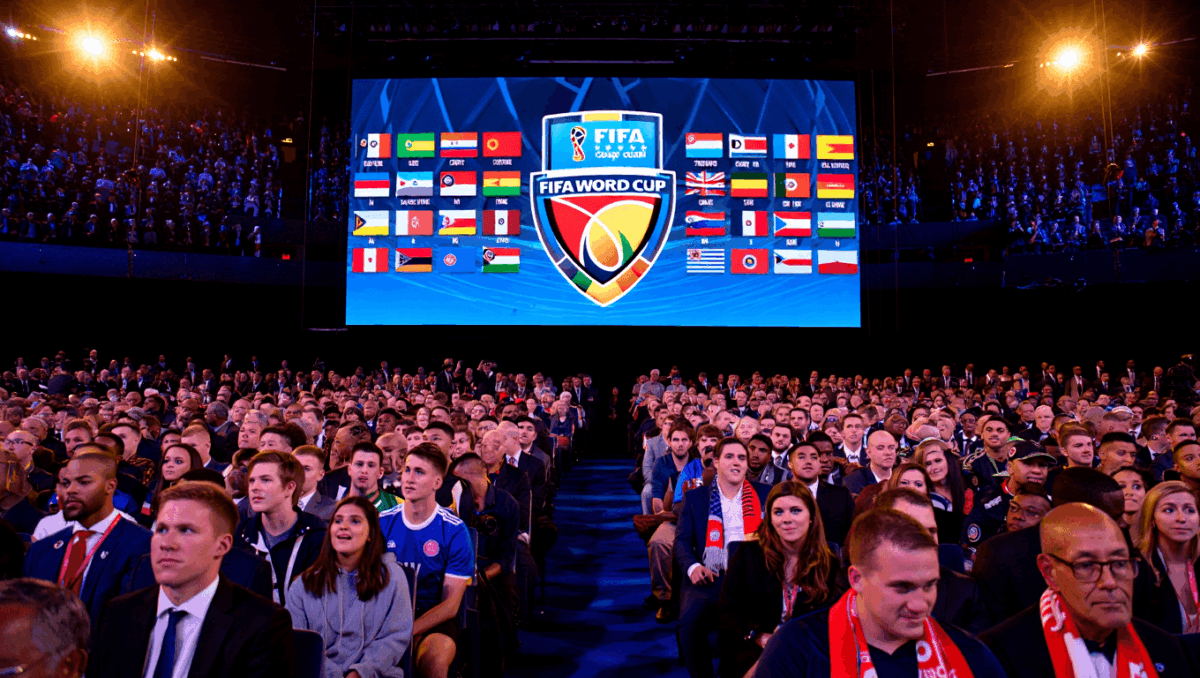
The 2026 FIFA World Cup repechaje playoff system revealed how the remaining six qualification spots will be distributed during today’s group draw in Washington D.C. The historic 48-team tournament features 12 groups of 4 teams, with both European and intercontinental playoff winners positioned strategically across the competition.
🔥 Quick Facts
- Six playoff spots remain undecided: four from UEFA playoffs, two from intercontinental playoffs
- 48 teams total competing in 12 groups of 4, marking the first expanded World Cup format
- Playoff matches scheduled for March 26 and 31, 2026 in Mexico
- Only 32 teams advance after group stage—top 2 in each group plus 8 best third-place finishers
UEFA Repechaje Routes: Four European Playoff Spots Up For Grabs
Cagliari faces Lecce tonight in Serie A showdown, Rossoblu seek top-half push
Girona faces Barcelona tonight in La Liga showdown, Barcelona chases lead
The UEFA repechaje system divides the four available European spots across four separate pathways. Repechaje UEFA A features Wales, Bosnia and Herzegovina, Italy, and Northern Ireland competing for a spot in Group B alongside Canada, Qatar, and Switzerland. This route represents some of Europe’s strongest football nations.
Repechaje UEFA B places the winner in Group F with the Netherlands, Japan, and Tunisia. Ukraine, Sweden, Poland, and Albania battle for this qualification. Meanwhile, Repechaje UEFA C draws its four finalists—Slovakia, Kosovo, Turkey, and Romania—with a path to Group D, where they’ll face the United States, Paraguay, and Australia.
East Texas A&M faces Southeastern in Family Fun Day matchup today
Macclesfield faces Brentford tonight in FA Cup fourth-round showdown
Repechaje UEFA D, joining Group A with Mexico, South Africa, and South Korea, features the Czech Republic, Ireland, Denmark, and North Macedonia. All playoff semifinals and finals occur on the same dates in Mexico, compressed into two weeks of decisive matches.
Intercontinental Playoff Tournament: Two FIFA Spots Allocated
| Playoff Route | Destination Group | Competing Teams |
| Intercontinental Playoff A | Group K | New Caledonia, Jamaica, DR Congo |
| Intercontinental Playoff B | Group I | Bolivia, Suriname, Iraq |
The intercontinental playoffs bring together the strongest remaining teams from Asia, Africa, CONCACAF, and Oceania. The two highest-ranked teams—Democratic Republic of Congo and Iraq—earn direct seeding into the tournament finals, bypassing the semifinals. This format creates compelling matchups as six nations compete over two weeks in March 2026.
The tournament structure means four teams play first-round eliminators while the two seeded sides await the winners. The finals determine which two nations join the World Cup group stage, filling the last remaining slots.
Group Draw Highlights: Strategic Placement Across All 12 Sections
Europe’s dominant contingent stretches across multiple groups, with established powers like Spain, France, Germany, England, and Portugal heading their respective sections. The playoff teams slot into specific groups strategically—no group will feature more than one UEFA playoff winner, maintaining competitive balance. The 48-team format ensures that eight third-place teams qualify, reducing the traditional “group of death” scenario.
Historic debuts shine throughout the draw with Curacao making its first World Cup appearance after improbable CONCACAF qualifying success. Cape Verde qualifies for the first time in African history. Jordan and Uzbekistan mark their tournament debuts, while Scotland and Austria return after lengthy absences. These storylines will define June 11 to July 19, 2026.
Host nation advantage materializes with Mexico inaugural match against South Africa at the Estadio Azteca. The United States, Canada, and Mexico secure favorable groupings as organizers, though no host automatically advances. The final venue—MetLife Stadium in New Jersey—will host July 19’s championship match.
Understanding the Repechaje Format: How Teams Qualify for 2026
The two intercontinental pathways operate simultaneously during March 26-31, 2026. Intercontinental Playoff A features a semifinal between Jamaica and New Caledonia, with the winner facing Democratic Republic of Congo in the final for a Group K spot alongside Portugal, Uzbekistan, and Colombia. Bolivia and Suriname contest Playoff B’s semifinal, with the winner facing Iraq for the Group I position including France, Senegal, and Norway.
The repechaje structure guarantees competitive integrity by preventing any confederation from securing multiple spots through single pathways. UEFA’s four routes distribute European representatives efficiently, while intercontinental brackets unite teams across continental boundaries. All playoff matches occur at two Mexican venues, centralizing the drama and maintaining tournament momentum heading into the June group stage.
What Does the 2026 World Cup Draw Mean For Playoff Contenders?
The draw positioning creates distinct advantages for playoff qualifiers. UEFA nations entering Group B or F face stronger initial competition compared to Groups A or D, where hosts provide home-field benefits. Intercontinental finalists luck into favorable matchups with the draw determining whether they face elite powers like France and Portugal or more balanced opponents in their groups.
For repechaje teams, March victories become absolutely critical—tournament advancement depends entirely on playoff success, with no wild card entry to the group stage. This intensifies qualification drama as 16 European nations and six intercontinental competitors vie for just six spots. The compressed playoff schedule mirrors the urgency that will define the entire 2026 tournament, establishing which emerging powers and resurgent nations earn their place in football’s greatest stage.
Sources
- BBC News Mundo – Official 2026 World Cup group draw results and team placements from December 5, 2025
- ESPN – Comprehensive group analysis and playoff format explanation for all 12 tournament sections
- FIFA Official – Repechaje tournament rules, playoff dates, and intercontinental qualification pathways

Michael Brown is a seasoned sports journalist bringing years of experience covering professional athletics and sporting culture. With a keen eye for breaking stories and player dynamics, this veteran journalist delivers in-depth analysis and exclusive insights from the world’s biggest sporting events. His passion for the game shines through in every story, keeping fans connected to the action both on and off the field.