
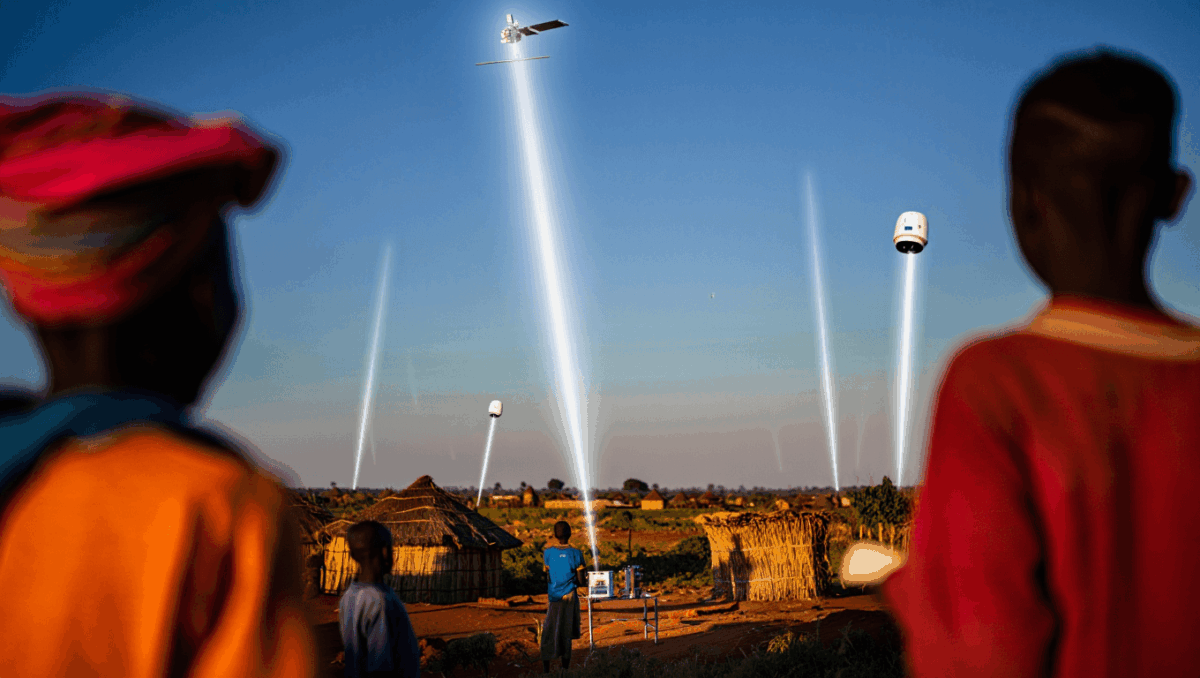
Starlink satellites are transforming African connectivity today. Airtel Africa and SpaceX announced a game-changing partnership on December 16, 2025, bringing direct-to-cell satellite technology to 14 nations. This strategic alliance will reshape how millions access reliable internet across the continent’s most remote regions.
🔥 Quick Facts
- Partnership announced December 16, 2025, covering all 14 Airtel Africa markets serving 174 million customers
- Direct-to-cell satellite service launches in 2026 with text messaging and app data initially
- Next-generation satellites will provide 20x faster broadband speeds for smartphone users
- Airtel Africa becomes the first African mobile provider to offer satellite-to-phone connectivity through Starlink
Starlink Satellites Transform Remote Coverage Across Africa
Intuit emerges as best software stock for 2026 while stock crashes to bargain levels analysts didn’t expect
2026 tax brackets shock Americans with hidden paycheck truth nobody expected
This unprecedented agreement marks a structural shift in African telecommunications infrastructure. Airtel Africa customers with compatible smartphones in regions lacking terrestrial coverage will gain network connectivity directly through Starlink’s low-Earth orbit constellation. The partnership strategically bypasses the capital-intensive requirement of building physical towers in geographically isolated or sparsely populated areas.
The coverage expansion addresses a chronic problem across the continent. Rural and underserved communities historically faced limited options for digital connectivity, restricting access to online education, telemedicine, and essential services. SpaceX’s satellite infrastructure provides an immediate solution without requiring Airtel to invest billions in terrestrial infrastructure densification.
Marcus Lemonis takes CEO role at Bed Bath & Beyond with $25M cost-cutting plan and watch what industry experts are saying about his next move
SPX surges 34 points at open with shocking tech recovery, here’s what caused the unexpected Venezuela rally
According to Airtel Africa’s leadership, the partnership delivers better and more reliable mobile service precisely where building towers remains economically unviable. The rollout demonstrates how mobile network operators increasingly leverage satellite solutions rather than overbuild terrestrial networks in challenging territories.
Direct-to-Cell Technology Sets New Continental Standards
The direct-to-cell technology represents a breakthrough for mass-market satellite connectivity in Africa. Initial service rollout beginning in 2026 will feature text messaging and data for select applications, allowing Airtel users to remain connected even in the most isolated environments.
The partnership includes support for Starlink’s first broadband Direct-to-Cell system, deploying next-generation satellites capable of providing high-speed connectivity. These advanced orbital platforms will deliver data speeds 20 times faster than current mobile internet capabilities. This technological advancement transforms satellite service from emergency-only backup into functional primary connectivity.
Regulatory approval in each of the 14 markets remains essential before launch. Airtel has begun navigating the complex approval process across Nigeria, Kenya, Malawi, Rwanda, Tanzania, Uganda, Zambia, Chad, Democratic Republic of Congo, Gabon, Madagascar, Niger, Republic of Congo, and Seychelles.
| Deployment Detail | Status/Information |
| Service Launch Timeline | 2026 across 14 African markets |
| Initial Features | Text messaging and app data |
| Customer Base Coverage | 174 million Airtel Africa subscribers |
| Speed Improvement | Up to 20x faster than traditional mobile |
Strategic Implications for African Digital Inclusion
This alliance signals a fundamental industry evolution where Direct-to-Device commercialization moves from niche emergency communication to mainstream connectivity solutions. Airtel’s decision to partner rather than build reflects pragmatic recognition that satellite operators excel at remote coverage economics.
Starlink gains first-mover advantage with Africa’s leading telecommunications provider, establishing a formidable competitive position against emerging satellite operators and legacy telecom incumbents. The scale of covering 14 nations simultaneously accelerates regulatory modernization across the continent, pressuring governments to streamline licensing frameworks.
For African digital access, this partnership addresses long-standing infrastructure gaps that hampered economic development, education delivery, and healthcare innovation. Millions previously locked out of digital services gain genuine connectivity pathways.
Regional Regulatory Landscape Faces Modernization Pressure
Successfully deploying direct-to-cell services across 14 sovereign nations requires synchronized regulatory approval processes never before attempted at this scale. Airtel and Starlink must navigate distinct approval requirements, spectrum allocation rules, and interference protocols in each market.
Some nations have already granted operating licenses to Starlink for broadband service, streamlining the direct-to-cell approval pathway. However, others require entirely new regulatory frameworks addressing satellite-cellular convergence—a previously non-existent licensing category.
Industry observers view successful execution here as potentially establishing a blueprint for satellite-terrestrial integration globally, proving that convergence between space and cellular sectors represents immediate commercial reality rather than distant possibility.
What Will This Partnership Mean for African Connectivity Going Forward?
This groundbreaking deal permanently reshapes how Africa addresses the digital divide. Traditional assumptions about building towers in every location yield to hybrid models combining terrestrial and satellite infrastructure optimally based on geography and economics.
Rural enterprises, educational institutions, and healthcare providers gain reliable connectivity essential for digital transformation. The 174-million-subscriber reach across diverse African contexts demonstrates that satellite-cellular integration works at continental scale, not merely in isolated pilot regions.
Competing telecom operators across Africa inevitably face pressure to secure similar satellite partnerships or risk falling behind in connectivity innovation. This ripple effect accelerates the broader shift toward satellite-terrestrial hybrid networks as industry standard rather than competitive differentiation.
Sources
- Reuters – Official announcement of Airtel Africa partnership with SpaceX
- SatNews – Industry analysis on Direct-to-Cell market maturation and commercial implications
- TipRanks – Financial market perspective on partnership scope and customer reach metrics

Patrick Graham is a business and finance journalist translating Wall Street’s complexities into stories that matter to everyday readers. With extensive experience in financial journalism and economic analysis, this expert journalist provides sharp insights on market trends, corporate developments, and the economic forces affecting daily life. His reporting helps readers make sense of the business world’s biggest moves.