
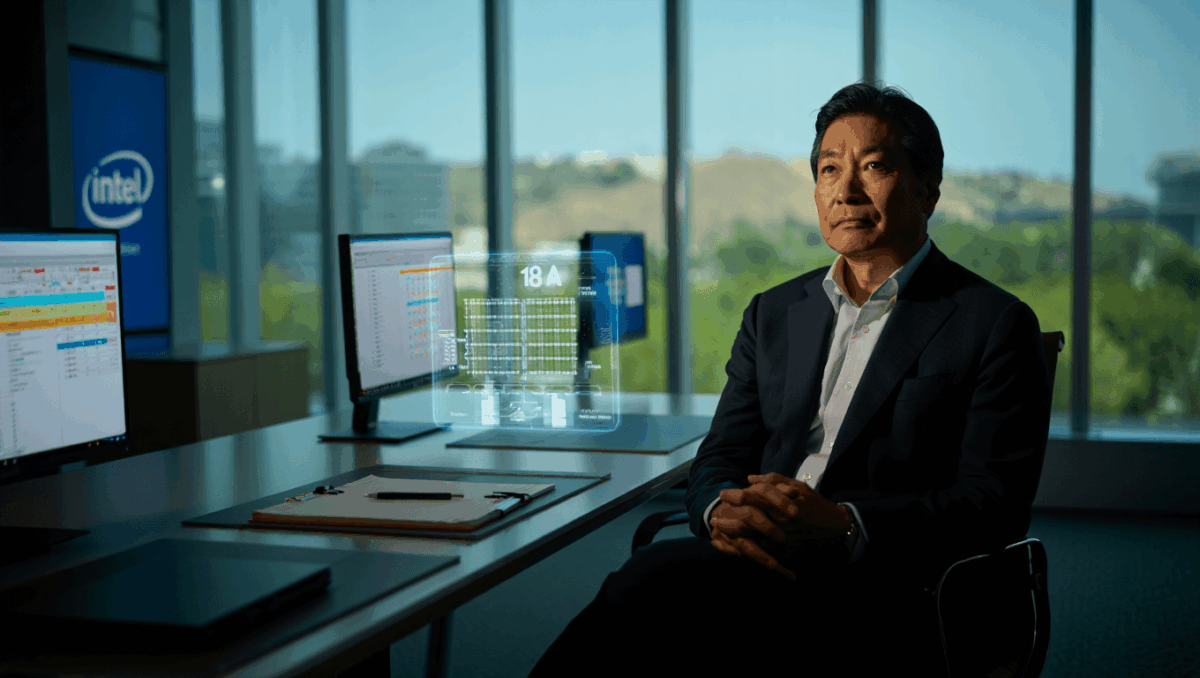
Intel stock soared 84% in 2025, fueled by optimism around its 18A manufacturing process and government support. However, the chipmaker now faces a harsh reality check as Nvidia halted testing of the advanced node, signaling deeper manufacturing challenges ahead for 2026. The contradiction between last year’s stellar gains and today’s foundry struggles raises critical questions about Intel’s recovery trajectory.
🔥 Quick Facts
- INTC stock jumped 84.1% in 2025, outpacing AMD’s 77.3% gain and Nvidia’s 38.8% return
- Nvidia halted 18A testing on December 24, 2025, citing yield and reliability concerns
- Intel 18A yields stand at mid-50% to mid-60% range, below high-volume production standards
- New CEO Lip Bu Tan faces critical 2026 manufacturing milestone to validate foundry ambitions
The 2025 Rally Built on Manufacturing Hope
TurboTax Expert Full Service opens January 5, 2026, and what new tax law changes mean for your refund will surprise you
Intel stock soars 4% at open with analyst predicting $50 target, here’s why Panther Lake launch today changes everything
Intel’s extraordinary 2025 performance didn’t materialize from profits but from investor hope. The company returned to marginal profitability while implementing aggressive restructuring, cutting costs, and securing $16 billion in government and private investments. President Trump’s administration backed Intel as a national champion, while Nvidia injected $5 billion in September 2025, signaling confidence in the turnaround plan.
The stock surged from early 2025 lows to hit a 52-week high of $44.01 in early December, reflecting bullish bets on the 18A process. This advanced 1.8-nanometer node promised to position Intel slightly ahead of TSMC’s N2 process technology. Wall Street analysts upgraded their price targets, with some projecting 2026 targets above $50. The narrative was straightforward: Intel’s manufacturing comeback would diversify global chip supplies and challenge TSMC’s dominance.
Nvidia’s Cold Reality: 18A Isn’t Market-Ready
| Factor | Details |
| 18A Current Yields | Mid-50% to mid-60% range |
| Nvidia Test Status | Halted December 24, 2025 |
| Adequate For | Intel CPUs, early external designs |
| Insufficient For | High-volume AI accelerators |
| INTC Stock Impact | Down 4% initially, later recovered |
Samsung Galaxy S26 Ultra drops at $1,299 but kept one jaw-dropping feature completely secret until February 25
CES 2026 unveils $99 AI memory wearable and smart glasses that finally look normal, but Samsung’s 6K 3D display will blow your mind
Nvidia’s decision to pause 18A testing represents more than a manufacturing setback—it’s a validation failure. According to Reuters reports from late December, Nvidia’s AI chipmakers require extremely high yields and strict variability control to maintain margins on premium GPUs priced at tens of thousands of dollars. Even minor yield fluctuations cannot be tolerated at scale. Intel’s 18A currently cannot meet this bar.
The timing stung harder because Nvidia’s $5 billion investment in September was widely interpreted as confidence in 18A. However, that capital turned out to be a purely financial move, with no guarantee of foundry partnership. Notably, Nvidia was exploring Intel’s 18A alongside TSMC partnerships and other suppliers, keeping its options open. When Intel couldn’t deliver reliable yields, Nvidia simply walked away.
What’s Actually Working: Internal Validation
Despite Nvidia’s exit, Intel 18A is advancing in real production scenarios. Intel Fab 52 in Arizona is ramping high-volume manufacturing of Panther Lake laptop CPUs and Clearwater Forest data center processors, both using the 18A process. This validates the technology’s viability for internal products and is critical for refining yields and confirming process consistency.
Microsoft committed to 18A for its Maia AI accelerators, and Amazon established a multi-year agreement for custom silicon through Intel Foundry Services. Apple may engage Intel for components below its M-series flagship lineup. These commitments demonstrate market interest, though they’re less demanding than Nvidia’s flagship GPU requirements. The real question isn’t whether 18A works—it’s whether Intel can drive yields high enough for the most demanding customers.
The 2026 Cliff: Manufacturing Execution Becomes Everything
Intel’s new CEO Lip Bu Tan replaced Pat Gelsinger in December 2024 amid doubts about the original turnaround timeline. The Nvidia revelations suggest those doubts had merit. Analysts like Stacy Rasgon warn that 2026 will be pivotal, with gross margins expected to decline in the first half as Intel moves to volume production. Managing this margin compression while simultane ously proving 18A reliability will test even experienced foundry operators.
Wall Street remains divided on Intel’s prospects. While some analysts maintain targets of $50 or higher, five institutional analysts assigned “Strong Sell” ratings—a rarity in semiconductor stock coverage. The lowest price target of $20 suggests skeptics expect Intel to trade at pre-Trump administration levels. Current trading near $36 reflects maximum uncertainty about whether 2026 delivers redemption or disappointment.
What Does Intel Need Now to Turn the Narrative Around?
Nvidia’s rejection forces Intel to answer a fundamental question: can it improve 18A yields from mid-50% to mid-60% to above 80% by mid-2026? This is technically achievable but requires flawless process optimization and disciplined execution. Intel must simultaneously convince skeptical customers that yields will stabilize at commercial production levels.
Second, Intel needs flagship customer commitments—not just promising players like Microsoft and Amazon, but elite tier AI accelerator manufacturers willing to bet foundry revenue on 18A. Nvidia’s pause was devastating because it signaled to other potential customers that validated yields don’t yet exist. Replacing that confidence will take visible, reproducible proof.
The $16 billion investment package and government backing provide financial runway, but financial support means little if manufacturing execution fails. Intel has spent more than two years and tens of billions trying to rescue its foundry dream. 2026 will determine whether that investment yields results or becomes a cautionary tale about the costs of falling behind in semiconductor manufacturing.
Will Intel’s Stock Recover from the Nvidia Reality Check?
Nvidia’s decision to pause 18A testing wasn’t rejection—it was marketplace validation speaking. Intel cannot engineer its way to profitability in foundry if customers require yields that aren’t currently achievable. The stock’s 84% rally was priced on hope that new leadership and government support would fix manufacturing physics within months. Instead, Intel faces the uncomfortable truth that foundry recovery takes years, not quarters.
For 2026, investors should expect volatility. Positive quarterly yields improvements will lift sentiment; any backward steps or customer defections will punish the stock. Intel’s market cap advantage over competitors remains slim—trading at non-GAAP forward P/E of 106.48x versus Apple or Microsoft at single digits. That valuation leaves little room for disappointment as reality gradually replaces optimism.
“Intel’s foundry recovery depends on manufacturing execution, not merely ambition. Intel 18A is a reality, in production, and already aiding multiple products. The process is not failing, but rather in the maturation stage.”
— Trefis Team, Forbes Analyst
Sources
- Yahoo Finance – Nvidia decision to halt 18A testing and Intel stock implications
- Forbes – Intel 18A Reality Check analysis and yield projections
- TradingView – Intel stock 2025 performance and 2026 technical analysis

Lee Ann Anderson is a technology journalist specializing in consumer tech, digital innovation, and Silicon Valley trends. With a talent for breaking down complex technical concepts into accessible insights, this skilled journalist keeps readers informed about the gadgets, apps, and breakthroughs shaping our digital future. Her coverage bridges the gap between tech enthusiasts and everyday users.