
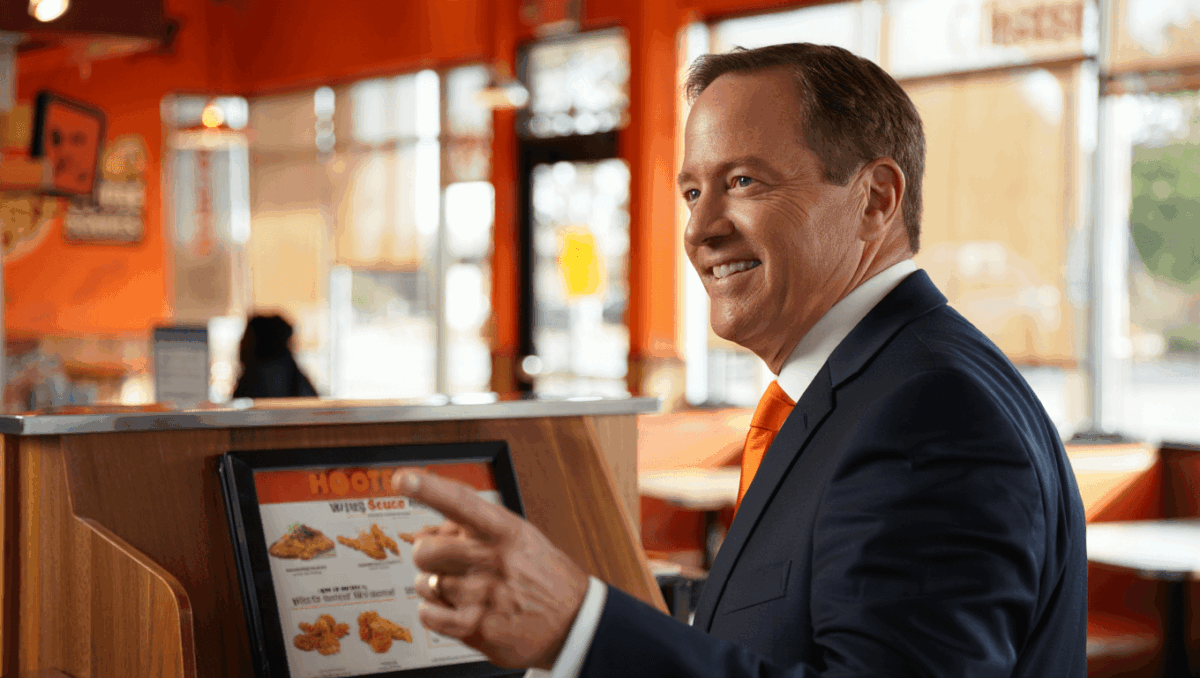
Hooters is staging a remarkable comeback under new ownership, with CEO Neil Kiefer revealing a critical discovery that explains years of decline. The founder-led group that regained control in November 2025 uncovered a major problem: many franchise locations served the wrong wing sauce for 20 years, eating away at the restaurant chain’s core identity and customer loyalty.
🔥 Quick Facts
- Hooters exited Chapter 11 bankruptcy in November 2025 after filing in March 2025 with $376 million in debt
- Original founders acquired 111 company-owned locations and Hoot Owl Restaurants assets through bankruptcy restructuring
- Sales declined 31 percent from 2019 to 2024, with the brand losing a quarter of its unit count before the comeback
- CEO Kiefer confirms locations now use authentic Grade AA butter-based wing sauce as original recipe specified
How Hooters Lost Its Way Before the Turnaround
Intuit emerges as best software stock for 2026 while stock crashes to bargain levels analysts didn’t expect
2026 tax brackets shock Americans with hidden paycheck truth nobody expected
From 2019 to 2024, Hooters hemorrhaged sales and locations under private equity ownership. Previous owners Nord Bay Capital and TriArtisan Capital Advisors carried the chain’s revenue down by more than 31 percent while the unit count dropped by a quarter. By 2024, Hooters of America was generating just $678 million in annual sales, down 15 percent from the prior year.
The COVID-19 pandemic worsened the decline, but the fundamental issues ran deeper. The chain had accumulated over $376 million in debt that previous owners couldn’t service, forcing the company into Chapter 11 bankruptcy on March 31, 2025. The situation left the brand struggling to maintain consistency, customer satisfaction, and relevance in a competitive casual dining market.
The Wing Sauce Discovery That Reveals Everything
Marcus Lemonis takes CEO role at Bed Bath & Beyond with $25M cost-cutting plan and watch what industry experts are saying about his next move
SPX surges 34 points at open with shocking tech recovery, here’s what caused the unexpected Venezuela rally
Shortly after taking control, CEO Neil Kiefer and his team made a startling discovery. For approximately 20 years, acquired franchise locations had been serving a substitute wing sauce instead of Hooters‘ signature butter-based formula. The original sauce uses Grade AA butter, distilled vinegar, and red cayenne peppers, creating the distinctive taste that defined the brand.
| Metric | Details |
| Wing Sauce Formula | Grade AA butter, distilled vinegar, red cayenne peppers (original recipe) |
| Years Inconsistency Occurred | approximately 20 years across many franchise locations |
| Previous Wing Sauce Alternative | substitute formula lacking authentic butter base |
| New Leadership Action | cleared old inventory, restored original butter-based sauce |
Kiefer explained that this inconsistency damaged customer expectations and brand loyalty. When guests visited different Hooters locations, they couldn’t count on the same iconic taste experience. This fundamental betrayal of brand promise contributed to the chain’s broader decline in sales and relevance. Now, new leadership is systematically correcting this error.
The Strategic Comeback Plan Under New Ownership
Original Hooters LLC, the founding group that created the first location in Clearwater, Florida, finalized their acquisition in November 2025. The group acquired 111 company-owned locations plus Hoot Owl Restaurants assets, giving them control of a substantial portion of the chain’s footprint. Their turnaround strategy focuses on a “re-Hooterization” campaign rooted in the brand’s founding principles.
The new owners are upgrading 100 company-owned locations with equipment enhancements, streamlined menus emphasizing fresh ingredients, and restored operational standards. Kiefer emphasized that every wing now gets hand-breaded according to the original recipe, using the authentic butter-based wing sauce. The company also introduced more modest uniforms, moving away from the controversial image that private equity prioritized and returning to family-friendly positioning.
Financial Results and Growth Signals
The Hooters comeback is showing promising early signs. Under new management, franchisees experienced average restaurant revenue that was over double that of company-operated units in 2024, according to available data. The $3,561,091 average unit volume for franchisees demonstrates that demand exists when operations align with customer expectations.
Hooters resolved its immediate debt crisis through restructuring. In June 2025, the company reached a $4.5 million settlement with junior creditors, providing structured payments to unsecured creditors and stabilizing its balance sheet during bankruptcy. The successful chapter exit in November positioned the brand for reinvestment in hospitality standards and customer experience improvements.
Can Hooters Sustain Momentum Beyond the Comeback?
The critical test ahead involves whether Original Hooters LLC can execute the turnaround consistently across all locations. CEO Kiefer noted that the “boys club hangout” image created by previous ownership created an unwelcome perception that deterred many customer demographics. By restoring operational consistency, ingredient quality, and brand purpose, the founders aim to rebuild trust with customers who abandoned the chain.
Market conditions remain challenging for casual dining, but Hooters‘ core strengths—famous burger and wing menu, sports bar atmosphere, and deep cultural brand equity—persist. The discovery of the wing sauce problem represents a teachable moment: sometimes brands decline not because they lack appeal, but because inconsistent execution erodes the promise that made them special. If new leadership can systematize quality across their 111 company-owned locations and maintain supplier relationships with franchisees, Hooters has genuine potential to reverse its trajectory and reclaim relevance in the casual dining market.

Patrick Graham is a business and finance journalist translating Wall Street’s complexities into stories that matter to everyday readers. With extensive experience in financial journalism and economic analysis, this expert journalist provides sharp insights on market trends, corporate developments, and the economic forces affecting daily life. His reporting helps readers make sense of the business world’s biggest moves.