
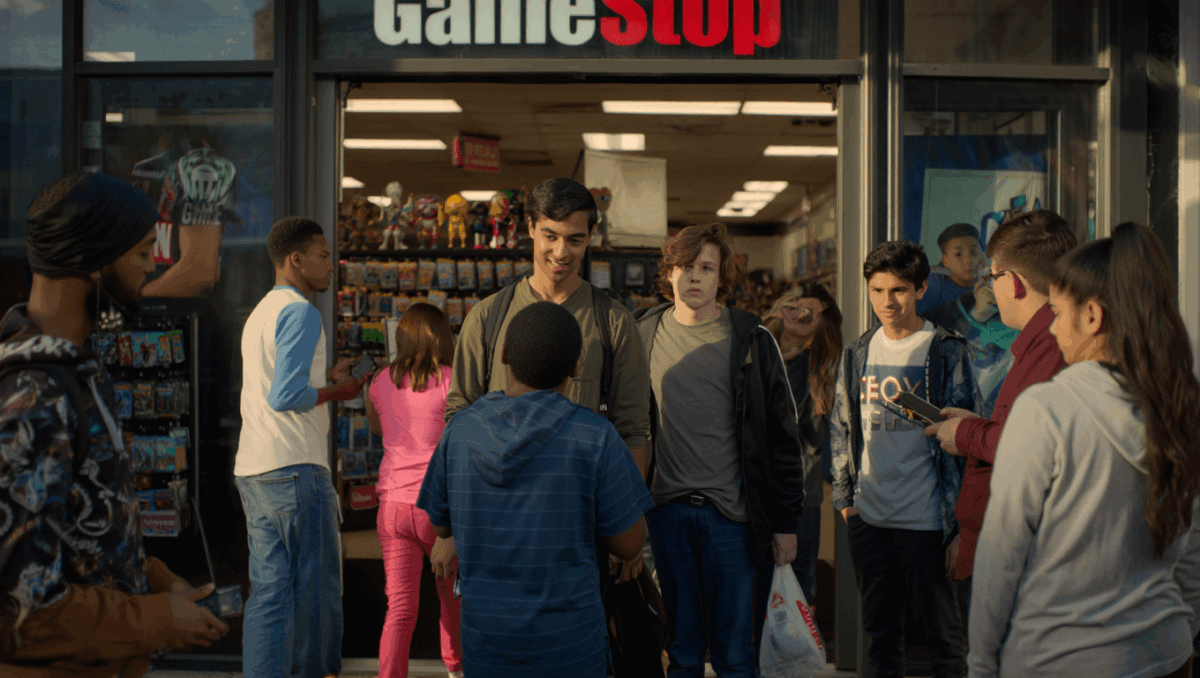
GameStop is betting big on its Resident Evil Requiem merchandise strategy as the struggling retailer discovers that collectibles have become its financial lifeline. The company is offering exclusive tote bags to players who pre-order the game at GameStop, a calculated move that mirrors the retail giant’s dramatic pivot away from declining gaming hardware sales. This strategic marketing play reveals how one of retail’s most famous casualties is clawing back relevance through collectibles rather than games.
🔥 Quick Facts
- Collectibles revenue jumped 50% to $256.1 million in Q3 2025, up from $171.1 million in Q3 2024
- Collectibles now represent 33% of GameStop’s total revenue, up from just 20% earlier in 2025
- GameStop stock surged 2% on December 17, 2025, following the Resident Evil Requiem exclusive announcement
- Pre-order exclusive tote bag features Raccoon City imagery and must be claimed with in-store pickup at GameStop
How GameStop Transformed from Gaming Retailer to Collectibles Powerhouse
Intuit emerges as best software stock for 2026 while stock crashes to bargain levels analysts didn’t expect
2026 tax brackets shock Americans with hidden paycheck truth nobody expected
GameStop’s business model has undergone a radical transformation. The video game software market has shifted almost entirely to digital distribution through platforms like PlayStation Store, Xbox Game Pass, and Steam. This left the company desperately searching for revenue alternatives as used game sales—once a core profit driver—continued their decade-long decline.
Enter collectibles. Trading cards, action figures, exclusive merchandise, and limited-edition gaming items have emerged as GameStop’s unexpected salvation. The strategy wasn’t invented overnight, but the momentum became undeniable during 2025 as collectibles penetration doubled year-over-year. The Resident Evil franchise, with its massive fanbase and iconic characters, represents exactly the type of property GameStop can leverage for exclusive merchandise deals.
Marcus Lemonis takes CEO role at Bed Bath & Beyond with $25M cost-cutting plan and watch what industry experts are saying about his next move
SPX surges 34 points at open with shocking tech recovery, here’s what caused the unexpected Venezuela rally
What makes this pivot particularly remarkable is that GameStop held $6.4 billion in cash at the end of Q1 2025, positioning the company with substantial financial resources for strategic collectibles partnerships and inventory investment. The company is no longer simply surviving—it’s actively investing in this new direction.
Resident Evil Requiem Proves GameStop’s Collectibles Strategy Works
The Resident Evil Requiem exclusive tote bag might seem like a modest promotional item, but it demonstrates GameStop’s sophisticated understanding of modern collector psychology. Gamers who pre-order want more than just a game; they want exclusive items that signal participation in a cultural moment and provide tangible value beyond gameplay.
The tote bag featuring Raccoon City, the series’ iconic setting, creates collectible appeal. Players understand that limited promotional items rarely receive second production runs, making exclusivity a critical selling point. This exclusive approach mirrors how GameStop previously moved merchandise through Deluxe Editions and Collector’s Editions, but with a modern twist that emphasizes brand partnerships.
The January and February 2026 release window for Resident Evil Requiem positions GameStop perfectly. The game launches on PS5, Xbox Series X/S, Switch 2, and PC—platforms with rabid collector communities. GameStop’s ability to offer in-store pickup incentives drives foot traffic to physical locations, a critical advantage as the retailer maintains nearly 4,200 stores worldwide despite decades of closure announcements.
Q3 2025 Earnings Show Collectibles Leading GameStop’s Recovery
| Business Segment | Q3 2025 Revenue | Year-Over-Year Change |
| Collectibles | $256.1 million | +50% |
| Hardware | Down significantly | Declining |
| Software | Down significantly | Declining |
| Total Net Sales | $821.0 million | -4.6% |
GameStop’s Q3 2025 financial results, announced on December 9, 2025, told a story of dramatic segment divergence. While total net sales declined 4.6% to $821 million, this decline masked the true story: collectibles were booming while everything else collapsed.
Hardware sales faced headwinds from the lack of new console releases—the industry hasn’t launched a major console since 2020. Software sales continued their digital distribution decline. But collectibles? The segment generated $256.1 million, a stunning 50% increase from Q3 2024’s $171.1 million. By quarter’s end, collectibles represented nearly one-third of the company’s entire revenue stream.
The earnings report included 67 million directly registered shares as of December 5, 2025, showing continued retail investor engagement with GME stock. While analyst ratings remain mixed, the undeniable fact is that GameStop has created a viable collectibles business that’s growing exponentially while traditional retail gaming continues its terminal decline.
Wall Street Remains Skeptical Despite Collectibles Success
Despite collectibles’ stellar performance, Wall Street analysts have largely held their fire on GameStop. The stock is down 26.9% since the start of 2025 and trading 35.9% below its May 2025 high of $35.01 per share. Analyst recommendations paint a decidedly pessimistic picture of the company’s broader viability.
The skepticism centers on a fundamental question: can collectibles sustainably replace the billions of dollars that video game sales once generated? Critics point out that the collectibles market, while growing, remains niche compared to the gaming industry’s historical scale. GameStop’s ability to maintain its retail footprint depends heavily on this untested business model succeeding in the long term.
However, the 2% stock jump on the Resident Evil Requiem announcement suggests retail investors are taking notice. The collectibles strategy appears to resonate with GME’s devoted shareholder base, many of whom view the company’s transformation efforts favorably. Each exclusive partnership represents another opportunity for GameStop to prove that collectibles partnerships can drive sustainable profitability.
What Does GameStop’s Exclusive Merchandise Strategy Mean for Investors and Collectors?
For collectors, GameStop’s pivot creates unique value propositions. Exclusive merchandise offers tangible collectible appeal that digital games simply cannot provide. The Resident Evil Requiem tote bag is only the beginning—industry experts expect GameStop to negotiate similar exclusive deals with major publishers throughout 2026.
For investors, the question remains whether collectibles can sustain GameStop’s resurgence or represent merely a temporary bright spot. The stock has traded under constant pressure despite collectibles’ explosive growth, suggesting Wall Street wants to see sustained profitability and comparable store growth before changing its bearish stance. GameStop must prove that collectibles aren’t a flash trend but rather a durable business foundation for the next decade.

Patrick Graham is a business and finance journalist translating Wall Street’s complexities into stories that matter to everyday readers. With extensive experience in financial journalism and economic analysis, this expert journalist provides sharp insights on market trends, corporate developments, and the economic forces affecting daily life. His reporting helps readers make sense of the business world’s biggest moves.