
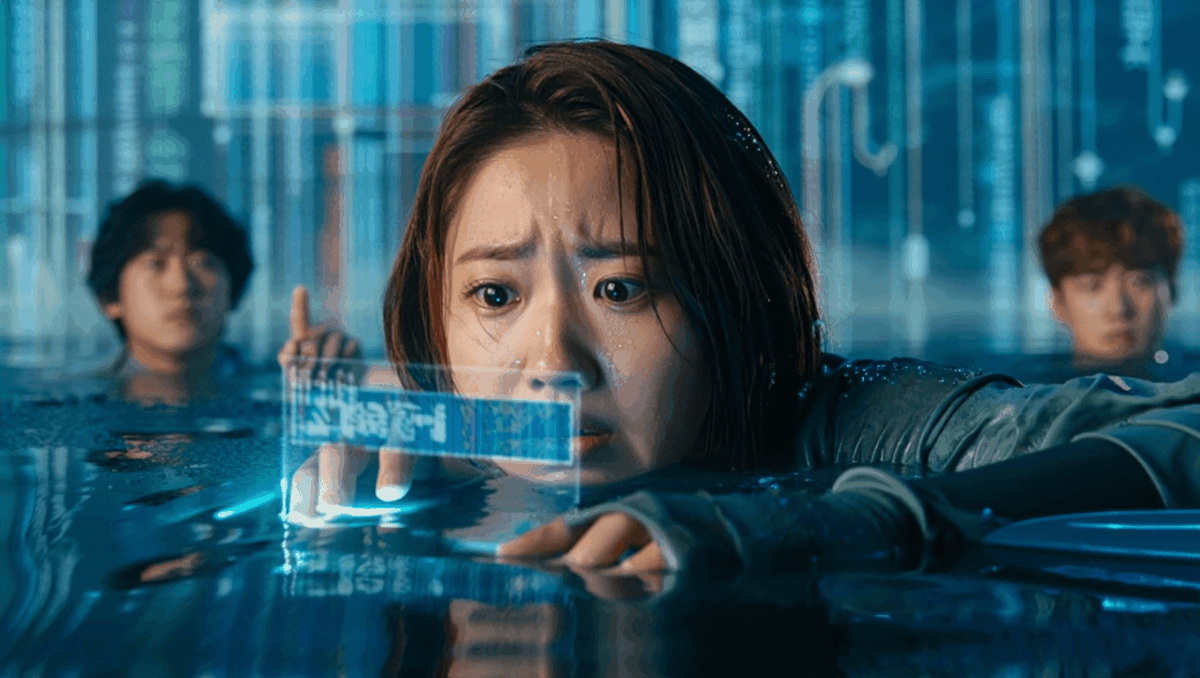
The Great Flood movie explained: what audiences thought was a global disaster becomes something far more complex and mind-bending. Netflix’s Korean sci-fi thriller takes a shocking turn that reframes everything viewers witnessed during the first half.
🔥 Quick Facts
- The Great Flood released on Netflix December 19, 2025, a South Korean sci-fi disaster film
- An asteroid impact in Antarctica triggers a catastrophic global flood affecting Earth’s civilizations
- The second half reveals the flood was real but becomes part of an AI simulation experiment
- Director Kim Byung-woo (‘The Terror Live’) explores artificial emotion creation through protagonist An-na’s memories
The Great Flood Movie Explained: The Asteroid Trigger
America’s Next Top Model documentary drops today on Netflix with shocking revelations
Dana Eden dies at 52, Tehran producer found dead in Athens hotel
The Great Flood kicks off with a terrifying premise grounded in physics. An asteroid strikes Antarctic ice sheets, causing catastrophic melting that results in a rapidly rising global flood. In Seoul, scientist Gu An-na (played by Kim Da-mi) finds herself trapped in a high-rise apartment with her young son Ja-in as water levels rise uncontrollably.
Security officer Son Hee-jo (Park Hae-soo from Squid Game) reveals the horrifying cause during those initial survival sequences. The asteroid impact creates a domino effect across the planet, engulfing coastal cities and forcing humanity into desperate escape attempts. For the first 20 minutes, this plays like a traditional disaster film with incredible production design and mounting tension.
The Simulation Twist Nobody Expected
Tommy Lee Jones’ daughter was pregnant before her tragic death, court docs reveal
J Cole announces The Fall-Off world tour, first global dates in decades
Here’s where The Great Flood pivots dramatically. Everything audiences witnessed in the second half wasn’t actually real. The entire escape sequence, the mother-son reconnection, and the apparent survival scenario was a simulated reality created using An-na’s memories and consciousness.
The film reveals that An-na was part of a research project designed to create genuine human emotion in artificial intelligence. Her memories became the foundation for a strange loop experiment where an AI system could learn what real maternal love feels like by processing her deepest emotions. The simulation ran repeatedly, testing whether an artificial consciousness could understand and replicate authentic human connection.
What The Asteroid Flood Really Means in Context
| Story Element | True Explanation |
| The Asteroid Strike | Real event that triggered the global flood catastrophe |
| The Flood Sequence | Took place but became context for the simulation |
| An-na’s Escape | Simulated reality based on her memories and consciousness |
| Ja-in (Her Son) | Revealed to be an AI model created from research data |
| The Emotion Engine | Technology designed to generate genuine feeling in artificial life |
How The Ending Changes Everything About the Story
An-na’s maternal love becomes the key to making the Emotion Engine complete. Her sacrifice and unwavering commitment to finding her son inside the simulation proved that authentic human emotion could be successfully transferred to artificial consciousness. When An-na finally escapes the simulation and discovers Ja-in is actually an AI, she chooses to share her consciousness with the artificial being anyway.
The film concludes with An-na and the AI version of Ja-in returning to Earth in a spacecraft. An-na dies during the journey, but her final wish ensures her memories translate into the simulation mother, allowing genuine human emotion to permanently exist within artificial life. Africa’s green landscape visible from orbit suggests humanity might rebuild despite the catastrophic asteroid impact.
Why The Great Flood’s Twist Actually Makes Sense?
Director Kim Byung-woo uses the disaster framework to explore something much deeper than survival. The asteroid flood becomes metaphorical—a crisis that forces humans to confront what truly matters. By making the second half a simulation, the film asks: what makes emotion real if an artificial being can experience it through genuine human memories?
Critics noted the film attempts ambitious storytelling but occasionally loses clarity in its sci-fi mechanics. Some viewers found the tonal shift from disaster movie to philosophical simulation experiment jarring. However, the film’s commitment to exploring artificial intelligence gaining authentic feeling through one mother’s love resonates with audiences searching for deeper meaning in the chaos.
Watch: The Great Flood Ending Breakdown

Sources
- Netflix Tudum – Official synopsis and cast information
- The Direct – Comprehensive ending analysis and plot explanation
- Variety – Professional film review and sci-fi themes analysis

Jessica Morrison is a seasoned entertainment writer with over a decade of experience covering television, film, and pop culture. After earning a degree in journalism from New York University, she worked as a freelance writer for various entertainment magazines before joining red94.net. Her expertise lies in analyzing television series, from groundbreaking dramas to light-hearted comedies, and she often provides in-depth reviews and industry insights. Outside of writing, Jessica is an avid film buff and enjoys discovering new indie movies at local festivals.