
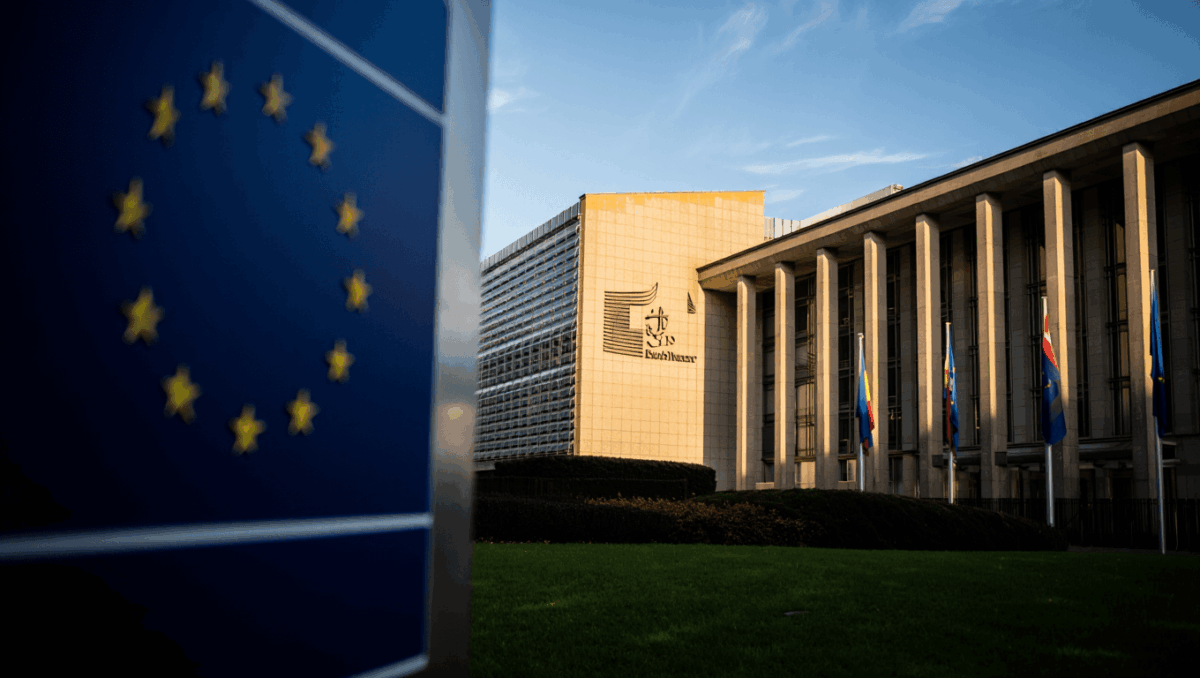
Meta AI faces a major EU antitrust probe over its WhatsApp policy that blocks competing AI providers from reaching customers. The European Commission opened a formal investigation on December 4, 2025, examining whether the tech giant’s restrictions breach EU competition rules. This marks an escalating regulatory challenge to Meta’s dominance in messaging and artificial intelligence services.
🔥 Quick Facts
- Meta announced the policy in October 2025, prohibiting AI providers from using WhatsApp Business Solution when AI is their primary service
- Implementation date is January 15, 2026 for existing AI providers; already applied October 15, 2025 for new providers
- Meta AI remains accessible on WhatsApp while competing services like ChatGPT face exclusion
- Investigation covers entire European Economic Area except Italy, which has separate proceedings underway
The Policy: What Meta Changed and Why It Matters
Intuit emerges as best software stock for 2026 while stock crashes to bargain levels analysts didn’t expect
2026 tax brackets shock Americans with hidden paycheck truth nobody expected
Meta updated WhatsApp’s Business Application Programming Interface (API) terms in October 2025, creating strict new restrictions on AI provider access. The policy prohibits third-party AI providers from using the WhatsApp Business Solution if artificial intelligence represents their primary or dominant service offering.
Businesses can still use AI tools for ancillary functions like automated customer support, but cannot deploy general-purpose AI assistants through the platform. This distinction is crucial because many AI-first companies rely on WhatsApp to distribute their conversational AI services to millions of users. The measure essentially creates a two-tier system where Meta AI gets exclusive access while competitors face complete exclusion.
Marcus Lemonis takes CEO role at Bed Bath & Beyond with $25M cost-cutting plan and watch what industry experts are saying about his next move
SPX surges 34 points at open with shocking tech recovery, here’s what caused the unexpected Venezuela rally
Teresa Ribera, Executive Vice-President for Clean, Just and Competitive Transition, emphasized the seriousness of the situation, stating the investigation aims to prevent dominant digital incumbents from abusing their power to crowd out innovative competitors in the AI space.
Why the European Commission Is Investigating
The European Commission is concerned that Meta’s policy may prevent third-party AI providers from offering their services through WhatsApp in the entire European Economic Area (EEA). This represents a potential abuse of dominant market position, violating Article 102 of the Treaty on the Functioning of the European Union (TFEU).
The investigation focuses on whether Meta leveraged its ownership of WhatsApp as a messaging monopoly to unfairly restrict competition in the emerging AI market. Several AI providers currently offer access to their assistants through WhatsApp, enabling users to interact with conversational AI for tasks like answering questions, generating content, or accessing customer support. Blocking these services could harm both competition and consumer choice.
| Investigation Detail | Status |
| Geographic Coverage | European Economic Area (All except Italy) |
| Policy Announcement | October 2025 |
| Full Implementation | January 15, 2026 |
| Legal Framework | Article 102 TFEU (Abuse of Dominant Position) |
Meta AI Gets Privileged Access While Competitors Face Exclusion
A critical issue flagged by regulators is the preferential treatment of Meta’s own AI service. While Meta AI remains fully accessible to WhatsApp users, competing AI providers will be blocked from the platform entirely. This creates an unfair competitive advantage, allowing Meta to integrate AI features into its messaging service while preventing rivals from doing the same.
Conversational AI has become essential for business communication, with companies using these tools to answer customer questions, handle inquiries, and provide technical support through messaging apps. By controlling WhatsApp’s AI layer, Meta gains unique market power to promote its own AI while suppressing competitors. The implementation timeline gives existing AI providers until January 15, 2026 to transition away from the platform or risk being banned.
Regulators are particularly concerned that this move represents broader anti-competitive behavior, following Meta’s history of acquisitions and platform control decisions that the EU has scrutinized under competition law.
Timeline and Italy’s Separate Investigation
The European Commission’s investigation formally launched December 4, 2025, but Italian regulators had already moved independently. Italy’s Competition Authority broadened its probe in November 2025 to examine whether Meta abused its dominant position by blocking rival AI chatbots from WhatsApp.
The EU investigation covers the entire EEA except Italy to avoid duplication of efforts. Italy has separate authority to pursue interim measures against Meta’s conduct locally. Both investigations operate simultaneously, creating pressure from multiple regulatory angles. The investigation has no predetermined deadline, but the EU indicated they want to act quickly to prevent possible irreparable harm to competition in the AI space before the January 15, 2026 policy goes fully into effect.
“AI markets are booming in Europe and beyond. We must ensure European citizens and businesses can benefit fully of this technological revolution and act to prevent dominant digital incumbents from abusing their power to crowd out innovative competitors.”
— Teresa Ribiera, Executive Vice-President for Clean, Just and Competitive Transition, European Commission
What Does This Investigation Mean for Businesses and Users?
If the European Commission finds Meta violated competition rules, the company could face significant penalties and be forced to modify or abandon its policy. Regulators might require Meta to allow AI providers continued access to WhatsApp or impose behavioral restrictions on the tech giant’s practice of leveraging WhatsApp’s scale to promote its own services.
For businesses relying on AI chatbots through WhatsApp, the stakes are high. Companies using services like ChatGPT, Copilot, or other third-party AI solutions will be unable to reach customers through the messaging app starting January 15, 2026 unless the policy is reversed. This disruption could reshape how enterprises use WhatsApp for customer engagement and support.
The investigation reflects the EU’s broader commitment to regulating Big Tech’s AI practices. By challenging Meta’s policy, regulators are protecting market competition in artificial intelligence while ensuring diverse AI solutions remain available to European consumers and businesses. The outcome could set precedents for how other tech giants manage access to their platforms for competing AI services.
Sources
- European Commission – Official antitrust investigation announcement and case details
- Reuters – Comprehensive reporting on EU probe and Meta’s WhatsApp AI policy
- Bloomberg – Market and regulatory analysis of the investigation

Patrick Graham is a business and finance journalist translating Wall Street’s complexities into stories that matter to everyday readers. With extensive experience in financial journalism and economic analysis, this expert journalist provides sharp insights on market trends, corporate developments, and the economic forces affecting daily life. His reporting helps readers make sense of the business world’s biggest moves.