
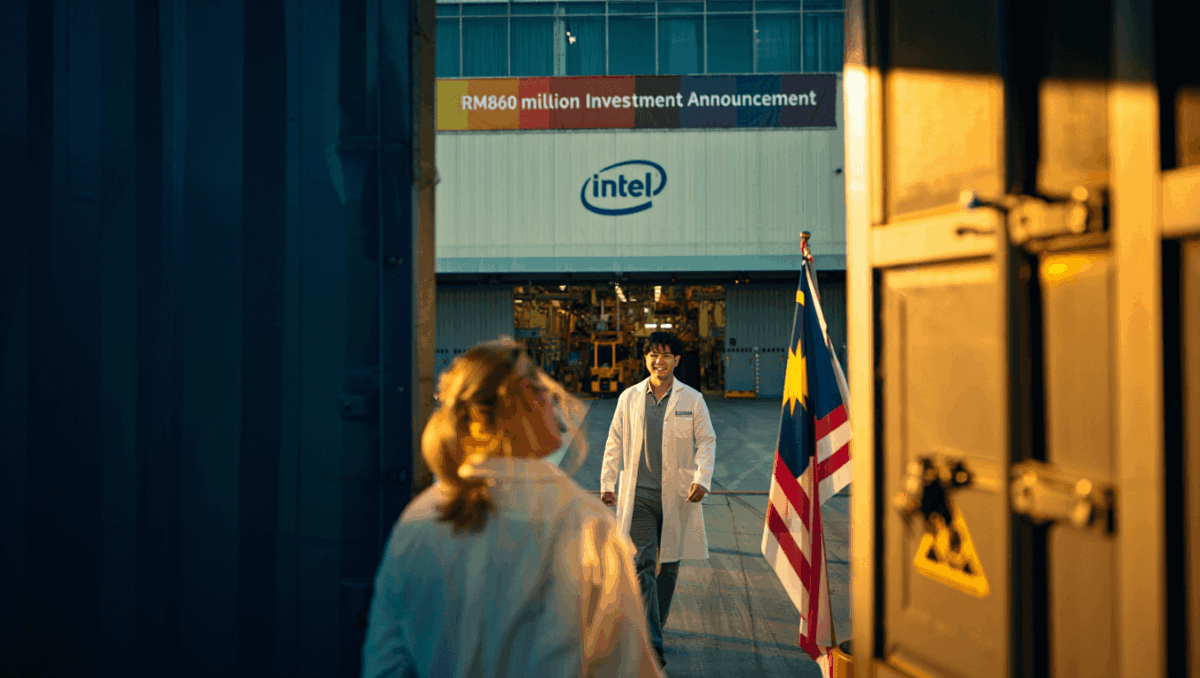
Intel announces a new investment in Malaysia today. The $208 million boost targets assembly and testing operations. Read on for context and the Apple foundry implications.
🔥 Quick Facts
- Investment: Intel pledges RM860 million (~$208 million) for Malaysia expansion.
- Date: Malaysian Prime Minister Anwar Ibrahim announced the pledge on December 2, 2025.
- Purpose: Funds target assembly and testing, according to Barron’s.
- Impact: The move strengthens Malaysia as a regional semiconductor hub.
Intel expands Malaysia investment and what it means
TurboTax Expert Full Service opens January 5, 2026, and what new tax law changes mean for your refund will surprise you
Intel stock soars 4% at open with analyst predicting $50 target, here’s why Panther Lake launch today changes everything
Intel is adding capital to its Malaysian footprint this week. The company announces RM860 million for assembly and testing.
Officials describe the move as a regional capacity build. The decision aligns with Intel’s recent manufacturing expansion plans.
Samsung Galaxy S26 Ultra drops at $1,299 but kept one jaw-dropping feature completely secret until February 25
CES 2026 unveils $99 AI memory wearable and smart glasses that finally look normal, but Samsung’s 6K 3D display will blow your mind
Malaysia will serve as a larger hub for final packaging. That reduces reliance on distant fabs and speeds delivery.
Investors reacted quickly to the announcement. Some market reports link the move to renewed interest in Intel stock.
Media coverage highlights the RM860 million figure and timing. It is a measured expansion rather than a full new fab.
Local officials view the project as job supporting. It may strengthen Malaysia’s semiconductor ecosystem over time.
Why the $208M move matters for chip supply chains
The additional funding addresses regional capacity needs. Intel’s pledge tries to ease pressure on congested supply routes.
Expanding assembly reduces transit times for finished chips. Shorter logistics chains help manufacturers meet peak demand.
$208 million is modest by wafer fab standards. Yet the sum matters for assembly and logistical resilience in Asia.
Companies often rely on multiple sites for redundancy. This investment signals a focus on operational flexibility.
Local suppliers could win new contracts soon. That would create jobs and deepen local industry links.
Investment details and what Intel will build
Public reports say the funds will expand assembly and test lines. Official technical specifics remain limited and partly TBA.
| Specification | Details |
| Processor | TBA |
| RAM | TBA |
| Storage | TBA |
| Price | RM860 million (~$208 million) |
The table reflects verified budget figures and placeholder technical details. Intel and Malaysian officials have not released full specs.
Assembly and testing upgrades often require new tooling. Timelines and exact capacity increases remain listed as TBA.
The confirmed figure ties to local job commitments. Officials frame the funds as capacity strengthening rather than new wafer fabrication.
Industry reaction and the Apple foundry speculation
Market commentary immediately surfaced after the report. Some outlets flagged talk linking Intel to an Apple foundry role.
Coverage mentions an investor narrative about an Apple manufacturing tie. No official confirmation of any Apple foundry deal exists.
Analysts note that assembly and testing differ from wafer fabs. A foundry for Apple would require separate, large-scale fabs and contracts.
Intel’s expansion improves regional capability regardless of Apple outcomes. The investment could make Malaysia more attractive for partners.
Media reports spurred stock chatter but did not cite contract details. Readers should treat Apple-related links as speculative for now.
According to Barron’s, Prime Minister Anwar Ibrahim stated that Intel will invest RM860 million to expand assembly and testing operations in Malaysia.
Will this settle Apple foundry rumors?
The short answer is no, it probably will not. The investment targets assembly and test capacity, not wafer production.
Apple would need dedicated wafer fabs and long-term agreements. Those require regulatory approvals and multi‑year commitments.
Intel’s pledge improves supply resilience. Yet it does not equal a confirmed Apple foundry contract.
If Apple pursued local partners, expanded testing hubs could help. However, a full foundry announcement would need separate confirmation.
For now, the verified takeaway is clear. Intel is boosting Malaysia capacity with RM860 million (~$208 million), and speculation must await proof.
Sources
- Barron’s – report on the RM860 million pledge and official comments.
- Yahoo Finance – coverage of Intel’s Malaysia investment and market reaction.
- The Economic Times – summary of the announcement and local context.

Lee Ann Anderson is a technology journalist specializing in consumer tech, digital innovation, and Silicon Valley trends. With a talent for breaking down complex technical concepts into accessible insights, this skilled journalist keeps readers informed about the gadgets, apps, and breakthroughs shaping our digital future. Her coverage bridges the gap between tech enthusiasts and everyday users.