
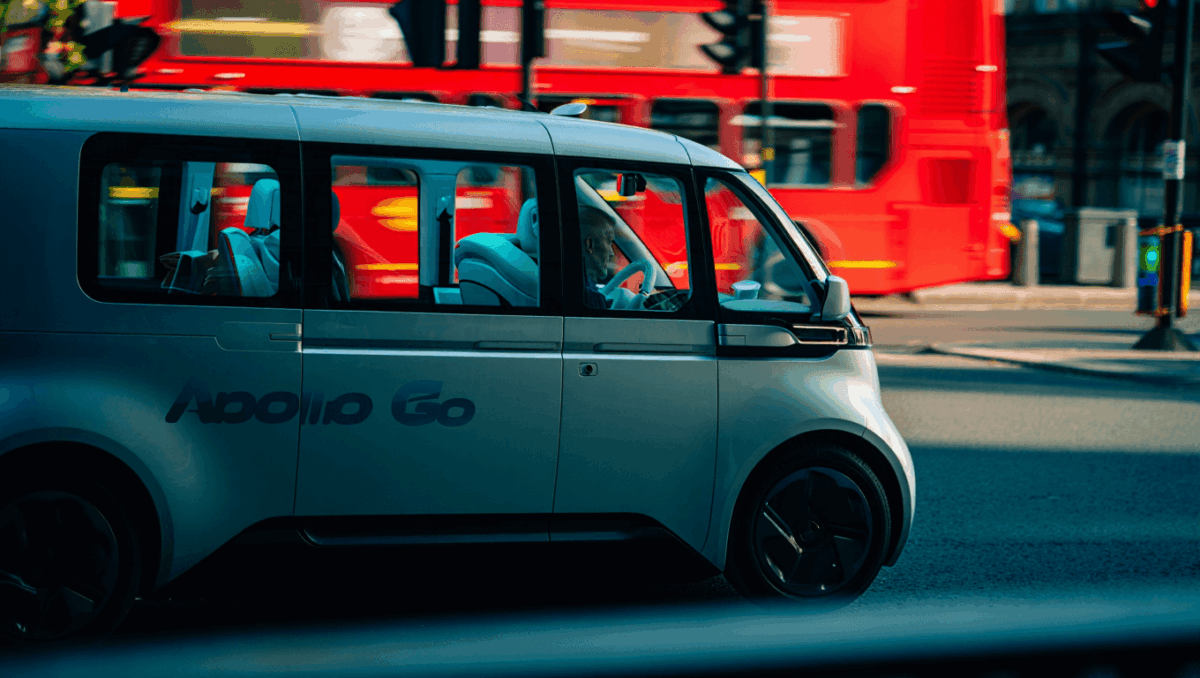
The taxi industry faces a transformative moment as Uber and Lyft announce landmark partnerships with Chinese tech giant Baidu for UK robotaxi trials launching next year. China’s Apollo Go driverless service will usher in a new era of autonomous transportation, reshaping how cities move and challenging the traditional cab workforce worldwide. This collaboration marks a critical turning point for ride-hailing giants adapting to the robotaxi revolution.
🔥 Quick Facts
- Uber and Lyft launched partnerships with Baidu on December 22, 2025
- Apollo Go RT6 robotaxis will begin pilot trials in London in H1 2026
- Baidu operates 250,000 fully driverless rides weekly across 22 Chinese cities
- Global robotaxi market projected to reach $118.61 billion by 2031
Baidu’s Apollo Go Brings Chinese Robotaxi Technology to London
Intuit emerges as best software stock for 2026 while stock crashes to bargain levels analysts didn’t expect
2026 tax brackets shock Americans with hidden paycheck truth nobody expected
Baidu, China’s leading autonomous driving company, will introduce its Apollo Go service to UK roads through separate partnerships with Uber and Lyft. The Apollo Go RT6 represents the sixth-generation robotaxi platform. This vehicle features advanced self-driving capabilities developed over years of Chinese market operations.
The RT6 is a 4.8-meter-long electric vehicle designed specifically for autonomous mobility. It features a detachable steering wheel, spacious four-seat configuration, and premium passenger amenities. Baidu manufactures the RT6 at approximately $34,825 per unit with JAC Motors, making it significantly cheaper than competing Western robotaxis.
Marcus Lemonis takes CEO role at Bed Bath & Beyond with $25M cost-cutting plan and watch what industry experts are saying about his next move
SPX surges 34 points at open with shocking tech recovery, here’s what caused the unexpected Venezuela rally
The vehicle employs sophisticated sensing technology including 8 LiDAR sensors, 12 cameras, 6 millimeter-wave radars, and 12 ultrasonic sensors. These components enable Level 4 autonomy, meaning the vehicle requires no steering wheel for normal operations. London trials will launch in the first half of 2026, targeting commercial services expansion.
Why Ride-Hailing Giants Are Embracing Autonomous Vehicles Today
Uber and Lyft recognize that robotaxis eliminate their largest operating cost: driver salaries. Traditional ride-hailing relies on human operators earning substantial hourly wages plus benefits. Autonomous vehicles promise to reduce per-mile expenses by 50-70% while maintaining service reliability.
The competitive pressure accelerates adoption urgently. Waymo already operates sophisticated robotaxi fleets in multiple US cities with over 100 million autonomous miles logged by July 2025. Tesla continues advancing its own autonomous vehicle technology, creating urgency for platforms to secure partnerships. Baidu‘s proven track record managing 2.2 million fully driverless rides in Q2 2025 gives Western platforms confidence in international expansion viability.
This partnership represents strategic risk management by Uber and Lyft. Rather than developing proprietary robotaxi technology requiring massive R&D investment, the platforms leverage Baidu‘s existing infrastructure and expertise. This approach accelerates time-to-market for European operations while sharing financial burdens.
Apollo Go Robotaxi Market Expansion and Technical Specifications
| Specification | Details |
| Vehicle Length | 4.8 meters |
| Seating Capacity | 4 passengers |
| Autonomy Level | Level 4 (full autonomy) |
| Manufacturing Cost | Approximately $34,825 |
| Weekly Driverless Rides | 250,000 (current China operations) |
| Operating Cities (China) | 22 cities |
Baidu positioned its Apollo Go service as Asia’s autonomous vehicle leader. The platform recently surpassed 1,000 deployed robotaxis across multiple Chinese cities with ambitious expansion targets. Baidu aims to operate 20,000 robotaxis globally by 2027, making the UK entry critical to international growth strategy.
The London pilot gives Baidu crucial European operational data. Successful trials open pathways to additional major markets including continental Europe, reinforcing Baidu‘s position against US competitors like Waymo. Lyft becomes Baidu‘s first European partner, signaling confidence in the Chinese technology’s readiness for Western regulatory environments.
Traditional Taxi Industry Faces Disruption as Cost Advantages Mount
Traditional taxi operators and drivers face unprecedented competitive pressure from robotaxis. Industry analysis suggests conventional taxis and ride-hailing services could face extinction within a few years in major markets. The Urban Robotics Foundation warned that traditional taxis might disappear from secondary robotaxi markets within 2-3 years of robotaxi launch.
Cost advantage proves decisive in this transformation. Robotaxis eliminate $15,000-$25,000 annual driver costs per vehicle. Tesla‘s autonomous fleet in Austin already operates 5 times cheaper than traditional Uber X services. As robotaxi networks scale and unit costs drop, conventional taxi economics become unsustainable.
Safety concerns dominate public sentiment about robotaxis in the UK. Surveys indicate widespread hesitation about autonomous vehicles despite technological advances. However, regulatory frameworks in the UK established clear autonomous vehicle testing protocols, suggesting governments recognize inevitable industry transformation.
What Does the Robotaxi Revolution Mean for Transportation Employment and Cities?
The robotaxi rollout creates significant employment disruption for millions of professional drivers globally. The taxi industry employs approximately 13.6 million drivers worldwide, with substantial workforces in major cities. UK taxi driver employment numbers face substantial headwinds as autonomous fleets expand.
However, the transition generates new job categories in software development, fleet management, vehicle maintenance, and autonomous systems oversight. Studies suggest employment shifts rather than disappearance, though income redistribution creates short-term hardship. Policymakers increasingly debate retraining programs and social safety nets for displaced drivers.
Urban infrastructure adoption accelerates with Uber, Lyft, Waymo, and local competitors all deploying robotaxis simultaneously. Multiple autonomous networks will reduce traffic congestion while requiring new parking infrastructure. Cities benefit from cleaner electric fleets producing zero tailpipe emissions, aligning with climate objectives.
The 2026 London trials represent a critical test case for European cities. Success or failure will influence Paris, Berlin, Amsterdam, and other major cities’ robotaxi adoption strategies. Winners in this market consolidation will achieve dominant market positions, reshaping urban mobility for decades.
“Baidu’s Apollo Go is Asia’s leader in autonomous ride-hailing, operating in 22 cities and providing about 250,000 fully driverless rides a week.”
— The Guardian, Technology Coverage
Sources
- BBC News – Coverage of Uber, Lyft, and Baidu partnership announcements
- Reuters – Global robotaxi deployment and market expansion reporting
- The Economist – Analysis of self-driving taxi revolution and industry transformation

Patrick Graham is a business and finance journalist translating Wall Street’s complexities into stories that matter to everyday readers. With extensive experience in financial journalism and economic analysis, this expert journalist provides sharp insights on market trends, corporate developments, and the economic forces affecting daily life. His reporting helps readers make sense of the business world’s biggest moves.